

Yes, you can reheat Thai green curry on the stovetop. You can learn how to reheat Thai green curry by warming it gently in a pan over medium heat, stirring until it’s steaming hot all the way through. Take care not to overheat it, especially if it contains eggplant, which can turn too soft.
Leftover curry makes a welcome second meal, but you’ll want it warmed evenly and served at its best. This guide covers reheating on the stovetop or in the microwave, storing leftovers, and preparing curry ahead. You’ll also find practical tips for serving it with freshly cooked rice. Gentle heat brings the sauce back to the table without rushing its fragrant, comforting flavours.
Key Takeaways
- Warm curry in a pan over medium heat, stirring until it’s steaming hot throughout.
- Use gentle heat to help keep chicken tender and prevent eggplant from becoming too soft.
- Store leftovers in an airtight container, or freeze them for up to 3 months and thaw overnight in the fridge.
- For microwave reheating, stir after the first minute, then heat in short intervals for more even warming.
- Plan ahead by chilling prepared curry overnight and adding fresh basil as you reheat it.
Reheating green chicken curry on the stovetop
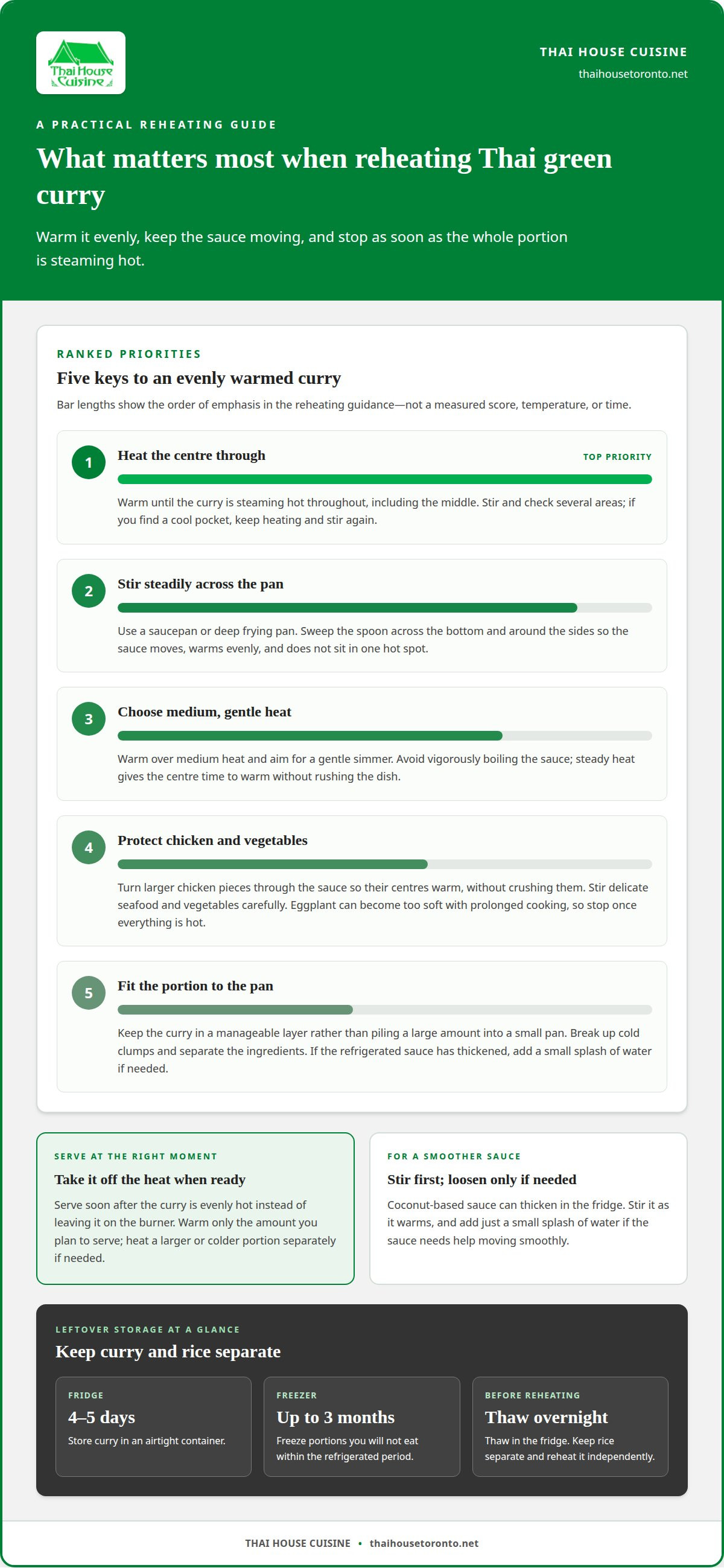
- Transfer the portion you plan to eat to a saucepan or deep frying pan. Keep it in a manageable layer instead of piling a large amount into a small pan. If the sauce has thickened in the fridge, stir in a small splash of water, just enough to help it move smoothly.
- Set the pan over medium heat and stir slowly as the curry warms. Sweep your spoon across the bottom and around the sides so the sauce doesn’t sit in one hot spot. Coconut-based sauce can thicken in the fridge, so steady stirring distributes the heat and helps prevent it from sticking before the rest warms.
- Continue heating until the curry is steaming hot throughout, including the centre. Stir and check several areas rather than relying on steam at the pan’s edges. If the middle is still cool, keep warming and stirring. Heating time depends on the portion size, pan, and starting temperature, so judge by the curry’s condition rather than a fixed timer.
- Stir chicken pieces gently. Turn larger chunks through the sauce so their centres warm, without crushing them against the pan. If the curry contains eggplant, stir carefully and stop heating once everything is hot. Prolonged cooking can make eggplant overly soft. A gentle simmer warms the dish without vigorously boiling the sauce.
- If you’re cooking a fresh curry rather than reheating leftovers, add chicken to the simmering curry and cook it through until tender. One green curry method simmers the chicken for about 10 minutes. Treat that as a recipe example, not a universal reheating timer: piece size and the cooking method affect how quickly chicken cooks. Stir so the pieces cook evenly in the sauce.
- Serve the curry as soon as it’s evenly hot instead of leaving it on the burner. Spoon it over freshly cooked rice if you’d like a warm, separate base. For a larger batch, heat only what you’ll serve and keep the rest chilled. The stovetop lets you control the stirring and texture, making it a practical choice for saucy chicken curry.
Gently reheating curry
Warm leftover curry gently, stirring so the sauce and ingredients heat evenly. Whether it contains chicken, seafood, or vegetables, check the centre of the portion and heat until it’s steaming hot throughout.
-
Check the Food-Safe Temperature
Heat the curry until it’s steaming hot throughout, then stir and check the centre before serving. The Canadian guidance in this section provides no numeric reheating temperature, so use the stated visual and practical cue: the whole portion must be hot, not just the sauce at the edges. If you find a cool pocket, continue heating and stir again.
-
Reheat Different Curry Ingredients Safely
Stir carefully to move chicken, seafood, and vegetables through the sauce as it warms. Check the middle of larger pieces and don’t serve while any part is cool. For eggplant, stop once the curry is steaming hot throughout, as extra heating can overcook it. If you prepared the curry a day ahead, add the sweet basil during reheating.
- Choose a saucepan or deep frying pan and warm the curry over medium heat. Stir regularly, drawing your spoon across the bottom so thicker sauce doesn’t settle in one place. Steady, gentle heat gives the centre time to warm without boiling the dish hard. If the sauce has thickened in the fridge, stir it first and add a small splash of water if needed.
- Before heating, break up any cold, compact portion with your spoon. Separate chicken pieces and vegetables so they aren’t trapped together in a dense clump. This helps the curry heat more evenly. Stir from the bottom and sides, then turn over the ingredients instead of repeatedly crushing them against the pan.
- Check seafood and tender vegetables carefully as the sauce warms. Stir gently to avoid breaking delicate pieces, and stop once the whole portion is steaming hot. Eggplant can soften quickly with continued cooking, so take the pan off the burner when the curry is ready. Turn chicken pieces through the sauce, paying attention to their centres.
- Serve the curry soon after it’s evenly hot. If one portion is larger or colder than another, warm it separately rather than assuming both are ready at the same time. For curry made a day ahead, leave out the sweet basil at first and stir it in while reheating. These checks help preserve the ingredients’ texture while warming the meal thoroughly.
How to store curry leftovers
Store curry in an airtight container in the fridge for 4-5 days, or freeze it for up to 3 months. Keep rice separate from the curry, and consider cooking fresh rice when you serve the leftovers.
- Divide the curry into portions you’re likely to eat at one sitting. For example, put a single meal’s amount in each airtight container instead of repeatedly opening one large container. Smaller portions are also easier to thaw and heat evenly. Store the chicken, vegetables, and sauce together in each portion.
- Seal the container once you’ve portioned the curry, then place it in the fridge if you’ll eat it within 4-5 days. Label the lid with the date you stored it, so you can keep track of the leftover curry. Keep the container closed between servings, and take out only the portion you plan to use.
- Freeze curry you won’t eat within that refrigerated period, and use it within 3 months. Leave room in the container for the curry, rather than filling it to the rim, and seal it tightly to help prevent spills. Write the freezing date on the label. Freezing a meal-sized portion makes it simpler to thaw only what you need.
- Thaw frozen Thai green curry in the fridge overnight before reheating. Transfer the sealed portion from the freezer to the fridge to thaw gradually. Don’t treat a frozen block like a chilled portion, as the centre may stay cold while the outside warms. Once thawed, stir the curry and reheat it thoroughly before serving.
- Store rice separately from the curry instead of mixing them in one container. This lets you reheat the rice and sauce independently and prevents the curry from making the rice soggy in storage. Bacteria in rice can produce toxins that reheating doesn’t destroy, so freshly cooked rice is a useful option to serve with reheated curry.
- Keep serving portions separate from the stored container. Use a clean utensil to transfer curry to a bowl, then return the sealed container to the fridge or freezer. Avoid heating the full batch when you need only one meal. For example, take one portion from the fridge and leave the rest stored for later.
- Plan ahead by choosing the storage method when you finish the meal. Refrigerate portions you expect to eat within 4-5 days, and freeze portions intended for later, up to 3 months. Mark each container clearly, keep rice apart, and thaw frozen curry overnight in the fridge before reheating.
Reheating curry in the microwave
- Transfer one serving of Thai green curry to a microwave-safe dish. Spread the chicken, vegetables, and sauce out instead of leaving them in a tight mound. A shallow layer heats more evenly than a deep, compact portion. Choose a dish with room for stirring, and don’t put metal in the microwave.
- Cover the dish loosely with a microwave-safe lid or cover, leaving an opening for steam to escape. Follow the cover’s use instructions. Covering the dish helps limit splashes as the curry heats. Place it on the turntable, if your microwave has one, so the portion can move as it warms.
- Heat the curry for one minute, then carefully remove the dish and stir. The centre and edges can warm at different rates, so bring sauce from the outside towards the middle. Turn over chicken pieces and separate vegetable clumps. Watch for escaping steam when lifting the cover or handling the hot dish.
- After stirring, continue heating in 30-second intervals. Stir between each interval, especially if the serving includes large chicken pieces or a dense patch of sauce. These short bursts let you check progress rather than leaving the whole portion to heat without interruption. Microwave power and portion size affect the time, so use the curry’s condition to guide you.
- Check the centre of the curry and the middle of the largest chicken piece before serving. The entire portion should be thoroughly hot or piping hot, with no cool pockets in the sauce. If you find a cool area, stir again and continue with another 30-second interval. Don’t judge readiness only by a hot dish or steaming edges.
- Stop heating once the curry is hot throughout. Repeated or prolonged microwave heating can toughen chicken, so don’t continue once the centre is warm. Eggplant and other soft vegetables can also lose their texture if overheated. Stir gently, then let the portion settle briefly before eating, taking care with hot sauce.
- For a larger serving, divide the curry between dishes rather than microwaving one deep container. Heat each portion in its own dish, following the one-minute start and 30-second intervals. If you’re warming curry with rice, keep the rice separate where possible, so you can stir the curry properly and check its centre. Serve once the curry is thoroughly hot.
What temperature should reheated Thai curry reach for food safety in Canada?
- Heat leftover Thai curry until it’s steaming hot all the way through. This is the practical reheating cue for the curry here; don’t judge it by a hot surface or warm sauce alone. Stir the portion and check whether the centre is hot, too.
- Use a saucepan for an even stovetop warm-up, or a microwave-safe dish for a microwave portion. Spread the curry out instead of leaving it in a dense mound. Heat the chicken, vegetables, seafood, and sauce together, not just the liquid around them.
- Stir from the edges towards the centre as the curry heats. The outside can become hot before the middle, especially when the curry is thick or packed with ingredients. Turn over larger chicken pieces and redistribute the vegetables so the heat reaches different parts of the serving.
- Pause heating to check for cool pockets. In a saucepan, stir and look for steam rising throughout the curry. In a microwave, stir after the first minute, then continue in 30-second intervals, checking between each interval. These intervals help you monitor the food rather than relying on one uninterrupted heating time.
- Pay particular attention to large chicken pieces and thick patches of sauce. Move the chicken through the sauce, then check the centre of the portion again. If any part is cool, keep heating and stirring until the whole curry is steaming hot. Don’t serve it while any area remains cool.
- Stop once the curry is hot throughout. Leaving the pan on the burner or continuing microwave cycles can overcook tender ingredients, including eggplant. The aim is evenly heated curry, not a hard boil or prolonged cooking that changes the vegetables’ texture.
- Serve the reheated curry promptly, and don’t rely on steam at the rim as your only check. A bowl’s edge can warm faster than its centre, and a thick portion takes longer to heat through. Stir, check the middle, and look for steam throughout for a more reliable practical check.
- Use the same method for each serving when reheating several portions. Divide a large batch into smaller amounts, then heat and check each one separately. Smaller portions are easier to stir thoroughly, and you can confirm the centre and ingredients are steaming hot before serving.
Thai House Cuisine: Dine-in Thai Meals
When you’d rather enjoy a freshly prepared Thai meal than warm leftovers at home, Thai House Cuisine offers dine-in, takeout, and delivery in Toronto’s Beaches neighbourhood and nearby Danforth, Leslieville, Scarborough, and East End areas. Choose dine-in for a relaxed meal out, or takeout and delivery for dinner at home. Thai food catering is also available for gatherings when you’d like Thai dishes on the table without preparing the meal yourself. These options suit a busy evening, a meal with others, or a night when you’d rather leave dinner to the kitchen.
For details about Thai House Cuisine’s offerings, visit Thai House Cuisine online.
Make your next meal a welcoming one
Leftovers can make a satisfying meal, while another evening may call for something freshly prepared. Knowing how to reheat Thai green curry gives you an easy dinner option at home, but you can also enjoy a meal without warming leftovers yourself. Choose what suits the moment, whether you’re having a quiet night in or sharing food with others.
Thai House Cuisine is a natural next step when you’d like to enjoy Thai food without making dinner yourself. Reach out to plan a meal that feels right for your occasion, from a relaxed visit to food for a gathering.
Enjoy an easy next meal and the pleasure of sharing good food.
Frequently Asked Questions
Can I reheat it?
Yes, Thai green curry can be reheated. Warm only the serving you plan to eat, and make sure the chicken, vegetables, and sauce are hot throughout before serving. For example, if one container holds several portions, transfer one portion to a pan or microwave-safe dish rather than heating the whole batch. This makes it easier to stir and check the centre without repeatedly heating the leftovers you’re saving.
Can it be frozen?
Yes, Thai green curry can be frozen for up to 3 months. Freeze it in a sealed, meal-sized container, leaving room for the sauce, and label the container with its contents and freezing date. Thaw it overnight in the refrigerator before reheating. For instance, freeze curry separately from rice so you can warm each as needed and choose freshly cooked rice for serving.
What is the best way to reheat Thai green curry on the stovetop?
Use a saucepan over medium heat and stir the curry regularly as it warms. If the sauce has set into a thick layer, gently loosen it with your spoon before turning the chicken and vegetables through it. Keep the contents moving, especially across the bottom of the pan, and avoid a vigorous boil. Check a piece from the middle of the serving, not just the sauce at the edge.
How do you reheat Thai green curry in a microwave without overcooking it?
Microwave one serving in a suitable dish, starting with one minute of heating. Stir thoroughly, then continue in 30-second intervals, checking and stirring each time. This approach gives you opportunities to stop as soon as the curry is hot throughout. Pay attention to the biggest chicken piece and any dense patch of sauce; the dish can feel hot while those areas still need warming.
How long can Thai green curry be stored in the fridge before reheating?
Thai green chicken curry leftovers can be kept in an airtight container in the fridge for 4-5 days. Label the container when you put it away, and use the date to keep track of how long it has been stored. If you won’t eat the curry within that period, freeze it instead. Keep rice in a separate container so the curry doesn’t make it soggy.
How should Thai green curry be cooled and stored safely in Canada?
Divide leftover curry into airtight containers and refrigerate it instead of leaving a large pot out for an extended period. Smaller portions are easier to store and reheat evenly. Keep rice separate, and mark containers with their storage date. For longer storage, freeze the curry and thaw it in the refrigerator overnight before reheating. Don’t save a serving that has been left out for a prolonged meal.
Can Thai green curry be reheated more than once?
To avoid repeatedly warming the same batch, divide it into individual portions before storing. Reheat only what you expect to eat, and return untouched portions to cold storage. For example, if you want a small bowl, transfer that serving to a separate pan instead of heating the full container and chilling the remainder again. This also makes each portion easier to stir and check.
How do you prevent coconut milk from splitting when reheating Thai green curry?
Warm the curry gently, stirring as the sauce heats. Avoid a hard boil, which can make coconut-based sauce look separated and oily. If the chilled curry is thick, stir it slowly before heating so the sauce loosens evenly. A small splash of water can help if it’s still too thick to stir. Stop when the curry is hot throughout instead of continuing to simmer it.


