
A cheese-free, plant-based meal can be a healthy takeout alternative to pizza when it centres on vegetables and balanced toppings. A typical pizza-parlour pie contains about 5,100 mg of sodium, roughly three times the daily limit recommended by the American Heart Association.
Pizza can be satisfying, but its sodium and cheese-heavy toppings may have you looking for a different kind of meal. A plant-forward takeout choice can still be flavourful and filling.
Here, you’ll learn how vegetable-forward, cheese-free toppings can make a satisfying alternative, which health concerns conventional pizza may raise, and what to consider when choosing takeout. The goal is a meal that feels generous and enjoyable while better matching your preferences.
Key Takeaways
- Conventional pizza can raise nutrition concerns, so consider how toppings, cheese and portion size shape the meal.
- Compare takeout choices by their ingredients and preparation, not just by the name of the dish.
- Build a more balanced order around vegetables, whole grains and a satisfying source of protein.
- Read nutrition labels with serving size in mind, and pay attention to sodium and added sugar.
- Explore how Thai takeout and cheese-free, plant-based toppings can bring fresh variety to your next meal.
2. Potential health concerns with conventional pizza
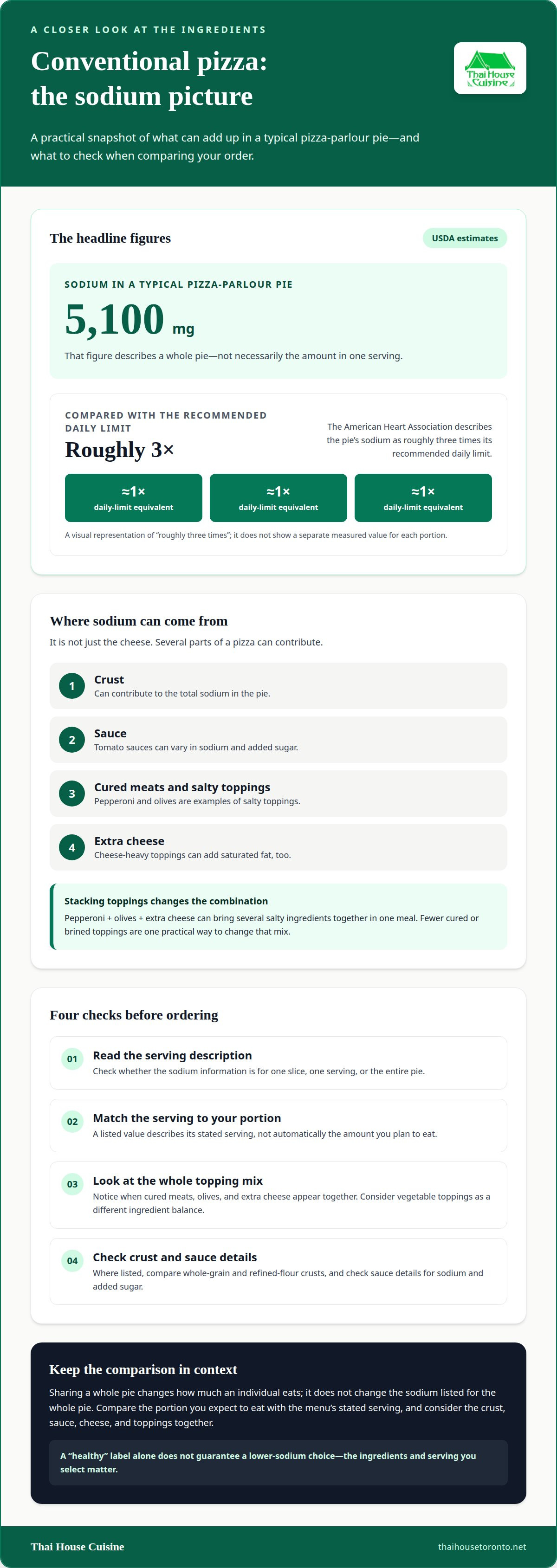
A typical pizza-parlour pie contains about 5,100 mg of sodium, according to USDA estimates. The American Heart Association describes that amount as roughly three times its recommended daily limit. A whole pie may be shared, but the sodium still deserves attention when planning portions.
How much do healthy takeout meals typically cost in major Canadian cities? The total depends on the dish, portion, ingredients, and delivery charges. In Toronto neighbourhoods such as the Beaches and Leslieville, compare the full order and serving size rather than assuming one typical cost applies across the city.
Sodium can come from several parts of pizza, not just the cheese. Crust, sauce, cured meats, and salty toppings can all contribute. Pepperoni, olives, and extra cheese, for example, stack several salty ingredients in one meal. Choosing fewer cured or brined toppings is one practical way to change that combination.
Portion size also affects how much you eat. Sharing a large pizza differs from eating several slices on your own. If a menu lists nutrition per serving, compare that serving with the amount you expect to eat. A listed value describes the stated serving, not necessarily the whole pizza.
Cheese-heavy toppings can add saturated fat, while processed meats such as pepperoni and sausage bring their own nutritional considerations. A pizza with both may feel filling, but leave less room for vegetables. Compare a loaded meat-and-cheese slice with one topped with vegetables to see how the ingredients change the meal.
Crust and sauce matter, too. Where available, a whole-grain crust may provide more fibre than a refined-flour crust. Tomato sauces can vary in added sugar and sodium. Check ingredient details or nutrition information when the menu provides them, rather than judging by the sauce’s colour or name.
That doesn’t mean every pizza is the same or that you need to avoid it. These points offer a practical way to assess your order. Consider the whole combination: portion, crust, sauce, cheese, and toppings. One ingredient swap may help, but several choices together shape the meal.
Use this quick check before ordering:
- Check whether sodium information describes one slice, one serving, or the entire pie.
- Notice when cured meats, olives, and extra cheese appear together.
- Compare the portion you plan to eat with the menu’s stated serving.
- Look for whole-grain crust, vegetables, and sauce details when listed.
Choosing a vegetable-topped slice instead of sausage with extra cheese changes the ingredients in your meal. If the menu has no nutrition panel, use its topping list and portion description to compare options. A lower-sodium choice isn’t guaranteed by the word “healthy” on a menu; it depends on the ingredients and serving you select.
3. Which Canadian takeout meals are lower in calories and saturated fat than pizza?
A dish name alone doesn’t show whether a takeout meal is lower in calories or saturated fat than pizza. The recipe and portion matter: compare the crust, cheese, cooking method, protein, sauce, and sides. A vegetable stir-fry with tofu, for example, differs from one cooked with generous oil and served with a large portion of rice.
Start with meals built around vegetables and a clear protein choice. A grilled chicken salad, tofu-and-vegetable stir-fry, or lentil soup offers a different ingredient balance from cheese-heavy pizza. Dressings, creamy sauces, fried toppings, and rich add-ons can change that balance, so consider the complete order, not just its headline ingredient.
Grain bowls also give you plenty to compare. Look for a base such as brown rice or another whole grain, plus vegetables and beans, tofu, or grilled chicken. Creamy dressing, fried protein, and extra cheese can make a bowl richer than its name suggests. If the option is available, ask for dressing or sauce on the side and add only as much as you want.
Sandwiches and wraps vary just as much. A whole-grain wrap with grilled vegetables and lean protein differs from one filled with fried chicken, cheese, and creamy sauce. If they’re on the menu, pair your wrap with a side salad or broth-based soup instead of fries. The side contributes to the whole meal, not just the main item.
Use these comparisons when scanning a Canadian takeout menu:
- Choose grilled or steamed preparations over deep-fried versions, such as grilled chicken instead of crispy chicken.
- Compare vegetable-forward fillings with meals centred on cheese, processed meat, or cream sauce.
- Look for beans, tofu, or lean poultry alongside vegetables and a grain.
- Consider the serving size and sides, not only the entrée description.
Nutrition panels allow a more precise comparison when both meals include serving information. Match the serving sizes first, then compare calories and saturated fat per serving. Figures aren’t directly comparable if one describes a whole entrée and another a smaller portion. Ingredient lists and menu descriptions can still help when detailed nutrition information isn’t available.
For a satisfying alternative, build the order around texture and flavour as well as ingredients. A warm bowl with rice, crisp vegetables, tofu, and a savoury sauce may feel complete without pizza’s cheese-and-crust combination. Choose a portion that suits your appetite, and keep rich extras measured. Explore Thai takeout options for another way to bring vegetables, rice, and varied flavours into your meal planning.
Neither meal is automatically lower in calories or saturated fat. The ingredients and portion size matter. A bowl with vegetables, grains, and beans, tofu, or grilled chicken may offer a different balance from cheese-heavy pizza, while creamy dressing, fried protein, or extra cheese can make the bowl richer. Compare matching serving sizes when nutrition information is available.
5. Which Thai or Vietnamese takeout dishes are nutritious and lower in sodium?
Thai and Vietnamese menus offer vegetable-forward choices, but sodium depends on sauces, broth, and preparation. Vietnamese fresh rolls with vegetables and tofu, for example, may have a different profile from deep-fried rolls. The dipping sauce matters, too, so use a modest amount rather than pouring it over the rolls.
For a noodle bowl, look for plenty of vegetables and tofu, chicken, or another lean protein. When possible, ask for sauce on the side, especially with dishes made with soy sauce or fish sauce. These seasonings add savoury depth, but a generous pour can make a meal saltier. You can leave some sauce behind rather than mixing in the entire portion.
Vietnamese pho combines herbs, noodles, vegetables, and protein in a fragrant broth. Because broth contributes to the dish’s sodium, drinking all of it can affect your intake. Add fresh herbs and lime for brightness, and taste the broth before adding table seasoning. A broth-based dish isn’t automatically low in sodium.
Thai stir-fries can pair vegetables with tofu or chicken and rice. Asking for extra vegetables and a lighter hand with sauce can help you balance the ingredients. A dish covered in sauce may contain more sodium than a simply seasoned version, even when it includes vegetables. Ask for sauce separately if that option is available.
Some menu choices need a closer look. Thai papaya salad often gets its punch from a dressing that can include fish sauce. Vietnamese noodle bowls may come with salty dipping sauce, while curries can include seasoned paste. Choose the vegetables and protein you want, then moderate the sauce or broth that carries much of the seasoning.
Protein is another useful part of the comparison. A 2018 study found that people who ate red meat daily had triple the levels of trimethylamine N-oxide (TMAO) compared with people getting protein from white meat or non-meat sources. Tofu, beans, and chicken are options to consider when choosing a Thai or Vietnamese meal.
Try this ordering approach for a more balanced plate:
- Choose a dish with vegetables, such as tofu stir-fry or fresh spring rolls.
- Select tofu, chicken, or another lean protein instead of making processed meat the centrepiece.
- Ask for dipping sauce or stir-fry sauce on the side, then use a small amount.
- Taste pho broth before adding extra seasoning, and enjoy herbs or lime for flavour.
Menu descriptions can guide your choice, but recipes vary between restaurants. Compare the ingredients and how much sauce or broth comes with the meal. A Thai vegetable stir-fry with tofu and rice, or Vietnamese fresh rolls with a modest amount of dip, can make a satisfying takeout alternative when you want varied flavours and more vegetables.
5. How can I order healthier takeout with more vegetables, whole grains, and lean protein
Build your order around vegetables, a whole-grain base, and protein. For example, choose a bowl with brown rice, mixed vegetables, and grilled chicken. This gives you a clear way to scan a menu before choosing extras. If brown rice isn’t offered, look for whole-wheat noodles, a whole-grain wrap, or another grain option.
Start with the vegetables listed in the dish description. Where the menu allows, add options such as broccoli, peppers, leafy greens, carrots, or mushrooms. A vegetable stir-fry can be a useful starting point, but check what comes with it. A small garnish isn’t the same as vegetables forming a substantial part of the meal.
Next, choose a protein that fits the meal. Grilled chicken, tofu, beans, and lentils pair well with vegetables and grains. One option is a burrito bowl with black beans, brown rice, lettuce, and peppers. Another is a whole-wheat wrap with grilled chicken and salad vegetables. Look for a protein that’s a clear part of the dish, not just a small topping.
Pay attention to preparation. “Crispy” usually signals a different approach from grilled or steamed. Creamy dressings, cheese, and rich sauces can add more than vegetables and grains to a meal. If available, ask for dressing or sauce on the side, then add enough for flavour without coating every ingredient.
Use this simple order-building sequence when browsing a menu:
- Choose a dish featuring vegetables, such as a stir-fry or salad bowl.
- Select a whole-grain base, such as brown rice or a whole-wheat wrap.
- Add grilled chicken, tofu, beans, or lentils as the protein.
- Choose a sauce or dressing separately when possible.
Side dishes can strengthen or undo that balance. Pair a grain bowl with fruit or a side salad instead of automatically choosing fries. For a sandwich, look for a vegetable-filled option and whole-grain bread. With a Thai meal, consider how the vegetables, rice, protein, and sauce come together.
Finally, compare the complete order, not just the main item. A salad with creamy dressing, fried chicken, and a large side differs from a grilled-chicken salad with dressing served separately. Consider the menu description, serving size, and sides together. These choices make it easier to find a meal with vegetables, whole grains, and lean protein.
For pizza, add vegetable toppings or serve it with a salad to make the meal more balanced. Lean meats such as chicken and ground turkey are other topping options to consider, alongside vegetables and your preferred protein.
5. What should I watch for in takeout nutrition labels, including sodium and added sugar?
Start with serving size, then compare sodium and sugars for the amount you plan to eat. A label may describe one serving, while a takeout container holds more. The American Heart Association notes that eating two servings means consuming twice the sodium listed for one serving. Check whether the label’s serving matches your meal.
Next, compare sodium in similar dishes, such as two vegetable noodle bowls or soups. The lower listed amount can help distinguish options, but serving sizes must match. Sauces, broth, seasoning mixes, and salty toppings can all contribute sodium. If a dish comes with dipping sauce, use only the amount you want.
Look at sugars in context. Sweetened iced tea, glazed protein, and sauce can all contribute sugars to one order. For packaged drinks or sides with nutrition information, compare the serving and sugars listed before choosing. When restaurant dishes have no nutrition panel, menu descriptions can still flag sweet sauces such as sweet chilli or teriyaki.
Ingredients offer another clue. Check packaged sauces and dressings for words such as sugar, syrup, honey, or molasses. Their place in the ingredient list can help you compare products, but doesn’t tell you the total amount in a meal. Use the nutrition information alongside the ingredients when both are available.
Calories and saturated fat may also appear on nutrition labels. Compare similar items, such as a grilled chicken wrap and a fried chicken wrap, using the same serving basis. Then consider add-ons: creamy dressing, cheese, or a sweetened beverage can change the overall order. Looking only at the entrée can miss what the drink and sides contribute.
For a quick label check, follow these steps:
- Match the stated serving size to the amount you expect to eat.
- Compare sodium between similar meals or packaged sides.
- Review sugars and ingredient lists for sweetened drinks, sauces, and dressings.
- Include sides, toppings, and beverages in your comparison.
A nutrition label is most useful when you compare like with like. For example, compare two soups with similar serving sizes, rather than a small soup portion with a full meal. If a restaurant provides no nutrition panel, use the menu’s ingredients and preparation descriptions to make a practical choice. Sauce served separately gives you more control over how much you add.
Pizza can be worth a close sodium check when comparing takeout choices. A typical pizza-parlour pie’s sodium content is about 3 times the daily limit recommended by the American Heart Association. Check the serving basis alongside the sodium amount and consider how much of the pie you expect to eat; the amount for a serving may not represent the amount you plan to consume.
Tens of thousands of servicemen and women returned from the Italian campaigns after World War II with an appreciation of Italian cuisine, including pizza. That history doesn’t replace checking the label: as with any takeout, use the listed sodium and serving size to assess the portion you plan to eat.
Thai House Cuisine: Dine-in Thai Meals
Thai House Cuisine offers dine-in Thai meals and takeout and delivery orders when you want a flavourful alternative to pizza. Choose the format that suits your meal, whether you’d like to settle in for dinner or enjoy takeout at home. Lunch specials also offer another way to enjoy Thai food during the day.
Use these ideas to compare ingredients, portions, and sauces as you choose what suits your preferences. Thai food offers Toronto diners in the Beaches, Danforth, Leslieville, nearby Scarborough, and the East End a varied mix of flavours and textures. The right meal depends on what you feel like eating.
Visit Thai House Cuisine’s website to explore your options.
Make your next meal a fresh choice
Start your next takeout choice with what you’re in the mood to enjoy: bright vegetables, satisfying textures, and flavours that differ from your usual order. A healthy takeout alternative to pizza can be a chance to explore a new combination, not a compromise. Choose a dish that suits your appetite and consider how its ingredients come together.
For a shared meal or a gathering, Thai House Cuisine also offers Thai Food Catering. Whether you’re planning a relaxed dinner or feeding a group, a welcoming meal can make the occasion feel special. Follow your curiosity, try something that appeals to you, and make your next order your own.
A delicious change of pace can begin with one thoughtful choice. Enjoy exploring what’s next.
Frequently Asked Questions
What are healthy takeout alternatives to pizza in Canada?
Vegetable stir-fries with tofu, Vietnamese fresh rolls, and grain bowls with beans or grilled chicken can all make satisfying alternatives. For a Thai option, consider a vegetable or tofu dish with rice, and include sauces in your nutrition comparison. A healthy takeout alternative to pizza depends on ingredients and portion size, so look for vegetables and protein, and compare nutrition details when available.
Are shawarma bowls or wraps a healthy alternative to pizza?
These meals can offer a different balance from cheese-heavy pizza when they include vegetables, a whole-grain base or wrap, and satisfying protein. Creamy sauces, fried toppings, and portion size can change the meal, so compare the full order rather than relying on the dish name.


