

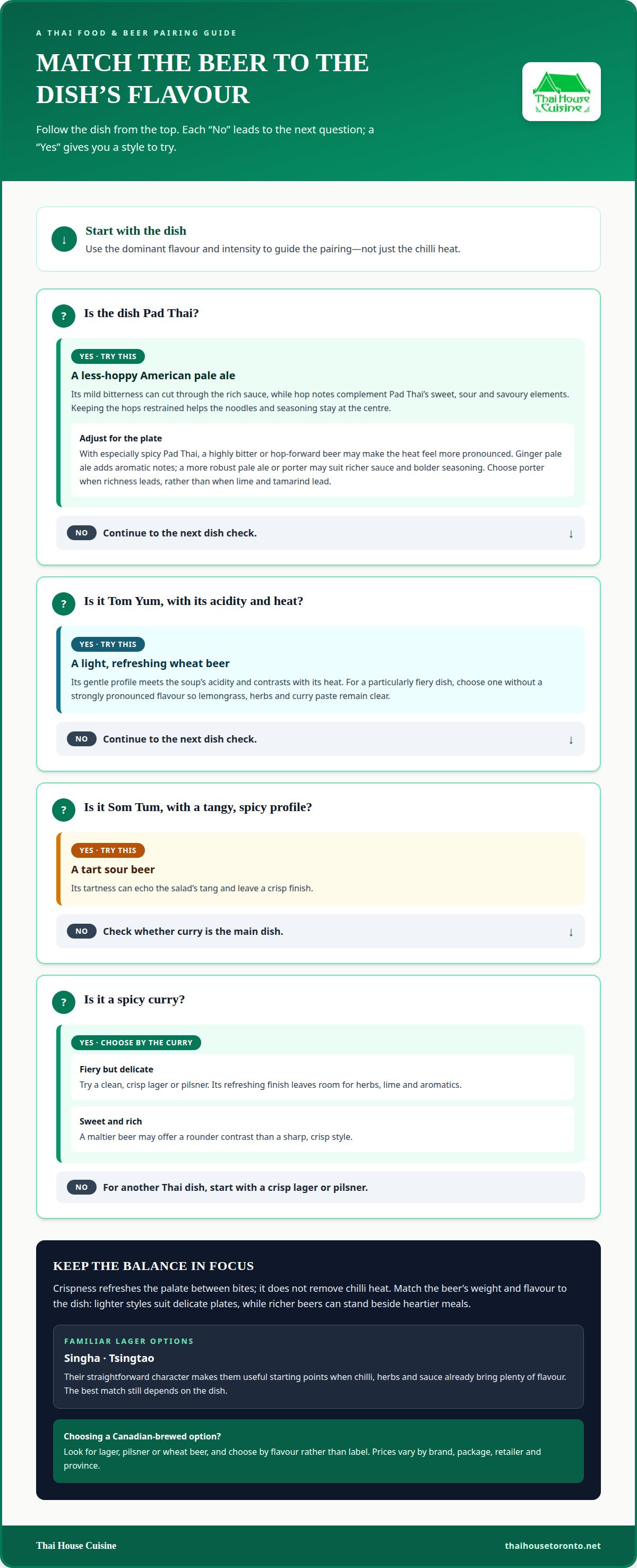
The best beer with spicy Thai food is often a crisp, light-bodied lager or pilsner. Its refreshing finish complements the dish without overpowering it. Singha and Tsingtao are familiar choices, while a less-hoppy American pale ale can add flavour alongside Pad Thai.
Thai food’s heat is only part of the pairing. Sourness, sweetness and savoury umami also shape how beer tastes with each bite. A refreshing lager may suit an aromatic curry, while pale ale can stand up to Pad Thai’s richer sauce and tangy-sweet balance.
Explore how beer styles pair with Thai dishes, from crisp pilsner to flavourful pale ale. These practical suggestions cover spicy, sour, sweet and savoury flavours, with a simple way to choose a beer that complements the dish instead of competing with it.
Key Takeaways
- Start with a crisp lager or pilsner when you want a refreshing match that won’t overpower spicy Thai dishes.
- Pair a less-hoppy American pale ale with Pad Thai to complement its rich, tangy-sweet sauce.
- Consider wheat beer with Tom Yum or a tart sour beer with Som Tum to meet the dishes’ acidity and heat.
- Singha and Tsingtao are lager options to try, but the best match depends on the dish’s intensity and flavour balance.
- Look beyond heat: sourness, sweetness and umami can all influence which beer feels most harmonious with a Thai meal.
American pale ale with Pad Thai
American pale ale can suit Pad Thai when you want more flavour than a light lager offers. Its mild bitterness can cut through the rich sauce, while hop notes complement the dish’s sweet, sour and savoury elements. Choose a less-hoppy pale ale to keep the noodles and their seasoning at the centre of each bite.
Pad Thai brings several flavours together: tamarind adds tang, lime brings brightness, and peanuts contribute a nutty richness. Fish sauce and other savoury ingredients deepen the umami. A balanced American pale ale can meet those contrasts without making the pairing feel too heavy. The match works especially well when the beer’s bitterness is present but not dominant.
Heat changes the balance. With milder Pad Thai, a pale ale’s hop character can add a lively counterpoint to the sauce. If the dish is especially spicy, a highly bitter or hop-forward beer may make the heat feel more pronounced. A less-hoppy pale ale is gentler, letting the chilli, tamarind and noodles retain their distinct character.
Ginger pale ale is another option with Asian food, including Pad Thai. Its ginger notes can echo the aromatic flavours often found in Thai cooking, while the pale ale base offers more body than a crisp lager. Try it if you enjoy a noticeable beer flavour but still want the dish’s tangy sauce to come through.
For the best beer with spicy Thai food, match intensity as well as flavour. A moderate pale ale works with lighter Pad Thai; a more robust version can stand up to richer sauce or stronger seasoning. Take a bite, then a sip. If the beer overwhelms the tamarind or leaves the chilli dominating, switch to a softer, less-hoppy style.
Porter is an alternative for diners who want a stronger-tasting beer with Thai food. Its deep, roast-leaning character creates a different contrast from pale ale’s hops, so it may suit a heartier meal better than a delicate noodle dish. With Pad Thai, consider porter when the sauce is rich and the seasoning bold, rather than when lime and tamarind lead.
Keep the pairing flexible: American pale ale is a starting point, not a rule. A less-hoppy pale ale suits a balanced plate, ginger pale ale adds aromatic interest, and porter brings more weight. Let Pad Thai’s sauce, chilli level and savoury depth guide your choice, then select a beer that complements the flavours instead of competing with them.
Light-bodied, crisp beers for spicy Thai dishes
Light-bodied, crisp beers are a reliable starting point for spicy Thai food. Wheat beer and sour beer offer alternatives when acidity, chilli or delicate flavours shape the plate.
Crisp Beers and Chili Heat
A crisp beer has a clean, refreshing finish that contrasts with chilli heat. Lagers and pilsners work well with fiery but delicate dishes because their lighter character leaves room for herbs, lime and aromatics. Crispness doesn’t remove the heat; it refreshes the palate between bites. A malty beer offers a different balance, and its fuller sweetness may suit a sweet-spicy curry better than a sharp salad.
Wheat Beer for Spicy Dishes
Wheat beer’s light, refreshing body can complement spicy dishes without crowding their flavours. With Tom Yum, its gentle profile meets the soup’s acidity and contrasts with its heat. For a particularly fiery curry, choose a refreshing wheat beer without a strongly pronounced flavour, so lemongrass, herbs and curry paste remain clear. A delicate Thai dish can also pair well with witbier, another light-bodied style.
Beer Styles for Thai Dishes
Match the beer’s weight and flavour to the dish: light styles suit delicate plates, while richer beers can stand beside heartier meals. A crisp lager or pilsner fits spicy curry when you want a clean finish; wheat beer is a useful match for acidic Tom Yum. With Pad Thai, consider the sauce’s sweet, sour and savoury balance. For Som Tum, sour beer’s tartness can echo the salad’s tang and leave a crisp finish.
These examples answer a common pairing question: Thai curry can work with a clean lager or pilsner, Pad Thai with a lighter pale ale, and spicy salads with tart sour beer. If the curry is sweet and rich, a maltier beer may offer a rounder contrast than a crisp style.
Canadian Beer Choices and Cost
In Canada, look for Canadian-brewed lager, pilsner or wheat beer when you want a local option with Thai food. Choose by flavour rather than label: clean lager suits chilli-forward dishes, while wheat beer can complement Tom Yum. Beer prices vary by brand, package, retailer and province, so compare the format and style you prefer.
For a non-beer pairing, chilled Japanese sake is another option with spicy Thai food. Water also refreshes the palate alongside a meal, especially when chilli is prominent. Choose based on whether you want the drink to contrast the heat, echo the dish’s acidity or keep its flavours in focus.
Pairing Thai food with Tsingtao or Singha
Tsingtao and Singha are lagers commonly suggested with Thai food. Their straightforward character makes them useful starting points when chilli, herbs and sauce already bring plenty of flavour. Rather than expect one beer to suit every dish, let the plate’s dominant taste guide the pairing. A fragrant curry and a sharp salad call for different contrasts.
Try Singha with curry when you want the beer to sit alongside aromatic seasoning without adding another strong flavour. Tsingtao can also accompany a Thai meal, including dishes where a clean lager provides a quieter counterpoint. These are suggestions, not strict rules. Sauce, chilli level and richness can change how the beer tastes from bite to bite.
For a meal with several dishes, consider how the beer will work across the table. Lager can bridge contrasting flavours, such as savoury curry alongside tangy salad. If one dish is much spicier, taste it with the beer before deciding whether the combination feels balanced. A sip between bites can also reveal the contrast more clearly than tasting the beer alone.
Personal preference matters as much as the style name. Some diners want beer to refresh the palate; others prefer a flavour that stands up to bold seasoning. Use a simple comparison:
- Choose Singha or Tsingtao as a familiar lager starting point for a Thai meal.
- Try the lager with the dish’s strongest flavour, such as curry paste or lime-forward dressing.
- Notice whether the beer refreshes the next bite or competes with its seasoning.
- Compare another beer style if the lager feels too mild beside a richer dish.
This tasting approach is especially useful at a shared table. A Tsingtao pairing that works with mild curry may feel less satisfying beside fiery salad. Keep the dish constant while comparing beers, or the beer constant while comparing dishes. Changing one element at a time helps reveal whether chilli, sourness or richness drives your preference.
Many beer styles can work with Thai food, so experimentation is part of the pleasure. Start with Tsingtao or Singha, then compare them with crisp pilsner or less-hoppy pale ale. A lighter option can suit delicate flavours, while a fuller beer may better match a richer meal. The best pairing lets both the beer and the Thai dish remain enjoyable.
For a first tasting, pair a lager with a familiar dish, such as curry or Pad Thai. Then try the same beer with spicy salad and note the difference. This simple comparison reveals whether you prefer a refreshing match or a more flavourful contrast. Singha and Tsingtao offer a clear starting point; your palate decides what you would pair again.
Lagers and pilsners with Thai food
Lagers and pilsners are light beer choices for Thai food, and German pilsner is one suggested match. Lager, pilsner, wheat beer and IPA each bring a different balance of weight, flavour and contrast to spicy dishes.
Lager and Pilsner Pairings
Lager or pilsner can accompany Thai food without dominating the meal. That matters when herbs, curry paste or chilli already create a vivid flavour profile. Try German pilsner with fragrant curry and notice whether its crisp character keeps the seasoning in focus. It also offers a straightforward starting point for comparing other pairings.
Dish intensity helps guide your choice. A more assertive beer can overshadow a delicate Thai dish, while light lager may seem less present beside a robust meal. Consider the dominant seasoning, not just the dish name. Mild and fiery curries may call for different levels of beer character, even when both are served with rice.
Comparing Beer Styles with Spicy Dishes
Lager and pilsner offer a lighter profile, wheat beer brings a refreshing option, and IPA adds more hop character. Chilli level and the dish’s other flavours determine which contrast feels balanced. Wheat beer can complement Tom Yum’s acidity and contrast its heat. A balanced IPA can pair with Thai food, while very hop-forward IPAs may suit especially spicy dishes better.
Think of each style as a different companion at the table. German pilsner can suit a lighter meal; wheat beer can meet a sour, spicy soup; and balanced IPA adds more pronounced flavour alongside bold seasoning. With especially spicy curry, consider whether the beer’s intensity will complement the dish or compete with it. Aim for a pairing where both remain distinct.
Use a simple tasting comparison to make the decision concrete. Keep the Thai dish the same, then try it with pilsner and wheat beer. Notice whether lager keeps the herbs clear or wheat beer better meets the soup’s acidity. With curry, compare pilsner and balanced IPA, focusing on how each works with the chilli and seasoning.
For a shared Thai meal, German pilsner can be a versatile first choice, while wheat beer or balanced IPA offers a clear alternative. Match lighter beer with delicate dishes and reserve fuller, more pronounced flavours for bolder plates. If chilli dominates, compare balanced IPA with a hop-forward option; if acidity leads, try wheat beer. Personal taste completes the pairing.
Thai cuisine’s spicy, sour, sweet, and umami flavours
Thai food rarely brings just one flavour to the table. Green curry can combine chilli heat with herbs and savoury depth, while Som Tum brings sharp, tangy notes. Pad Thai often balances sweet, sour and savoury tastes in one sauce. Identify the dish’s leading flavour, then choose a beer that complements it without crowding the rest.
Chilli heat can make strongly bitter beer feel more assertive, so consider the dish’s spice level. Crisp, light-bodied lager offers contrast and leaves room for aromatics such as lemongrass. With bolder seasoning, balanced IPA can meet green curry’s flavour, while very hop-forward versions may suit especially spicy dishes. Treat beer as part of the flavour balance, not a way to erase heat.
Sourness changes the match. Lime in Som Tum or tamarind in Pad Thai gives a dish a tart edge that can make crisp beer especially refreshing. Sour beer can echo Som Tum’s tang and finish cleanly. With Tom Yum, wheat beer’s light body contrasts with the soup’s acidity and heat. Choose based on whether you want to mirror the tang or soften its impact.
Sweetness calls for a different approach. Massaman curry’s sweet, spiced character can pair with amber ale’s malt-forward profile and caramel notes, adding roundness rather than sharp contrast. Pad Thai’s sweet-and-sour sauce, by comparison, may work with less-hoppy pale ale, whose mild bitterness balances richness without taking over the tamarind and lime.
Umami, the savoury depth found in ingredients such as fish sauce, can make a dish taste fuller. In Pad Thai, it sits alongside peanuts and tangy sauce; in curry, it blends with aromatic seasoning. Clean lager can keep these flavours distinct, while more flavourful pale ale adds another layer. Choose based on whether the meal needs freshness or more depth.
For the best beer with spicy Thai food, start by naming the strongest flavour on the plate. For Som Tum, consider tartness; for Massaman, sweetness and spice; for green curry, heat and aromatic depth. Take a bite, then a sip. If the beer masks the dish’s balance, choose a lighter or less assertive style.
Sour beer’s tart, refreshing character can complement Som Tum and provide a crisp finish. For particularly spicy dishes, choose a beer that balances the heat without overpowering the food. Focus on the dish’s leading flavours, adjusting the beer’s intensity when spice or tang feels dominant, so each sip supports rather than obscures the meal.
Thai House Cuisine: Dine-in Thai Meals
At Thai House Cuisine, enjoy these pairings over dine-in Thai meals, with a beer style chosen to suit the dish. Try crisp lager with spicy curry or compare a lighter beer with Pad Thai’s sweet-and-sour balance. Takeout and delivery make it easy to enjoy Thai food at home, and lunch specials offer another way to savour the menu. For gatherings across Toronto, including The Beaches, Danforth, Leslieville, nearby Scarborough and the East End, Thai food catering brings the dishes to a shared table.
For a Thai meal in Toronto, visit Thai House Cuisine.
Make your next Thai meal your own
Let your next pairing suit your mood as much as the dish. When choosing the best beer with spicy Thai food, consider whether you want a crisp contrast or fuller flavour alongside the meal. A shared table invites experimentation: choose a dish, settle on a beer style, and enjoy how their flavours meet.
Thai House Cuisine serves Thai meals for dine-in, takeout and delivery, as well as catering for gatherings across Toronto, including The Beaches, Danforth, Leslieville, nearby Scarborough and the East End. Choose the setting that suits your plans, then find a pairing that feels right for you.
Here’s to good food, a thoughtful pour and a meal worth lingering over.
Frequently Asked Questions
Which beer ABV and bitterness levels pair best with very spicy Thai food?
For very spicy Thai food, start with a moderate-strength beer and restrained bitterness rather than chasing a specific alcohol or bitterness figure. Those details alone can’t predict how a beer will taste with chilli; malt character, carbonation and seasoning matter too. Try a sip with a bite of curry, then consider whether the beer’s bitterness sharpens the heat or its body feels too heavy.
Are light beers or non-alcoholic beers good with spicy Thai food?
Yes, light beers and non-alcoholic beers can both be good choices, especially if you want the food’s herbs and aromatics to stay prominent. A crisp, lightly flavoured option can work with chilli-heavy salad, while maltier non-alcoholic beer may suit a fuller curry. Taste the drink with the dish, not on its own, since sweetness and acidity can change the pairing.
Should I avoid hoppy or high-alcohol beers with spicy Thai dishes?
You don’t have to avoid them, but very hop-forward or high-alcohol beers can dominate delicate dishes and may make chilli feel more pronounced. With robust curry, balanced IPA can still fit; with a milder noodle dish, start with a less assertive beer. If the beer overwhelms the food, switch to a lighter style or alternate sips with water to refresh your palate.
What beer can I buy in Canada to pair with spicy Thai food, and what does it cost?
Look for Canadian-brewed lager, pilsner or wheat beer. Clean lager suits chilli-forward dishes, while wheat beer can complement Tom Yum. Cost depends on the brand, package, retailer and province, so compare the options you prefer.


