

The best Thai food for picky eaters can be familiar, comforting and flavourful without relying on chilli heat. Start with chicken satay, grilled pork skewers with sticky rice, a Thai omelet, fried rice or noodles such as Pad Thai and Pad See Ew. These approachable dishes make it easier to choose familiar ingredients and keep a meal simple.
It’s understandable to want a meal everyone at the table will enjoy, especially when spice or unfamiliar textures can put someone off. Ask for a mild preparation or no added chilli, and name a familiar protein or vegetable. When it suits the dish, request sauces on the side so diners can control each bite.
Here are five approachable Thai meals and practical ways to make a clear request when ordering. Starting with familiar ingredients and adjusting the preparation can make trying Thai food feel welcoming rather than like a gamble.
Key Takeaways
- Try familiar textures and flavours first, such as satay with peanut sauce or grilled pork with sticky rice.
- Choose a Thai omelet or fried rice for a simple, filling meal, and tailor the protein or vegetables to suit the eater.
- For a noodle option, compare Pad Thai’s sweet-and-savoury profile with the wider noodles and soy-seasoned flavour of Pad See Ew.
- When ordering, ask for mild preparation or no added chilli, and request sauces on the side when appropriate.
- Use dine-in, takeout, delivery or catering to enjoy Thai meals in the way that best fits the occasion.
1. Chicken satay with peanut sauce
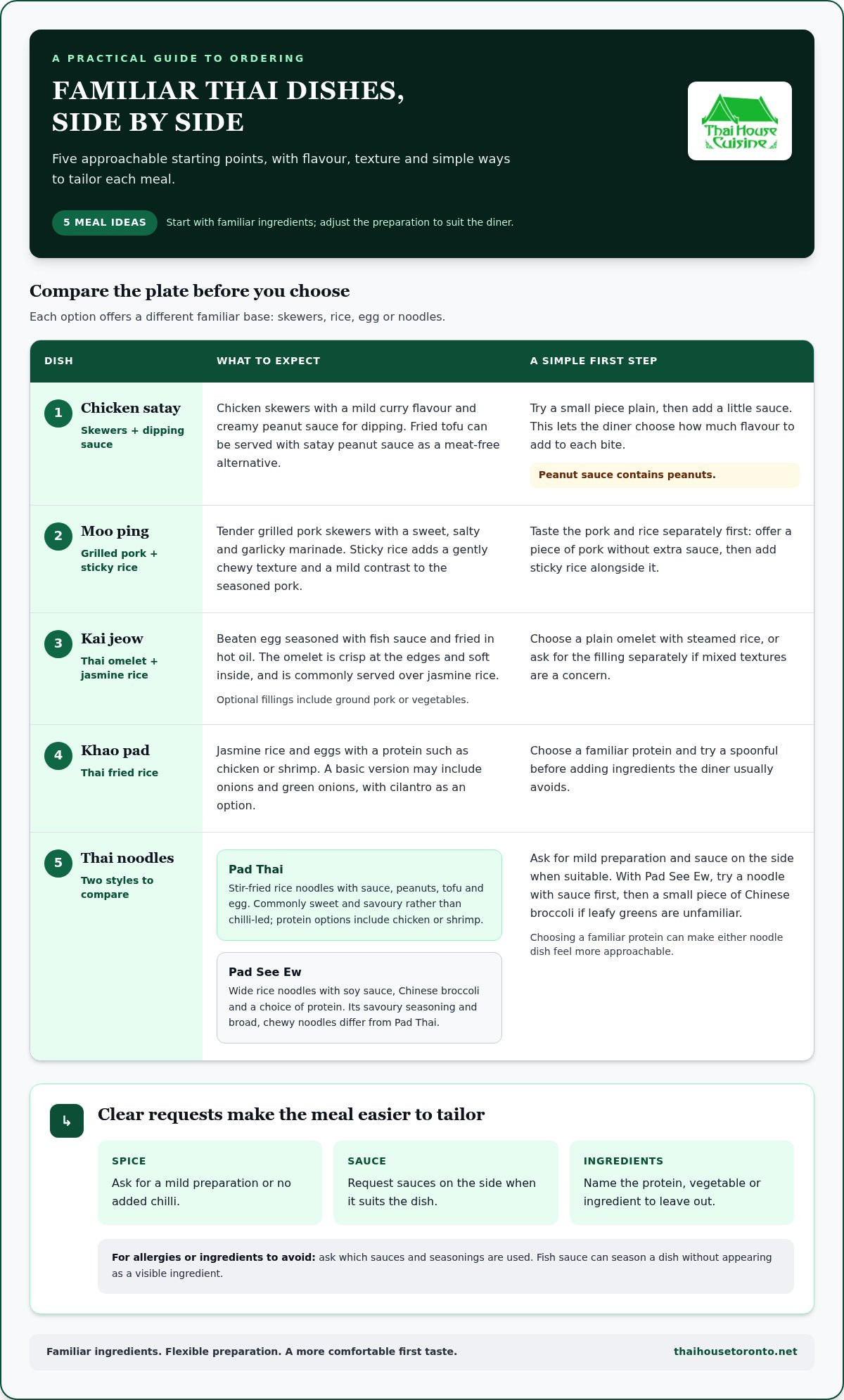
Chicken satay is an approachable appetizer because it arrives on skewers, with peanut sauce served for dipping. Its mild curry flavour and creamy sauce offer a familiar starting point for diners who prefer to choose each bite. For a meat-free alternative, fried tofu can also be served with satay peanut sauce instead of a spicy dip.
Keep the first taste simple: try a small piece of chicken plain, then add a little sauce. This lets a picky eater decide how much flavour feels comfortable without committing to a heavily sauced portion. The skewers are easy to share, making satay a useful starter before choosing a main dish.
For a familiar plate built around chicken and rice, consider khao man gai. It features poached chicken with rice cooked in garlic, ginger and chicken broth; a small bowl of soup may accompany it. Ask for the spicy sauce on the side or left off, so chicken and rice stay at the centre of the meal.
Grilled Thai chicken is another straightforward option, often served with sticky rice. Thai fried chicken has a crisp coating made with rice flour and a Thai tempura flour mixture, and its base recipe includes salt. Red curry paste can add extra flavour to the batter, so ask for a simple preparation if strong seasoning is a concern.
For a cooked-to-order combination, gai pad med mamuang brings chicken, vegetables, cashews and savoury sauce together in a stir-fry. It can be served with or without spice. Cashews add crunch, while the vegetables and sauce make the dish more varied than plain chicken and rice. Ask about the cashews before ordering if nuts are a concern.
Thai sweet and sour chicken offers another flavour profile, pairing chicken with fresh, contrasting tastes. It may suit someone who likes a familiar sweet-and-sour flavour but wants to try a Thai preparation. Compared with satay, it gets its flavour from the cooked dish rather than a creamy peanut dipping sauce.
Some ingredients aren’t obvious from a dish’s name. Peanut sauce contains peanuts, and fish sauce can season a dish without appearing as a visible ingredient. Ask which sauces and seasonings are used, and clearly mention any allergy or ingredient that must be avoided. For spice-sensitive diners, request a mild preparation or no added chilli. For texture-sensitive diners, ask for sauce on the side when suitable.
2. Grilled pork skewers and sticky rice
Moo ping, or grilled pork skewers, pairs tender pork with a sweet, salty and garlicky marinade. Its familiar grilled-meat flavour can make it a comfortable main dish for a picky eater who enjoys barbecue-style food. Diners can try a small piece first, then decide whether they want more. Sticky rice adds a gently chewy texture and a mild contrast to the seasoned pork.
Try the components separately before combining them. Offer a piece of pork without extra sauce, then add sticky rice alongside it. This helps a diner work out whether the marinade, meat texture or rice is the deciding factor. If pork isn’t a favourite, grilled pork neck or pork satay are other possible dishes, with different cuts and seasonings.
For a noodle alternative, Pad See Ew combines wide rice noodles with soy sauce, Chinese broccoli and a choice of protein. Its savoury seasoning differs from the sweet, salty, garlicky pork marinade, while the broad noodles have a distinct chew. A diner who likes noodles but avoids leafy greens can first taste a noodle with sauce, then try a small piece of Chinese broccoli. Choosing a familiar protein can also make the plate feel more approachable.
Thai fried rice offers another cooked, rice-based option. Khao pad is made with jasmine rice and eggs, plus a protein such as chicken or shrimp. A basic version may include onions and green onions, with cilantro as an option. For a cautious first taste, choose a familiar protein and try a spoonful before adding ingredients the diner usually avoids. Fried rice also has a different texture from sticky rice, though both start with rice.
Save mango sticky rice for dessert. It pairs fresh mango slices with rice cooked in sweetened, condensed coconut milk. The fruit and sweet rice are distinct from a savoury meal and may appeal to a child who enjoys mango or sweetened rice. Offer a small taste of each component separately to find out whether the mango, coconut flavour or sticky texture is the favourite.
When ordering, name the ingredient or texture that matters most, such as “pork on the side” or “no cilantro.” Ask for mild preparation if chilli heat is a concern, and request sauces separately when suitable. For a look at familiar Thai rice and noodle dishes, explore these Thai meal options.
3. Thai omelet with optional meat or vegetables
Kai jeow, the Thai omelet, has a simple base: beaten egg seasoned with fish sauce and fried in hot oil. It’s commonly served over jasmine rice, giving picky eaters two familiar components in a filling meal. The egg is crisp at the edges and soft inside, so try a small piece first if texture is a concern.
For a more substantial plate, kai jeow can include ground pork or vegetables. Ask for the filling separately if mixed textures are a sticking point, or choose plain omelet with steamed rice. The dish works for breakfast, lunch or dinner and can also be ordered as a side to share alongside other flavours.
That flexibility makes kai jeow a practical lunch or a substantial snack. Pairing it with rice creates a satisfying plate, while a smaller portion alongside another dish lets a cautious diner try one new taste at a time. If pork isn’t preferred, say which meat the diner does eat when asking about protein options.
Pad Thai is another familiar choice for a noodle-based meal. It combines stir-fried rice noodles with sauce, peanuts, tofu and egg, and can be ordered with protein options such as chicken or shrimp. Its flavours are commonly sweet and savoury rather than chilli-led, but diners can ask for mild preparation and sauce on the side when suitable.
For a vegetarian preference, tofu and vegetables can be a meat-free starting point, but ingredients matter: kai jeow is seasoned with fish sauce, and Pad Thai sauce may include fish sauce. Ask specifically whether fish sauce can be omitted. Pad Thai contains peanuts, so it isn’t suitable for someone avoiding them; clearly state an allergy before ordering.
For allergies, name the ingredient and explain that it must be avoided rather than relying on a general request for a “plain” dish. Ask which components contain it and whether the dish can be prepared without it. For a picky eater without an allergy, make one clear request, such as “egg and rice, no vegetables.” If that combination works, try another ingredient on a future visit.
Choose kai jeow when egg and rice feel familiar; pick Pad Thai when noodles are more appealing. Both offer a clear starting point, with protein and ingredient choices shaping the meal.
Make the order clear by naming both the dish and how you’d like it served: ask for kai jeow with steamed rice, or as a side alongside other Thai food. It’s made with beaten egg seasoned with fish sauce and fried in hot oil, so mention the fish sauce explicitly when asking about ingredients. These details help clarify whether the omelet should anchor the meal or accompany other dishes.
4. Mild Thai fried rice with customizable protein
Khao pad, or Thai fried rice, starts with jasmine rice and egg, making it familiar for a cautious diner. Because the ingredients are stir-fried together, each spoonful combines the grains with the other ingredients. Ask for no added chilli to keep the heat gentle. If the diner prefers distinct textures, serve a small portion first and let them decide whether to mix it together.
Protein choices can shape the dish without changing its rice-and-egg foundation. Chicken is a straightforward choice for someone who already enjoys it, while shrimp offers a seafood option. Thai fried rice can also vary with crab or Thai basil, bringing a different flavour to the plate. Start with one familiar addition; introducing several new ingredients at once can make it harder to tell which flavours or textures the diner likes.
A basic version can include onions and green onions, with cilantro as an optional addition. For a selective eater, name the preferred ingredients and any garnish to leave out. Green onions and cilantro have distinct aromas, so asking for them separately lets diners control each bite. Naming ingredients is clearer than requesting generally “plain” fried rice.
Try a small tasting sequence: start with rice and egg, add a bite with chicken or shrimp, then sample any onion or herb. This separates the familiar base from less familiar additions. A diner who likes the first combination can try more ingredients; someone who prefers the base can keep their portion simple. The goal is to find a combination that works, not to finish every component.
For a mild order, say “no added chilli” and specify the protein. If the diner dislikes egg or onion, mention that clearly too. Asking the kitchen to reduce or omit Thai chillies is a practical way to request less heat. Fried rice is served as a combined dish, so name the ingredients that matter most rather than expecting unwanted pieces to be easy to remove.
Keep allergies distinct from preferences. Shrimp and crab are seafood, while egg is a central ingredient in khao pad; identify anything that must be avoided. “No cilantro” is a preference, not an allergy, and saying which applies helps make the request clear. For a vegetarian variation, ask for a meat-free preparation and clarify whether egg is acceptable. Removing meat alone doesn’t make a dish suitable for every vegetarian.
5. Non-spicy Thai restaurant meals
A mild Thai meal doesn’t have to mean choosing plain rice alone. Start with a dish whose main ingredients already suit the diner, then ask for little or no added chilli. Pad Thai, Pad See Ew, kai jeow and khao man gai offer familiar starting points, with noodles, egg, chicken or rice to guide the choice. When choosing the best Thai food for picky eaters, begin with ingredients the diner already enjoys.
Green curry is almost always hot in Thailand, while tom yum and pad kra pao can vary with preparation and chilli. If heat is unwelcome, request a mild version or no added chilli instead of assuming a dish name tells you how spicy it will be. The best Thai food for picky eaters often starts with familiar ingredients and a clear request about heat.
For noodle fans, Pad Thai combines rice noodles with peanuts, tofu and egg; Pad See Ew uses wide noodles, soy sauce and Chinese broccoli. Choose based on whether the diner prefers Pad Thai’s sweeter sauce or Pad See Ew’s savoury soy seasoning. Naming a preferred protein, such as chicken or tofu, makes the request more specific.
Yellow curry is generally milder than other curry choices on Thai menus. Green and red curries can bring more heat, so they may be less suitable as a first choice for someone avoiding spice. A diner curious about curry can start with yellow curry and rice, keeping the curry sauce separate to control each bite.
Say “mild, please” or “no added chilli” when ordering. Thai tables may include nam pla with chopped chillies, which diners can add to their own food after serving themselves. Leave that condiment untouched for a no-heat meal. If a restaurant uses a spice scale, ask for its lowest level rather than assuming the same setting means the same heat everywhere.
Choose the meal based on the ingredient or texture the diner likes most. Egg and rice point towards kai jeow; chicken and rice suggest khao man gai, with its spicy sauce omitted or used sparingly. A child who enjoys noodles may prefer Pad See Ew’s wide strands. These choices keep the request concrete without requiring a diner to know Thai menu terms.
For allergies, name the specific ingredient that must be avoided rather than describing the dish as simply “mild.” Peanuts feature in Pad Thai, and fish sauce seasons some Thai dishes. Spice preference and ingredient safety are separate requests, so explain both clearly when they apply.
Thai House Cuisine: Dine-in Thai Meals
Thai House serves authentic Thai comfort food for dine-in in Toronto’s Beaches neighbourhood. If you’re choosing for someone who prefers familiar ingredients, use the dishes discussed above as a starting point and make clear requests about spice, sauces or ingredients to avoid. A mild noodle dish, chicken and rice, or an omelet can help guide the meal.
For a meal at home, Thai House Cuisine also offers takeout and delivery orders, plus lunch specials. Thai food catering is another option for gatherings where guests may have different tastes and spice preferences.
Visit thaihousetoronto.net to explore Thai House Cuisine.
Make the next meal a comfortable first step
A good first experience doesn’t need to change anyone’s tastes overnight. Let the picky eater choose something familiar, then agree on one small way to explore a new flavour. That might mean trying a different texture or having one new ingredient on the side. Giving them a say can make a restaurant meal feel more manageable and enjoyable.
The best Thai food for picky eaters is the meal that suits the person at your table. Share clear preferences when ordering, including spice tolerance, ingredients to leave out and whether sauces should be separate. For allergies, name the specific ingredient and explain that it must be avoided. Those details make the choice intentional rather than a guessing game.
Let curiosity grow at its own pace. A small, comfortable first taste can open the door to new favourites another time.
Here’s to a welcoming meal and a new favourite, discovered one bite at a time.
Frequently Asked Questions
Which Thai dishes are mild and suitable for picky eaters?
Pad See Ew, Thai omelet, chicken and rice, and basic fried rice are approachable starting points. Narrow the choice by considering the eater’s preferred texture: wide noodles, soft egg, or separate pieces of chicken and rice. For a shared meal, order a familiar main and let the diner sample a small amount of another dish. This keeps the first taste low-pressure and lets them choose what to try next.
What Thai dishes can be ordered without chili or spice?
Ask for a dish to be prepared without added Thai chillies, and request sauces or chilli condiments separately when appropriate. Pad Thai, Pad See Ew and Thai omelet are options to discuss for a no-heat meal. Curries can vary in heat, so ask about the spice level before choosing one if you’re avoiding spice. If a menu marks spicy dishes, choose an unmarked option and still state the no-chilli request.
Can pad thai be customized for picky eaters, and what ingredients can be omitted?
Yes. Ask for a preferred protein, such as chicken, shrimp or tofu, and name ingredients the diner wants left out. Pad Thai commonly includes rice noodles, peanuts, tofu and egg; its sauce and garnishes also shape the flavour. For example, request no peanuts as a preference, or clearly explain if they must be avoided because of an allergy. Ask for sauce separately if the diner wants to control each bite.
What Thai dishes are best for children or first-time diners?
For a child or first-time diner, choose a dish built around an ingredient they already enjoy, then invite them to sample one unfamiliar flavour alongside it. A small taste of mango sticky rice can introduce coconut flavour, while grilled chicken or an omelet offers a savoury starting point. Let the diner decide whether to combine the components; familiar food beside a new taste can make trying something different feel manageable.


