

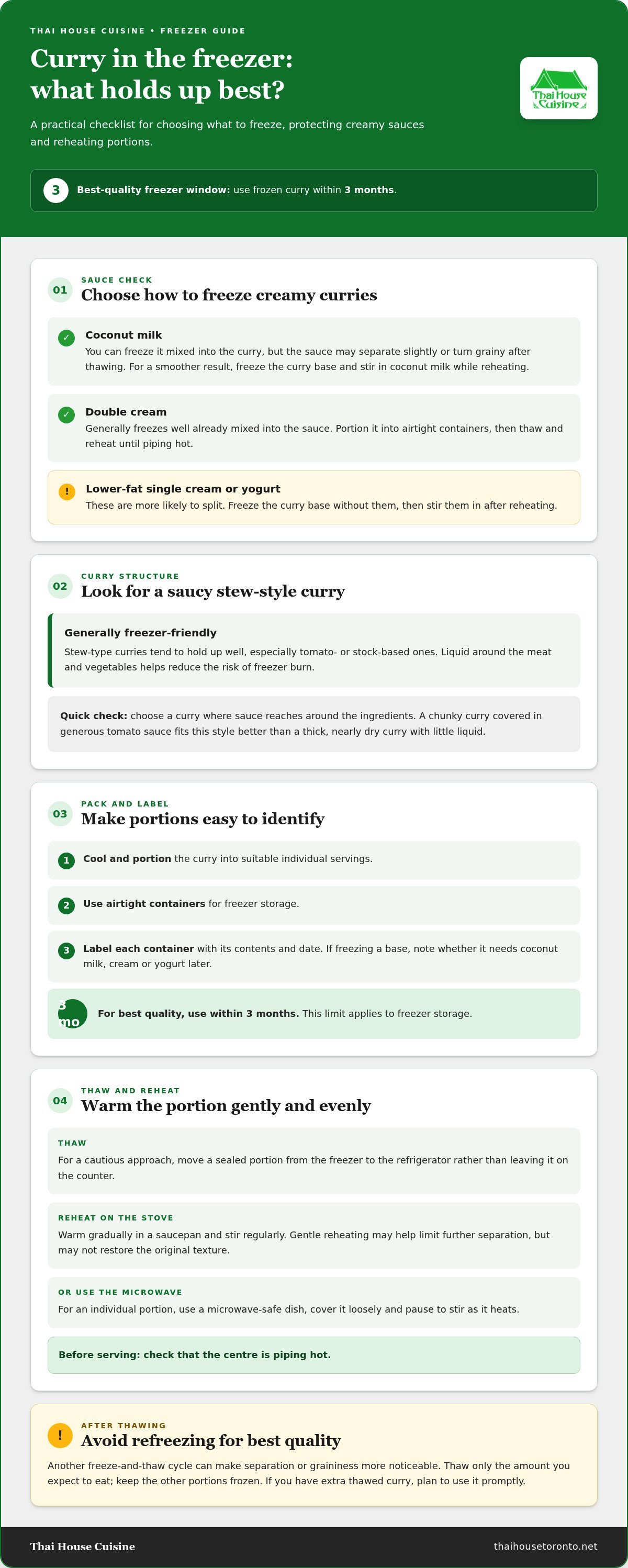
Yes, you can freeze coconut curry, but its texture after thawing depends on the ingredients. Coconut milk curry may separate slightly or turn grainy, while curries made with double cream and most stew-type curries generally freeze well. For best quality, don’t keep curry frozen for more than 3 months.
It’s understandable to want to save a favourite coconut curry without losing its creamy sauce or tender ingredients. With careful portioning, airtight packaging and gentle reheating, you can freeze it while setting realistic expectations for the texture.
This guide explains what freezing does to coconut milk, cream and yogurt sauces, which stew-style curries generally hold up best, and how to portion, label and package curry for the freezer. You’ll also learn how to thaw and reheat it until piping hot.
Key Takeaways
- Coconut milk curry can be frozen, though the sauce may separate or become grainy after thawing.
- Double-cream curries tend to freeze well, while yogurt and lower-fat single cream may split; add these after reheating for a smoother finish.
- Stew-type curries, especially tomato- or stock-based ones, generally hold up well in the freezer.
- Freeze curry in airtight containers in suitable portions, and label each one with its contents and date.
- Use frozen curry within 3 months, and reheat thawed curry until piping hot.
Freezing coconut milk curry
Yes, you can freeze coconut curry, though coconut milk sauce may separate slightly or become grainy after thawing. Freeze it in individual portions, then reheat it until piping hot before serving.
Adding Coconut Milk Before Freezing
Freezing curry with coconut milk already mixed in is practical, but the sauce may change texture. After thawing, it can look slightly split or feel grainy, even when the curry is otherwise ready to serve.
For a smoother result, you can freeze the curry base before stirring in coconut milk, then add the milk while reheating. This means you’ll need coconut milk on hand when serving. If the milk is already in the curry, freeze it anyway if convenience matters more than a perfectly smooth sauce. Keep frozen curry for no more than 3 months.
Safe Thawing
Thawing lets frozen curry soften before reheating so the centre can warm evenly. For a cautious approach, move a sealed portion from the freezer to the refrigerator to thaw, rather than leaving it on the counter.
The fridge life of coconut curry depends on how it was cooled and stored, as well as its ingredients. Use refrigerated leftovers promptly; the 3-month limit applies to freezer storage, not to the fridge. Once thawed, reheat the curry until piping hot, including the middle of the portion.
Reheating Without Splitting
Gentle reheating may help limit further separation, but it can’t guarantee the sauce will return to its original texture. Warm thawed curry gradually in a saucepan, stirring regularly so the sauce and ingredients heat evenly.
A microwave also works for an individual portion. Use a microwave-safe dish, cover it loosely and pause to stir as it heats. Check that the centre is piping hot before serving. If the sauce looks grainy or separated, stir it thoroughly; some texture change may remain.
Refreezing After Thawing
For best quality, avoid refreezing thawed coconut curry. Another freeze-and-thaw cycle can further affect the sauce, making separation or graininess more noticeable.
Thaw only the portion you expect to eat, then reheat that amount until piping hot. Keep the remaining frozen portions in the freezer, and label containers with their contents and date. If you have more thawed curry than you need, plan to use it promptly rather than refreezing it.
Coconut milk curry generally freezes without major problems, but the sauce may split slightly or feel grainy after thawing. Consider this when deciding whether to freeze the finished curry or add the coconut milk later. A change in appearance or texture does not necessarily mean the curry is unsuitable to serve. Stirring can help bring the sauce together, though it may not restore its original texture. Freezing the complete dish is convenient; holding back the coconut milk lets you add it during reheating. Neither approach guarantees a perfectly smooth sauce after thawing.
Freezing curries made with cream or yogurt
Cream and yogurt behave differently in the freezer. Curry made with double cream generally freezes well, while lower-fat single cream and yogurt are more likely to split after thawing or reheating. Check the recipe’s ingredients rather than relying on the curry’s name when deciding how to freeze it.
Double Cream Curry
You can freeze a double cream curry with the cream already mixed into the sauce. Its richer base generally holds up better through freezing and thawing than lower-fat single cream or yogurt.
For example, portion a curry made with double cream into airtight containers and freeze it. After thawing, reheat it until piping hot, stirring so the ingredients warm evenly. The texture may differ from freshly made curry, but double cream is generally the more freezer-friendly choice. Label the container clearly, especially if you also store curries made with yogurt or single cream.
Single Cream and Yogurt
Freezing a finished curry made with lower-fat single cream or yogurt is not recommended. Either ingredient may split during thawing or reheating, leaving the sauce uneven rather than smooth.
A yogurt-based curry illustrates the issue: its spices and other ingredients may freeze well, but the yogurt can separate later. The same concern applies to curry finished with lower-fat single cream. To help preserve the sauce’s texture, leave these ingredients out before freezing instead of relying on stirring to reverse separation. Add them after reheating.
Freeze the Base, Add Cream or Yogurt Later
If a curry recipe calls for yogurt or lower-fat single cream, freeze the curry without it. This keeps the more delicate dairy out of the freezer and lets you finish the sauce closer to serving time.
Prepare the curry base as usual, stopping before the recipe’s cream or yogurt step. Cool and portion the base for freezing, keeping track of which ingredient the recipe needs. Once thawed, reheat the curry until piping hot, then stir in the cream or yogurt. Add it after reheating, rather than freezing it in the finished sauce. This approach also works when preparing separate portions from one batch: label each portion with its planned finishing ingredient.
Let the recipe guide your choice. Double cream can go into the curry before freezing; with lower-fat single cream or yogurt, freeze the base and add the ingredient after reheating. This simple adjustment gives you a clear storage plan for different creamy curries.
Freezing stew-type curries
Stew-style curries generally freeze well because their liquid surrounds the meat and vegetables, helping reduce the risk of freezer burn. Tomato-based and stock-based curries are particularly suitable. A chunky curry with ingredients covered in generous tomato sauce fits this style better than a thick, nearly dry curry with little liquid.
Before freezing a batch, assess the sauce and ingredients together. In a stew-style curry, liquid should reach around the meat and vegetables rather than leave large areas exposed. Vegetable curry with tomato sauce throughout has this saucy structure; a drier curry may offer less protection.
The liquid does more than make a curry easy to serve. As the curry freezes, sauce around the solid ingredients helps shield their surfaces from freezer burn. That makes tomato-based and stock-based stew curries strong candidates. Consider both the sauce type and how thoroughly it covers the ingredients.
Compare a chicken curry simmered in stock with a thicker curry containing little sauce. The stock-based dish has liquid around its pieces, which is typical of stew-style curries that generally freeze well. A curry with exposed chunks has less coverage. If the finished dish is thick, check whether there is still enough sauce to surround the meat or vegetables.
The vegetables can also help you judge the curry’s structure. In a stew-style curry, distinct ingredients sit in sauce rather than wearing only a mostly dry coating. Vegetables distributed through a tomato-based curry, for example, are surrounded by liquid. That’s a useful clue when deciding whether the dish resembles a freezer-friendly stew.
Don’t judge by the word “curry” alone. Compare the finished sauce: tomato-based and stock-based curries are particularly suitable for freezing, and stew-style dishes generally benefit from liquid covering their ingredients. A saucy stew is a better fit for this category than a dry curry.
After thawing, the curry’s texture will depend on its ingredients and sauce. Stew-style curries generally handle freezing well because they have plenty of liquid, with tomato and stock bases especially promising. Use this distinction to decide whether to freeze the dish as prepared or choose another storage approach.
Labelling and freezer storage time
Label every curry container with its contents and the date you freeze it. Curries should not be kept frozen for more than 3 months. A clear date helps you use older portions first, while the contents label distinguishes recipes that may look similar once frozen. For example, mark whether a portion contains coconut milk, tomato sauce, or yogurt added after reheating.
Write the label before placing the container in the freezer. Include the curry name and freezing date on the lid or a label that stays attached. “Vegetable curry, frozen October 30” is more useful than “leftovers,” especially if you’ve frozen more than one batch. Use the actual date, so the 3-month storage limit is easy to track.
Keep the 3-month limit in view when organizing stored meals. Arrange older dated portions where they’re easiest to reach, and place newly frozen containers behind them. This simple rotation makes it less likely that an earlier batch will be forgotten. The date also gives you a quick way to decide which portion to thaw first.
Label recipe details that matter when it’s time to serve, not just the dish name. “Chicken coconut curry, add yogurt after reheating” identifies both the contents and the next step. For a tomato-based vegetable curry, name the main ingredients. Specific notes help you distinguish containers when frozen sauces and ingredients look similar.
When freezing several portions from one batch, mark each container with the curry name and date. Add a short note if a portion differs, such as “no cream” or “extra vegetables.” This keeps your freezer record clear without relying on memory. Check the label before thawing, especially if an ingredient needs to be added later.
- Contents: Name the curry and its distinguishing ingredients.
- Date: Record the date each portion goes into the freezer.
- Use-by plan: Use the dated portion within 3 months of freezing.
A label supports both organization and meal planning. If you’re choosing between two portions, the dates show which one went into storage first. If you’re selecting a recipe, the contents note helps you find the right sauce or ingredients. Keep the wording brief but specific, then follow the 3-month maximum for frozen curry.
Portioning and packaging curry for the freezer
Freeze curry in airtight containers sized for practical portions, and label each with its contents and date. Choose a quantity that suits one meal instead of freezing the whole pot together. Separating a large batch into meal-sized portions means you can thaw only what you plan to eat.
Decide on portion sizes before filling the containers. A single serving works for a quick lunch, while a larger portion may suit a shared meal. Divide a mixed batch according to how you expect to serve it. Separate portions make it easier to take out the right amount without thawing the whole batch.
Use an airtight container for each portion. A secure seal keeps the curry contained and limits its exposure in the freezer. Check that the lid fits firmly, then close it fully after adding the curry. For coconut milk curry, keep the sauce and solid ingredients together in each portion so they’re ready to reheat as one serving.
Make each label specific enough to distinguish similar meals. Write the curry’s contents and date on the container, not just “curry.” For example, “chickpea coconut curry” identifies the recipe more clearly. Note any ingredient that will be added later. Clear labels help you select the right container without opening several portions.
- Portion: Divide the batch by the amount you plan to serve at one meal.
- Package: Put each portion in an airtight container.
Keep each label visible after packing. Write on the lid or attach a label to the side of the container, where other items won’t hide it. Add the details before stacking containers. A visible name and date make frozen curry easier to identify.
Choose portions to match your meal plan. If you usually serve curry with rice, portion it to suit the meal you plan to serve. Keep the curry in its own airtight container and label it clearly. Then you can take out one portion without disturbing the rest of the batch.
Before storing a new batch, compare its labels with the portions already in the freezer. Make sure each container lists its contents and date, especially when recipes look alike. Place the portions so their labels remain easy to read. Consistent portioning, sealing and labelling keep frozen curry organized and easy to choose.
Thai House Cuisine: Dine-in Thai Meals
Thai House Cuisine offers Dine-in Thai Meals when you’d rather enjoy a prepared meal than plan another freezer portion. If you’re deciding whether to save leftovers or sit down to a fresh meal, dine-in gives you a welcoming way to enjoy Thai food without handling storage and reheating at home. Takeout and Delivery Orders offer another option when you’d prefer to eat at home.
For a shared occasion, Thai Food Catering can make Thai dishes part of your gathering, while Lunch Specials suit a midday meal. Choose the option that fits how you want to enjoy your meal, whether that means dining in, eating at home, or planning food for an event.
Visit Thai House Cuisine online to learn more.
Make Your Next Meal a Little Easier
Knowing whether you can freeze coconut curry helps you plan meals around your ingredients and schedule. Portion and label a batch according to how you’ll serve it, and choose freshly prepared Thai food when you’d prefer not to store and reheat a meal. Thai House Cuisine offers dine-in, takeout, delivery and catering for Toronto, including the Beaches, Danforth, Leslieville, nearby Scarborough and the East End. Choose an option that suits your next meal or gathering.
Enjoy authentic Thai comfort food prepared by Thai chefs, whether you’re planning ahead or choosing what sounds good today.
Here’s to more satisfying meals, prepared in the way that works for you.
Frequently Asked Questions
Can you freeze coconut curry?
Yes, coconut curry can be frozen, though the sauce may look different after thawing. If the curry is for a special meal, freeze a small portion first to see how its texture changes before storing more. Curries with coconut milk can still be enjoyed after slight separation; stir the sauce as you reheat it until piping hot.
How long does coconut curry last in the freezer?
Keep coconut curry frozen for no more than 3 months. For example, if you freeze portions from separate batches, use the date on each container to choose the older one first. A brief freezer inventory can help you spot portions before they reach that limit. The date records when storage began, while the curry name helps distinguish similar sauces and recipes.
Does coconut milk separate or change texture when frozen in curry?
Yes, coconut milk curry may separate slightly or feel grainy after thawing. The change can be noticeable in a smooth sauce, even if the curry is still suitable to reheat. A curry that looked uniform before freezing may show separation in the container. Stirring during reheating can redistribute the sauce, but the original texture may not fully return.
How should you cool and package coconut curry for freezing?
Once the curry has cooled, divide it into portions that suit the way you plan to serve it. Place each portion in an airtight container and label it with the contents and date. Write “vegetable coconut curry,” for example, rather than just “curry.” If an ingredient needs to be added after reheating, note that on the label.
Can you freeze coconut curry with vegetables, tofu, or meat?
Yes, you can freeze curry with vegetables, tofu or meat, particularly when it has a stew-style sauce. Tomato-based and stock-based curries generally freeze especially well, and sauce around the ingredients helps reduce the risk of freezer burn. A saucy vegetable curry is a better fit than a dry curry with exposed pieces. Assess the sauce and ingredients together before freezing.


