

Gentle heat and a little added moisture are the key to reviving leftover Pad Thai without drying the noodles out. If you’re deciding what to do with leftover Pad Thai, seal it in an airtight container and refrigerate it within 2 hours; add a splash of water or sauce when reheating. Don’t leave it at room temperature for more than 2 hours.
Rice noodles can turn sticky or tough when reheated, so yesterday’s Pad Thai may seem less appealing. With a few simple adjustments, you can keep the noodles moist and separate. This guide explains how to reheat Pad Thai in a pan or microwave, how to store leftovers safely, and what to consider before freezing them.
Key Takeaways
- Loosen thickened sauce with a little water so it coats the noodles instead of leaving them clumped together.
- For microwave reheating, warm a small portion briefly, stir, and check it before heating further.
- Use gentle heat and avoid vigorous stirring to help keep delicate rice noodles from breaking.
- A wok or frying pan gives you control: add a splash of moisture and toss the noodles until warmed through.
- Choose your storage container and cooling method with care, and keep in mind that bean sprouts can lose their crispness in the fridge.
What to do with leftover Pad Thai noodles?
- Separate the noodles and check the sauce. Lift a small portion with a fork or chopsticks to see whether the noodles are stuck together or just coated in thickened sauce. Cold Pad Thai can look dry because the sauce firms as it chills. If the noodles still bend, loosen them gently instead of pulling hard and breaking them. Keep any leftover sauce nearby so you can add moisture gradually as the noodles warm.
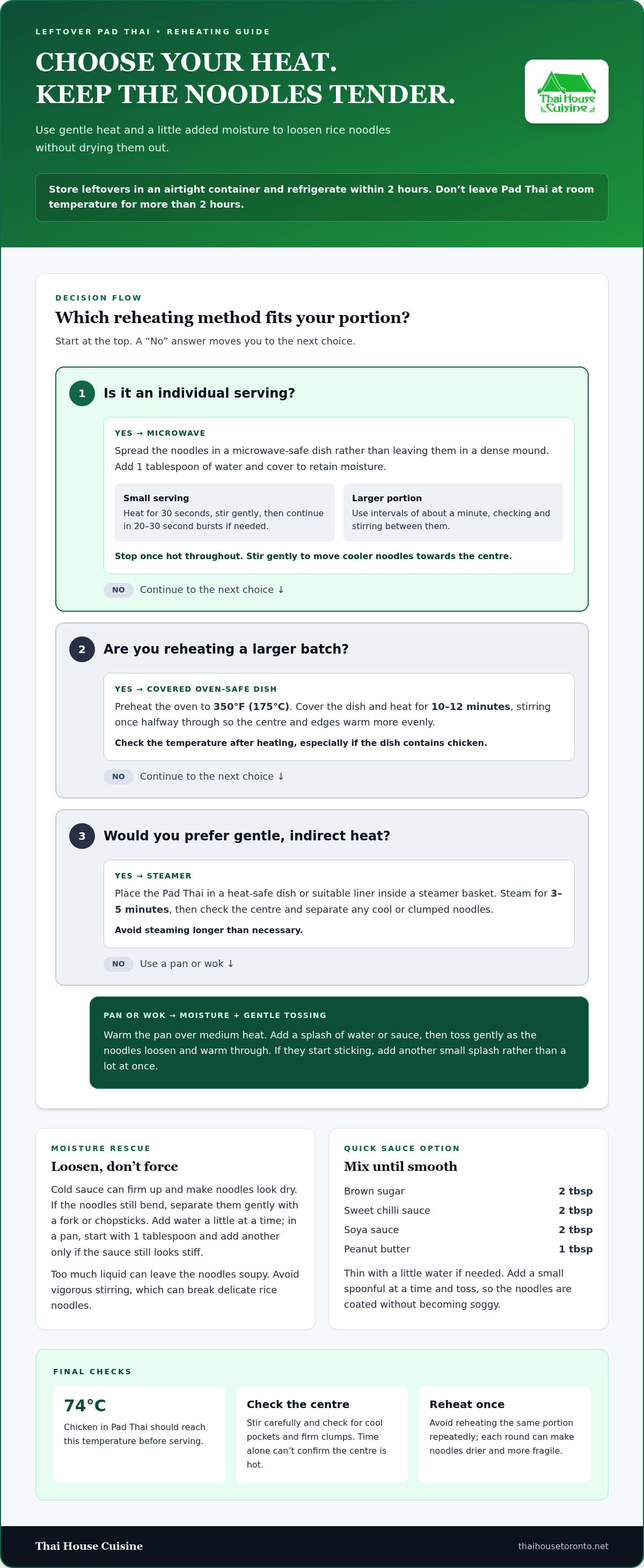
- Add water a little at a time. Place the Pad Thai in a pan and add 1 tablespoon of water, then toss gently to help the thickened sauce spread. If the noodles remain clumped or the sauce still looks stiff, add another tablespoon. The added water loosens the coating without introducing a new flavour. You can use leftover Pad Thai sauce instead, if you have some. Add it in small amounts, since too much liquid can leave the noodles soupy.
- Mix a simple sauce for extra moisture. Whisk together 2 tablespoons of brown sugar, 2 tablespoons of sweet chilli sauce, 2 tablespoons of soya sauce, and 1 tablespoon of peanut butter. This makes a quick, sweet-savoury option for refreshing a leftover portion. Add a small spoonful at a time and toss, tasting as you go. Pad Thai sauces vary; another version combines fish sauce with honey or brown sugar and a little Sriracha.
- Prepare the sauce until smooth. Stir the four ingredients in a small bowl until the peanut butter blends with the soya and sweet chilli sauces. If the mixture is too thick to pour, loosen it with a little water. Keep the sauce separate until you reheat the noodles, then add just enough to coat them. This helps balance the flavours and lets you adjust the texture without soaking the dish.
- Store extra sauce sealed in the fridge. A sealed jar of homemade Pad Thai sauce can keep in the fridge for 2-3 weeks; the same period applies to a sealed jar of complete Pad Thai sauce mix. Label the jar with its contents and date so you can identify it later. Keep it closed between uses, and stir the sauce before adding it to noodles, since ingredients can settle during storage.
What Makes Pad Thai Tricky to Reheat?
For Pad Thai with chicken, reheat it until the chicken reaches 74°C. Rice noodles can heat unevenly, so stir and check the warmest and coolest parts rather than relying on time alone.
- Choose a method that suits the portion. A microwave works well for an individual serving, while a covered oven-safe dish suits a larger batch. A steamer basket is another gentle option. Cooked rice noodles can soften or break under high heat or vigorous stirring, so use moderate heat and check their texture as they warm.
- Microwave a small serving in short bursts. Transfer the noodles to a microwave-safe dish and spread them out instead of leaving them in a dense mound. Heat for 30 seconds, then stir gently to move cooler noodles towards the centre. Continue for another 20-30 seconds if needed. For a larger portion, use intervals of about a minute, checking and stirring between them. Stop once it’s hot throughout.
- Use a steamer for gentle, even warmth. Place the Pad Thai in a heat-safe dish or suitable liner inside a steamer basket. Steam for 3-5 minutes, then check the centre and separate any noodles that remain cool or clumped. Steam can help warm the noodles without direct contact with a hot pan, but avoid leaving the dish in longer than necessary. Check any chicken for 74°C before serving.
- Warm larger portions in the oven. Preheat the oven to 350°F (175°C), put the Pad Thai in an oven-safe dish, and cover it. Heat for 10-12 minutes, stirring once halfway through so the centre and edges warm more evenly. Check the temperature after heating, especially if the dish contains chicken. If the middle is still cool, return it to the oven and check again before serving.
- Check heat and texture before eating. A kitchen timer helps you track microwave bursts, steaming minutes, or oven time, but the clock alone can’t show whether the centre is hot. Stir carefully, then check for cool pockets and firm clumps. With chicken Pad Thai, verify that the chicken reaches 74°C. Avoid reheating the same portion repeatedly, since each round of heating can make the noodles drier and more fragile.
Preventing noodles from drying out or clumping
- Loosen the noodles before adding heat. Gently separate a small portion with chopsticks or a fork, working from the outside towards the centre. If a tight clump resists, don’t pull hard, as the rice noodles can tear. Add a tablespoon of water before microwaving, then cover the dish to retain moisture. Toss lightly after warming so the water and sauce coat the noodles instead of pooling underneath.
- Use extra sauce sparingly. A little leftover Pad Thai sauce can revive noodles that look dry, but add it gradually. Start with a spoonful, toss, and see if the strands separate. Too much sauce can make the noodles heavy and mask the balance of sweet, savoury, and tangy flavours. If your serving has peanuts, add them after warming to help keep their crunch.
- Turn a leftover portion into a salad. Let the noodles cool, then gently separate them before tossing with crisp vegetables such as shredded carrot or sliced bell pepper. Add a little dressing and mix just before serving, as dressing added too early can make the noodles soggy. Finish with peanuts for crunch. Keep any cooked meat or seafood chilled until assembly, and don’t leave the finished salad sitting out.
- Refresh the noodles in a stir-fry. Warm a pan over medium heat, then add the noodles with a splash of water or sauce. Toss gently as they loosen instead of pressing down or stirring rapidly. Add quick-cooking vegetables, such as sliced bell pepper, near the end so they stay crisp. If the noodles start sticking, loosen them with another small splash rather than adding a lot at once.
- Prepare fresh flat rice noodles according to their package. Cooking methods and soaking needs can differ by noodle type, so follow the directions on the package rather than assuming every rice noodle cooks alike. One recipe uses 300 g of flat noodles soaked for 30 minutes. Drain the noodles thoroughly before cooking; excess water can dilute sauce and encourage sticking when the noodles meet the pan.
- Handle cooked noodles gently before combining them. If your preparation method calls for it, drain and rinse the cooked rice noodles, then set them aside before adding them to the pan. Keep them loose instead of piling them into a compact mass. Add the sauce while tossing so each strand gets coated. This helps limit clumping and makes it easier to combine the noodles with vegetables, eggs, or peanuts.
Reheating Pad Thai in a wok or frying pan
- Warm the pan before adding the noodles. Set a non-stick skillet or wok over medium heat and add 1 tablespoon of oil. Use a wide pan, especially for a larger portion, so noodles aren’t piled deeply. Let the oil coat the cooking surface, then add the Pad Thai. A thin, even layer warms more consistently and is easier to toss without crushing the noodles or breaking their texture.
- Add moisture and toss gently. Pour in 1-2 tablespoons of water, lime juice, or leftover sauce. Toss the noodles for about 2-4 minutes, just until warmed through. If the sauce has thickened, water loosens it; lime juice adds brightness, while extra sauce reinforces the existing flavour. Start with the smaller amount, then add a little more only if the noodles still look dry. Avoid vigorous stirring, which can break rice noodles.
- Use a wok for a quick, even reheat. Add the noodles to a lightly oiled wok over medium heat, then splash in 2-3 tablespoons of water. Keep them moving with a gentle lifting motion for 60-90 seconds. Separate clumps as they soften, rather than pressing them against the hot surface. Add delicate bean sprouts near the end, so they warm without becoming too soft. Serve once the portion is hot throughout.
- Choose the oven or air fryer for hands-off warming. For an oven, place Pad Thai in a covered oven-safe dish at 350°F (175°C) for 10-12 minutes, stirring once halfway through. For an air fryer, use 325°F (160°C) for 3-4 minutes and toss halfway. A covered oven dish suits a larger portion; the air fryer works better for a smaller amount spread in an even layer.
- Reheat only the portion you plan to eat. Pad Thai is best reheated once; repeated heating can dry the sauce and weaken the noodles’ texture. Divide a large container before warming, then promptly return untouched leftovers to the fridge. Chicken, noodles, and sprouts may warm at different rates, so toss the portion and check the centre before serving. Add fresh lime or peanuts after heating for a familiar Thai restaurant-style finish.
Storing leftover Pad Thai
- Put leftovers away promptly. Pad Thai shouldn’t sit at room temperature for more than 2 hours. Divide it into smaller portions soon after serving, especially if the container holds a large batch. Smaller amounts cool more evenly than a deep pile of noodles, chicken, sauce, and vegetables. Prompt refrigeration also makes it easier to keep the ingredients together and use the leftovers within their safe storage window.
- Use shallow containers for cooling. Transfer Pad Thai into clean, shallow containers, keeping the food no deeper than 5 cm. A deep container can hold warmth in the centre while the edges cool, so split a large batch across several containers. Keep the lids ready, but allow the food to cool before sealing and refrigerating. Once stored, keep the container covered to protect the noodles from drying out and absorbing other fridge odours.
- Choose the storage period by the ingredients. Pad Thai can be refrigerated in an airtight container for up to 3 days. Use a shorter window when the recipe contains ingredients with a shorter listed storage life: shrimp Pad Thai is 1-2 days, chicken Pad Thai is 2-3 days, and Pad Thai with bean sprouts mixed in is 1-2 days. Egg-only or vegetarian Pad Thai without meat or seafood can be kept for 3-4 days. Follow the shortest applicable period.
- Freeze portions you won’t eat soon. Pad Thai can be frozen for up to 2 months. Pack it in an airtight, freezer-safe container and divide a large batch into meal-sized portions before freezing. Smaller portions are easier to thaw and reheat evenly. For best texture, freeze the noodles and sauce together, but add fresh garnishes such as peanuts after heating rather than freezing them in the dish.
- Thaw frozen Pad Thai in the fridge. Let a frozen portion thaw overnight in the fridge before reheating. Thawing first helps the noodles and centre of the dish warm more evenly. Avoid leaving the container on the counter to thaw, since Pad Thai shouldn’t remain at room temperature for more than 2 hours. Once thawed, reheat only the portion you plan to serve.
- Label the container and check its contents. Write the storage date and ingredients on the lid, especially when several recipes or portions share the fridge. Note whether the dish contains chicken, shrimp, or bean sprouts, then use the earliest applicable storage limit. Bean sprouts can lose their crispness within 24-48 hours under refrigeration, so a portion may soften even while stored. Keep the storage date visible when organizing leftovers.
Thai House Cuisine: Dine-in Thai Meals
Thai House Cuisine is a natural choice when you’d rather enjoy a freshly prepared Thai meal than reheat leftovers. Choose dine-in for a relaxed meal, or order takeout or delivery when you want Thai comfort food at home in Toronto’s Beaches, Danforth, Leslieville, nearby Scarborough, or the East End. For a shared gathering, Thai catering brings Thai dishes to the table; lunch specials are another option for a midday meal.
Thai chefs draw on family recipes and fresh local ingredients to create flavour-rich dishes. Whether you’re planning a quiet meal, ordering food for home, or arranging catering, choose the option that suits your occasion.
Make Your Next Pad Thai Meal a Good One
Knowing what to do with leftover Pad Thai can make tomorrow’s meal feel less like an afterthought. Treat the noodles as a starting point and choose a finish that suits your appetite: a gentle reheat for a familiar bowl, or a fresh twist when you want something different. Planning ahead can help you serve only what you’ll enjoy and keep any extras easy to handle later.
If you’d rather leave the cooking to someone else, Thai House Cuisine offers a welcoming place to enjoy Thai food. Choose a meal that fits your plans, whether you’re gathering around the table or enjoying food at home.
Here’s to meals with warmth, flavour, and a little less waste. Enjoy your next Pad Thai, freshly served or thoughtfully revived.
Frequently Asked Questions
How long does leftover Pad Thai last in the fridge?
It depends on the ingredients: shrimp Pad Thai keeps for 1-2 days, chicken Pad Thai for 2-3 days, and egg-only or vegetarian Pad Thai without meat or seafood for 3-4 days. If bean sprouts are mixed in, use the shorter 1-2-day window. For a mixed dish, follow the shortest applicable storage period. Label the container with the date so you can make that call easily.
How should leftover Pad Thai be stored safely?
Refrigerate Pad Thai within 2 hours, using shallow containers no more than 5 cm deep so it cools more evenly. Seal the portions once cooled and keep them covered in the fridge. If you made a large batch, divide it instead of leaving it in one deep container. Store portions separately from fresh garnishes, such as peanuts or lime, to keep those additions fresh for serving.
Can you freeze leftover Pad Thai, and how long does it keep?
Yes, freeze Pad Thai in an airtight, freezer-safe container for up to 2 months. Divide a large batch into portions before freezing, so you only thaw what you plan to eat. Thaw a portion overnight in the fridge, then reheat it until hot throughout. Noodles and vegetables may soften after freezing, so add fresh garnishes after heating for a brighter finish and extra texture.
What is the safest way to reheat Pad Thai?
Reheat only the portion you’ll eat, and stir it so cooler areas warm evenly. A microwave, covered oven dish, steamer, or pan can work; check the centre rather than relying only on the timer. For Pad Thai containing chicken, ensure the chicken reaches 74°C. If the meal is frozen, thaw it in the fridge before heating, which helps the middle warm along with the edges.
Can leftover Pad Thai be reheated more than once?
It’s best to reheat Pad Thai only once. Repeated heating can make rice noodles increasingly soft or dry, and it becomes harder to preserve their texture. If you have a large container, take out a single serving before warming and return the untouched portion to the fridge. Avoid warming the whole batch if you expect to eat only part of it.
How can you tell if leftover Pad Thai has gone bad?
Discard Pad Thai if you notice mould, an unusual sour or rancid smell, or a slimy texture. Don’t taste it to decide whether it’s still suitable to eat. Also consider how it was stored: food left at room temperature beyond 2 hours should be discarded, even if it looks and smells normal. Use the storage window for its ingredients, particularly shrimp, chicken, or bean sprouts.
How to revive dry leftover Pad Thai when reheating?
Add moisture before heating: sprinkle 1 tablespoon of water over a microwave portion, then cover it. In a pan, add 1-2 tablespoons of water, lime juice, or leftover sauce, starting with the smaller amount. Toss gently as the noodles warm, then add another small splash only if they still seem dry. This gradual approach helps loosen sauce without leaving the noodles swimming in liquid.
What can you make with leftover Pad Thai besides reheating it?
Serve chilled noodles as a salad, tossed with crisp greens, shredded vegetables, lime juice, and peanuts. For a heartier option, use a small portion as a filling for lettuce cups, adding fresh herbs or sliced cucumber for crunch. Keep the noodles cold until you assemble the dish, and add dressing just before serving to prevent soggy rice noodles.


