

Keep hot catered food at about 140°F or above, and use a chafing dish or electric warmer to hold it through the party. When planning how to keep catered food warm for a party, start with food that’s already hot, then keep serving dishes covered between visits to the buffet. For buffet service, the Government of Canada recommends warming trays, chafing dishes or slow cookers.
It’s natural to worry that food will cool during transport or dry out while guests mingle. The right setup helps preserve warmth and flavour, whether you’re hosting indoors or outdoors. For a short wait, covered serving dishes can help; for a longer event, a chafing dish or food warmer provides steadier heat. Keep lids closed between servings, and use a food thermometer to check the temperature.
Here are practical ways to keep food warm, transport it in an insulated carrier and choose a method that suits your menu and setting. You’ll also learn how to manage outdoor serving and keep crispy dishes from losing their texture.
Key Takeaways
- Keep hot food at about 140°F or above, and start with food that’s already hot before placing it in a warmer.
- For buffet service, use covered dishes, chafing dishes or warming trays to help keep food hot between servings.
- Choose a warming method that suits the setting: outdoor buffets need protection from wind, while smaller dishes may fit a slow cooker or toaster oven.
- Preheat an insulated cooler with hot water for 15–20 minutes before using it to transport warm food.
- For longer gatherings, serve smaller batches and keep extra food warm for refills.
1. How to Keep Food Warm for Hours?
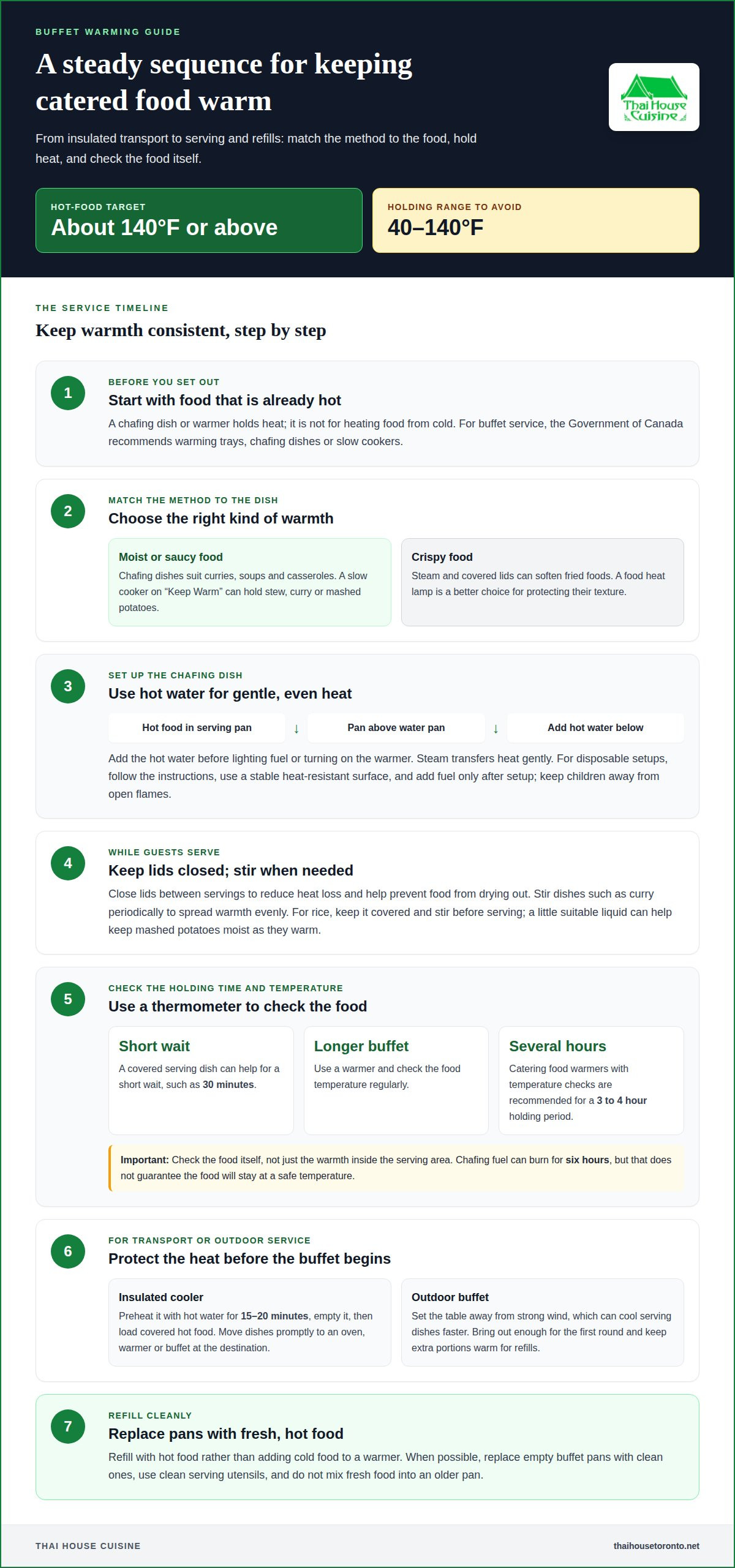
Planning how to keep catered food warm for a party starts with food that’s already hot. Keep hot dishes at about 140°F or above, and use a chafing dish or electric warmer for buffet service. The Government of Canada recommends warming trays, chafing dishes or slow cookers to keep hot buffet foods hot. A chafing dish holds food with gentle heat, rather than cooking it from cold.
For a buffet, place hot food in its serving pan, then set the pan above a water pan. Add hot water to the lower pan before lighting the fuel or turning on the warmer. Steam transfers heat gently, helping saucy mains, curries, soups and casseroles stay warm for serving. Keep the lid closed between servings to reduce heat loss. Stir dishes such as curry periodically to distribute warmth evenly.
Chafing dishes suit foods that are moist or served with sauce. Crispy fried foods can soften under a lid or steam, so a food heat lamp is a better option for protecting their texture. Use a covered serving dish for a short wait, such as 30 minutes, but choose a warmer and check temperatures for a longer buffet. Keep food out of the 40–140°F range while it sits. A thermometer helps you check the food itself, not just the warmth inside the serving area.
Disposable chafing setups can work for casual gatherings when a reusable buffet unit isn’t practical. Assemble the disposable serving and water pans according to their instructions, then place them on a stable, heat-resistant surface. Add fuel only after setup, and keep children away from open flames. Chafing fuel can burn for six hours, but that doesn’t guarantee the food will stay at a safe temperature. Check it regularly and keep the lid closed between servings.
For several hours of service, catering food warmers with temperature checks are recommended for a 3 to 4 hour holding period. Refill with hot food rather than adding cold food to a warmer. Replace empty buffet pans with clean ones when possible, and keep serving utensils clean. These steps help maintain steady warming while keeping each dish ready for guests.
2. Keeping food warm for Thanksgiving and outdoor parties
Thanksgiving menus often have several dishes ready at different times. Use the kitchen oven as a holding spot for casseroles and sides, set to 200°F. Reheat side dishes in a 350°F oven, then transfer them to covered, oven-safe dishes for serving. Keep food covered between trips to the table, since a lid slows heat loss and helps prevent the surface from drying out.
Rice, mashed potatoes and vegetables need different care. Rice can dry out on top, so keep it covered and stir before serving. For mashed potatoes, mix in a little suitable liquid before warming, then cover to retain moisture. Vegetables may also benefit from a little liquid, but use only enough to prevent drying. Keep a serving spoon nearby so you can stir and serve without repeatedly uncovering the food.
Without electricity, use a gas grill as a warm holding area. Preheat it to around 200 degrees, or set one burner to its lowest heat for casseroles and side dishes. Keep covered pans away from direct flame, and monitor the food as it warms. Set the outdoor buffet away from strong wind, which can cool serving dishes faster. For a steam-based option indoors, simmer water in a pot or skillet and place a heat-safe bowl over it to warm food gently.
For an outdoor meal, bring only enough food for the first round to the buffet. Keep extra portions warm in the kitchen, then refill with fresh, hot pans as guests serve themselves. This small-batch approach limits how long each serving dish sits out and keeps the table from getting crowded. Use clean serving utensils for refills, and don’t mix fresh food into an older pan.
During transport, transfer hot food into covered containers and place them inside an insulated cooler. A cooler can help keep casseroles, brisket, stew and mashed potatoes warm for a couple of hours. To prepare it, preheat the cooler with hot water for 15–20 minutes, empty it, then load the covered food. A pot of boiling water placed inside can help the cooler retain warmth longer, but keep it separate from the food containers. At the destination, move dishes promptly to the oven, warmer or buffet rather than leaving them packed away.
3. Slow cookers, thermoses, microwaves and toaster ovens
Chafing dishes and warming trays suit shared buffet pans, while a slow cooker works well for moist foods guests can serve directly. Choose equipment to match the dish and serving style: a slow cooker on “Keep Warm” can hold mashed potatoes, stew or curry, while a toaster oven suits a small tray of rolls. A thermos is better for transporting an individual portion of soup than serving a group.
For a slow cooker or Instant Pot, add food while it’s already hot, then select “Keep Warm.” Don’t use this setting to heat food from cold. Keep the lid on between servings to retain warmth and moisture, and stir dense dishes such as mashed potatoes before serving. Set out a serving spoon so guests can take portions directly from the cooker, without repeated transfers to another pan.
A thermos can keep a small amount of soup or sauce contained during transport. Preheat the inside with hot water, empty it, then add hot food and close the lid securely. At your destination, pour the contents into a serving dish or keep individual portions inside until needed. A thermos is a poor fit for crispy foods because trapped steam softens their texture.
Use a microwave to reheat food that has cooled, not as the main buffet warmer. Cover the dish with a microwave-safe lid, heat it, then stir so warmth spreads through the centre. Once hot, transfer it to a suitable holding appliance. A microwave is practical for reheating in the kitchen, but guests shouldn’t have to wait for repeated reheating between servings.
A toaster oven can keep small items such as rolls or dessert warm. Place them in an oven-safe dish, use a warm setting if available, and keep the door closed between checks. Avoid crowding the tray, since packed items heat less evenly. For larger mains or several buffet pans, chafing dishes or warming trays are more practical than reheating food in toaster-oven batches.
Match the equipment to the amount and texture of food. A slow cooker’s “Keep Warm” setting can keep mashed potatoes warm for hours, while a thermos helps carry one portion and a toaster oven handles a small tray. For shared buffet service, use chafing dishes, warming trays or crock pots to hold hot food. Keep lids on where suitable, and check the food’s temperature during service rather than relying only on the appliance setting.
4. Transporting food in insulated containers
Insulated containers slow heat loss during transport, but they don’t cook or reheat food. Pack dishes while hot, with each pan covered by a close-fitting lid. Insulated food carriers work well for pans of rice, curry or vegetables; a smaller insulated container can hold soup or gravy. Choose a container that fits the dish snugly, since excess empty space makes it harder to retain warmth.
Secure the lids on covered insulated trays before loading them into the carrier. Keep pans level to prevent spills, and place heavier dishes on the bottom. Separate containers with clean towels or other insulating material to limit movement and help retain warmth. Don’t stack pans if their lids could shift or the carrier could tip. A snug fit and stable placement matter more than squeezing in extra dishes.
An insulated cooler can keep food warm for about 30 minutes. To prepare it, pour in hot water and leave it for 15–20 minutes, then empty and dry the cooler before loading covered pans. A pot of boiling water inside can help keep food warm longer, but keep it separate from the food and secure it against tipping. Close the lid promptly after packing, and open it only when removing a dish.
Plan the route from kitchen to serving table before packing. Put the first dish you’ll need near the top, so you don’t have to hold the carrier open while searching. Keep it away from cold drafts and cold surfaces. On arrival, use a food thermometer to check the temperature, then promptly transfer dishes to a suitable warmer or serving setup. Insulation helps during transit, but doesn’t replace temperature checks.
For a holiday meal with several pans, label each lid with the dish name and serving order. Pack sauces separately in sealed, insulated containers to prevent leaks. Keep crisp foods apart from moist dishes, since trapped steam can soften their texture. Wipe condensation from lids with a clean cloth before serving, and place each pan on a stable surface. These steps make it easier to keep food warm while protecting its presentation during transport.
5. Choosing fuel or electric warmers
Choose a warmer based on your buffet layout, serving time and available power. Chafing fuel suits a table without an electrical outlet, while an electric warmer tray needs a nearby power source. For a shorter holding period, a warming drawer or food warmer tray is recommended for about 1 hour. Match the equipment to the menu: a tray can hold several covered dishes, while a slow cooker is useful for one moist dish, such as mashed potatoes.
Fuel warmers create heat beneath a water pan, which gently warms the food pan above it. Set the chafing dish on a stable, heat-resistant surface before adding fuel. Follow the fuel container’s lighting and use instructions, and keep the flame away from decorations, tablecloths and busy serving areas. Keep children away from open flames. Never move a lit chafing dish or leave its flame unattended.
Electric warmers avoid open flames and suit indoor hosting where a power outlet is available. Place the unit on a level surface away from the edge of the buffet, and arrange cords so guests won’t trip. Add hot food to the warming tray rather than expecting it to heat a cold dish. Keep lids on between servings, and use a food thermometer to check the food itself during service.
Consider how guests will serve themselves. One large electric tray can hold several compatible pans, while separate warmers let you adapt the setup to different dishes. A chafing dish gives guests room to serve themselves from a buffet pan, while a slow cooker may be easier for thick curry or mashed potatoes. Keep crispy items separate from covered, moist foods, since trapped steam can soften them.
For a gathering that spans indoor and outdoor spaces, decide where each warmer will operate before setting up the buffet. Use electric equipment where a suitable outlet is available, and reserve fuel warmers for places without power. Keep warming equipment away from busy walkways, and children clear of hot surfaces and flames. During service, check each pan’s temperature and replace empty pans with clean ones instead of topping up old food.
For a family meal or party, a warming drawer or food warmer tray can hold a dish until serving. For a longer buffet, plan regular temperature checks and refills. Choose a method that fits your menu, table and hosting space.
Thai House Cuisine: Dine-in Thai Meals
Thai House Cuisine offers Thai food catering for hosts who’d rather focus on welcoming guests than managing every dish and warmer. It’s a natural option when you’re planning a gathering and want Thai food at the centre of the table. For a meal out, choose dine-in; takeout and delivery are convenient when you’re serving at home.
Choose what fits your plans: catering for an event, takeout for a relaxed gathering, or dine-in when you’d like to enjoy a meal out. Thai House Cuisine brings authentic Thai comfort food to each occasion.
Visit Thai House Cuisine’s website to explore your options.
Make Your Gathering Easier to Enjoy
A thoughtful plan for how to keep catered food warm for a party starts before the first dish reaches the table. Consider where guests will gather, how they’ll serve themselves and which parts of hosting you’d rather not manage. A little preparation helps the meal feel relaxed, leaving you more present for the conversations and shared moments that bring everyone together.
If you’d like Thai food at your next gathering, Thai House Cuisine can help with catering. You can also dine in or order takeout or delivery, depending on the occasion. Let the food set a welcoming tone while you focus on bringing people together.
Here’s to a warm table, good company and a gathering you can enjoy, too.
Frequently Asked Questions
How to Keep Food Warm for Hours?
Choose equipment to match the menu and party setup, then check the food rather than relying on the appliance setting. For a large batch of curry, a covered warmer helps retain heat and moisture; for rolls, a toaster oven suits a smaller quantity. If guests will serve themselves over time, plan where each dish will sit and how you’ll check it without leaving lids open.
What temperature should hot catered food be kept at for food safety in Canada?
Keep hot catered food at about 140°F or above as a practical holding target. Use a food thermometer to check the food itself, especially in the centre of a deep pan, where temperature may differ from the surface. Stir a thick dish before checking, and record readings during service so you can spot a cooling pan early and move it to active warming.
How long can catered food stay warm before it becomes unsafe to eat?
Time alone doesn’t determine safety; the food’s temperature during holding matters. Keep hot dishes at about 140°F or above and monitor them with a thermometer as guests serve themselves. If a warmer stops working, don’t assume the food is still safe because it feels warm. Check the temperature and consider how long it has been outside controlled warming before deciding whether to serve it.
How do you keep catered food warm during transport to a party?
Pack hot food in sealed, heat-retaining containers and keep each dish level to prevent spills. Separate sauces from crisp items, since trapped steam can soften crunchy textures. Plan your unloading order before you leave: put the first dish you need where it’s easy to reach, then move containers straight to active warming at the venue. A cooler helps retain heat in transit, but doesn’t replace temperature checks.
How do you set up and use a chafing dish with fuel safely?
Assemble the chafing dish on a stable, heat-resistant surface before lighting its fuel. Add water to the lower pan, place the food pan securely above it, then follow the fuel container’s lighting and use instructions. Keep the flame clear of decorations and busy walkways, and keep children away. Extinguish the fuel before moving or dismantling the setup, and let hot metal parts cool before handling them.
How can you keep food warm without drying it out or overcooking it?
Use gentle holding heat, a close-fitting lid and a little suitable liquid for dishes that tend to dry out. For example, stir broth into rice or gravy into sliced meat before warming. Keep the lid closed between servings, but stir thick foods occasionally to distribute heat. Separate crispy items from moist dishes, since steam under a lid can soften their coating.
How much chafing fuel and equipment do you need for a party of a given size?
Plan the setup around the number of pans, the menu and how long the buffet will run. Give each pan a suitable heat source, then follow the fuel container’s stated burn time and instructions. Dishes that need separate serving pans may require separate chafing setups; a slow cooker can hold one moist dish. Store extra fuel safely, away from heat and guests.
What do Canadian food safety guidelines say about hot holding catered food at home?
For buffet-style service, the Government of Canada recommends warming trays, chafing dishes or crock pots to keep hot foods hot. At home, use a thermometer to check food during the meal, and keep dishes covered between servings. Follow the equipment instructions, and don’t assume food inside is hot enough just because the appliance feels warm. Keep serving utensils clean and replace empty pans with clean ones.


