

Off-site catering isn’t automatically the easier choice for a Toronto East End holiday party. The best fit for holiday party catering in the East End depends on your venue, available space and setup, and whether you want guests to eat at a restaurant or at another location. Thai House Cuisine offers catering for parties and gatherings across Toronto and nearby East End neighbourhoods, as well as dine-in celebrations in the Beaches. Choose the format that best suits your event.
It makes sense to weigh logistics alongside the menu, especially when holiday plans can change. This guide explains what to consider when choosing in-house or off-site catering, how the venue and service style shape the experience, and what to look for in a cancellation policy before you commit. You’ll come away with a clearer way to match the catering setup to your gathering and understand which policy details affect your plans. That way, you can focus on welcoming everyone around the table.
Key Takeaways
- Choose in-house or off-site service based on your venue, available setup space and the kind of gathering you want to host.
- Compare catering options by menu fit, service style and how well they suit your event’s logistics.
- Share dietary needs and guest preferences early so the menu can be planned around the people at your table.
- Understand what shapes a catering quote, including menu choices, service needs and guest count, before setting your budget.
- Before booking, review the minimum order terms and cancellation policy, including any deadlines and financial consequences.
In-house and offsite catering
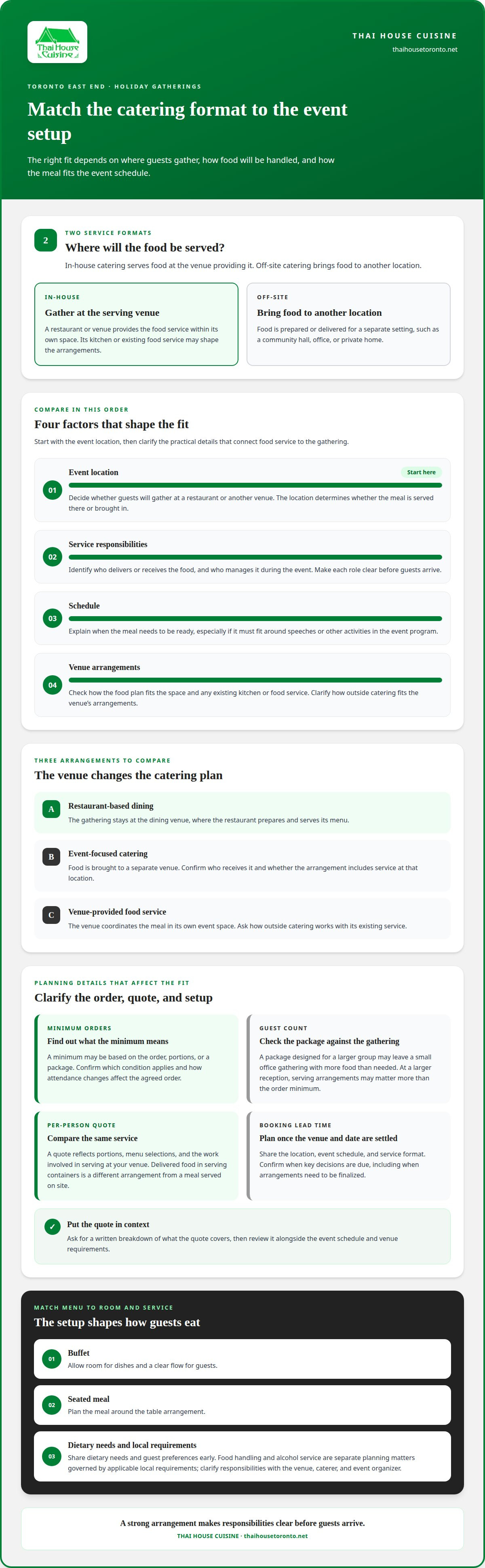
In-house catering serves food at the venue providing it; off-site catering brings food to another location. Choose by deciding how food service will fit the room, schedule and event setup. For holiday party catering in Toronto’s East End, consider what your venue can accommodate, not just the menu. A strong arrangement makes responsibilities clear before guests arrive.
There’s no reliable single answer to which caterers have the best holiday-party reviews without comparing recent feedback about similar events. Give more weight to comments about catered functions, and less to reviews of unrelated dine-in visits. Look for specific accounts of event coordination, accurate orders and communication. Those details are more useful than a general rating when you need catering.
Minimum orders and guest counts
Minimums can be based on the order, portions or a package, so identify which condition applies. For a small office gathering, a package designed for a larger group may leave you with more food than needed. For a larger reception, how food is arranged and served may matter more than an order minimum. Clarify how the minimum works and how changes in attendance affect the agreed order.
Booking lead time
Begin planning once the venue and event date are settled, even if the menu is still taking shape. Share the location, event schedule and service format so the caterer can plan for the practical requirements. A restaurant serving food at its own venue coordinates differently from one delivering to a separate hall. Confirm when key decisions are due, including when to finalize arrangements, before relying on a tentative plan.
Per-person holiday catering prices
A per-person quote reflects portions, menu selections and the work involved in serving at your venue. Compare proposals only when they cover the same service. Food delivered in serving containers, for example, is not the same arrangement as a meal served on site. Ask for a written breakdown of what the quote covers, then review it alongside the event schedule and venue requirements.
Menus and dietary options
The menu needs to work with the venue’s layout and service plan. A buffet requires space for dishes and a clear guest flow; a seated meal follows the table arrangement. For Toronto events, food handling and alcohol service are separate planning matters governed by applicable local requirements. The venue, caterer and event organizer should have clear responsibilities for each. Include those arrangements in the event plan before confirming service.
Which caterers offer holiday party catering in the East End?
East End hosts can choose between restaurant-based dining, event-focused catering and venues with their own food service. Each suits a different setup. A restaurant can prepare a familiar menu for a gathering, while an event caterer can bring food to a separate venue. A venue with in-house food service can coordinate the meal within its own event space. Even outside local event planning, established dining spots such as The Shack Riverfront Restaurant & Tiki Bar serve as great examples of how on-site restaurant hospitality can deliver a memorable group gathering without the logistical complexities of third-party venues.
Start by matching the food service to the event location. A restaurant-based celebration keeps the gathering at the dining venue. A community hall, office or private home calls for food prepared or delivered for that setting. Before choosing, clarify who handles delivery, where the food will be received and whether the arrangement includes service at the venue. Clear roles help prevent gaps between the food plan and event schedule.
Then consider how much coordination your event requires. A host organizing a short workplace gathering may prefer a straightforward food order. A formal evening with a fixed program may need meal timing coordinated with speeches or other activities. If the venue has its own kitchen or food service, ask how outside catering fits its arrangements. The provider’s setup should support the event’s flow rather than add avoidable coordination.
Use these practical points to compare options:
- Event location: Decide whether guests will gather at a restaurant or another venue.
- Service responsibilities: Identify who receives the food and manages it during the event.
- Schedule: Explain when the meal needs to be ready around the event program.
- Venue arrangements: Establish how the food plan works with the space and its existing services.
For a distinctive flavour direction, the cuisine itself can narrow the options. A Thai-inspired menu may suit a gathering where guests enjoy sharing dishes and exploring bright, aromatic flavours. If that style fits your celebration, browse Thai menu selections as you shape your event’s food direction.
Before settling on an arrangement, put the venue, event schedule and preferred service style into one request. This gives each prospective provider the same picture of the gathering and makes their proposed roles easier to compare. In Toronto’s East End, the right fit is the food service that aligns with your location and hosting plan, whether guests dine at the venue or gather elsewhere.
What types of holiday party menus and dietary options are available?
A holiday menu can follow familiar seasonal traditions or introduce flavours from another cuisine. For a formal dinner, plan a clear progression from starter to main course and dessert. For a casual office celebration, shareable dishes can suit a less structured schedule. Match the menu’s richness and portions to the event length, so guests can enjoy the meal without it competing with the program.
Build variety through contrast. Pair a rich main with a lighter vegetable dish, or balance warm items with a fresh salad. A winter gathering might combine a hearty centrepiece, roasted vegetables and a crisp side. A globally inspired menu can offer a range of savoury flavours, with dessert providing a gentler finish. A cohesive menu feels considered without requiring every dish to follow one tradition.
Dietary planning starts with precise information. Ask guests to identify their restriction and the ingredients they need to avoid. Distinguish an allergy from a preference, and record which guest needs each meal. Instead of writing “no dairy,” note whether the guest avoids milk ingredients entirely or has another specific requirement. Clear wording helps the menu planner understand the request and avoid assumptions based on broad labels.
- Vegetarian: Choose a filling main built around ingredients such as legumes, grains or vegetables.
- Vegan: Identify dishes without animal-derived ingredients, including in sauces and toppings.
- Gluten-related needs: Name the specific restriction and ask about ingredients in each course.
- Allergies: List the exact ingredient and the guest who needs the accommodation.
- Cultural preferences: Describe the requirement plainly, including any ingredients or preparation concerns.
Think about how the menu will be presented, not only what it contains. A printed menu can name unfamiliar dishes and describe key ingredients. For a seated dinner, assign each dietary meal to its intended guest and make the serving team aware. At a shared table, label dishes clearly and keep special portions identifiable. These details help guests make informed choices without interrupting the meal.
Review the final menu item by item before approving it. Check starters, sauces, garnishes, sides and desserts, since a dietary concern may involve more than the main course. If a substitution is planned, make sure the written menu reflects the change. A complete dish list helps the host explain what is being served and make guests with different needs feel welcome.
Typical Holiday Catering Prices Per Person in the East End
A per-person catering price in Toronto’s East End depends on the menu, portions, guest count and service arrangement. A reception with shared appetizers has different requirements from a seated dinner with several courses. The venue can also affect preparation and delivery needs. For a useful estimate, describe the event clearly instead of comparing menu prices without knowing what they include.
The price depends on the order, with menu selections, quantities and service needs shaping the quote. A menu with several mains and sides, for example, differs from a simpler meal built around one main. Individually packed portions are planned differently from food arranged for shared service. These choices affect the quantity and preparation involved, so the per-person figure reflects the complete order.
Compare quotes using the same details. Give each caterer the same guest estimate, event location, menu format and dietary requirements. Then review what each proposal includes, such as dishes, portions, delivery, setup or serving support. A lower-looking per-person figure may cover fewer items or a different service format. A written breakdown helps you see whether the proposals are genuinely comparable.
- Menu: List the mains, sides, appetizers and desserts you want included.
- Quantity: Share the estimated attendance and portion plan.
- Service: Specify delivery, buffet arrangement or individually packed meals.
- Dietary needs: Include required substitutions or separate meals in the request.
- Event details: Provide the location and timing that shape preparation and delivery.
Guest count is key to the calculation. A change in the final count can alter the amount of food needed, while special meals may affect preparation. For an office gathering, clarify whether every attendee needs a full meal or some will receive lighter portions. For a family celebration, account for children and adults according to the planned menu. These details help make the estimate reflect the people expected at the table.
Review cancellation terms alongside the quote, not after choosing a menu. Note the cancellation deadline, how attendance changes are handled, and whether deposits or other payments are affected. Keep the policy with the event proposal so the food plan and booking terms are easy to reference. A clear request, detailed quote and written cancellation policy give you a practical basis for planning your holiday catering budget.
What are the minimum order sizes and guest-count requirements
A catering minimum can refer to a minimum food order, a required number of portions or a set menu package. These terms aren’t interchangeable. For a Toronto office reception, the minimum might apply to the complete order, while a private event may be planned around individual meals. Read the written terms to understand what the minimum measures before deciding whether it suits your gathering.
Start with an attendance estimate, then separate confirmed guests from possible attendees. If colleagues are still deciding whether to attend, for example, give the caterer a realistic range rather than treating every invitation as a firm place. Ask which figure determines the order and when the final count is due. That deadline matters because it determines when the kitchen can plan portions and prepare the event order.
Check how guests with different meal needs are counted. A vegetarian or allergy-conscious meal may be part of the total guest count, but it can require a separate selection or identification. Include these meals in the head-count breakdown rather than adding them after finalizing the order. For a buffet, clarify whether the plan is based on total attendance or the number of portions selected for each dish.
- Estimated attendance: Give the likely count and note who hasn’t confirmed.
- Meal format: State whether guests receive individual meals or share buffet dishes.
- Special meals: List dietary requests as part of the count.
- Final-count deadline: Record the date for submitting confirmed quantities.
- Change terms: Review how additions or reductions affect the order.
Venue capacity and service format also shape a workable count. A small meeting room may have limited space for buffet tables, while a reception with guests arriving at different times may need another serving plan. Tell the caterer whether the meal is seated, buffet-style or packaged for pickup. This connects the requested quantity to how food will be served and how guests will move through the space.
Before booking, keep the minimum, final-count deadline, adjustment terms and cancellation policy together in the event paperwork. If attendance is uncertain, select a format that can be planned around a clear estimate. For an informal gathering that doesn’t need event catering, browse takeout and delivery options.
Thai House Cuisine: Thai Food Catering
Thai House Cuisine is a natural fit if you want Thai food at your holiday gathering. Its catering brings authentic Thai comfort food, family recipes and fresh local ingredients to events across Toronto and the GTA. Choose this option when you want to centre your celebration on Thai cuisine rather than a traditional holiday menu.
Before arranging the meal, outline your event date, venue, estimated guest count and preferred serving format. Include dietary needs in your planning so they’re part of the conversation from the start. These details help frame the catering request around your gathering.
Shape a holiday gathering around the experience you want
Let the meal help set the mood for your celebration. A relaxed evening with friends, a lively workplace gathering and a family dinner each call for a different kind of welcome. Choose the atmosphere first, then let the menu and service style support it. For holiday party catering in Toronto’s East End, Thai food can bring distinctive flavour to the occasion, whether guests gather for a shared meal or enjoy food at home.
Thai House Cuisine offers Thai food catering, dine-in meals, takeout and delivery. Choose the setting that suits your guests, then share your event details to plan the meal. A thoughtful menu can make the gathering feel personal, warm and easy to enjoy.
Here’s to a welcoming celebration and a table your guests will be glad to gather around.
Frequently Asked Questions
Do East End caterers offer delivery, setup, staffing, and rentals?
Catering arrangements can include food delivery, while setup, serving staff and rentals depend on the event plan. Thai House Cuisine offers Thai food catering, as well as takeout and delivery. For a holiday event, distinguish food delivery from on-site setup or staffing, and plan tables, serving equipment and rentals as separate logistics unless your written arrangement says otherwise. This helps assign responsibilities for the venue before party day.
What are the booking, deposit, cancellation, and refund policies?
Booking and refund terms depend on the catering arrangement, so rely on the written policy for your order. Before paying a deposit, review when payment is due, whether it is refundable, how to cancel and how any refund is issued. Note the deadline for changing the guest count and whether changes affect the order. Keep the policy with your booking confirmation so the terms are clear if plans shift.
Which caterers have the best reviews for holiday parties?
Compare recent reviews for similar catered events, focusing on event coordination, order accuracy and communication rather than ratings or reviews of unrelated dine-in visits.


