

Pumpkin should soften the curry’s spice, not mask it. Thai pumpkin curry makes a warming seasonal special, pairing tender pumpkin or squash with curry paste, creamy coconut milk, vegetables and aromatics such as garlic and ginger. The result is rich and gently sweet, with herbs and lime adding a fresh, bright finish.
If you enjoy creamy, savoury flavours with a lively edge, this dish offers more than pumpkin in sauce. The vegetables and seasonings shape its character, while the type of pumpkin or squash affects the texture. Fresh herbs and lime provide a welcome finish. Together, these elements make a comforting seasonal meal.
Key Takeaways
- See how curry paste, coconut milk and vegetable broth create the curry’s flavourful base.
- Learn how vegetables, garlic and ginger build depth, while herbs and lime bring a fresh finish.
- Compare pumpkin and squash options to understand how they shape the curry’s texture.
- Know which ingredients to review for allergens or dietary needs before ordering.
- Explore Thai House Cuisine’s Lunch Specials when you’re ready to enjoy Thai food as a meal.
What is Thai Pumpkin Curry?
- Begin with curry paste, the aromatic, savoury foundation. Thai red curry paste brings chilli warmth and fragrant seasoning; recipes use amounts such as 2 tablespoons or 3 tablespoons. Stir it into warm oil so its aroma opens before adding liquid. For a Thai pumpkin curry seasonal special, let pumpkin’s sweetness balance the paste’s heat. Start with less paste if you prefer gentler spice, then adjust as the sauce cooks.
- Add coconut milk to turn the seasoned paste into a creamy sauce. Its richness and mild sweetness pair naturally with pumpkin or butternut squash. Pour it in gradually, stirring until the paste is evenly distributed. Some recipes use canned coconut milk, while others combine it with broth. The sauce coats each piece of squash, creating a full-bodied curry rather than a thin soup.
- Use vegetable broth to lighten the sauce and help it simmer around the pumpkin. One recipe includes 1 cup of low-sodium vegetable broth alongside coconut milk. Add the broth after stirring the paste into the warm liquid, then bring everything to a gentle simmer. Moderate heat gives the squash time to soften and the seasonings time to mingle without scorching the coconut milk.
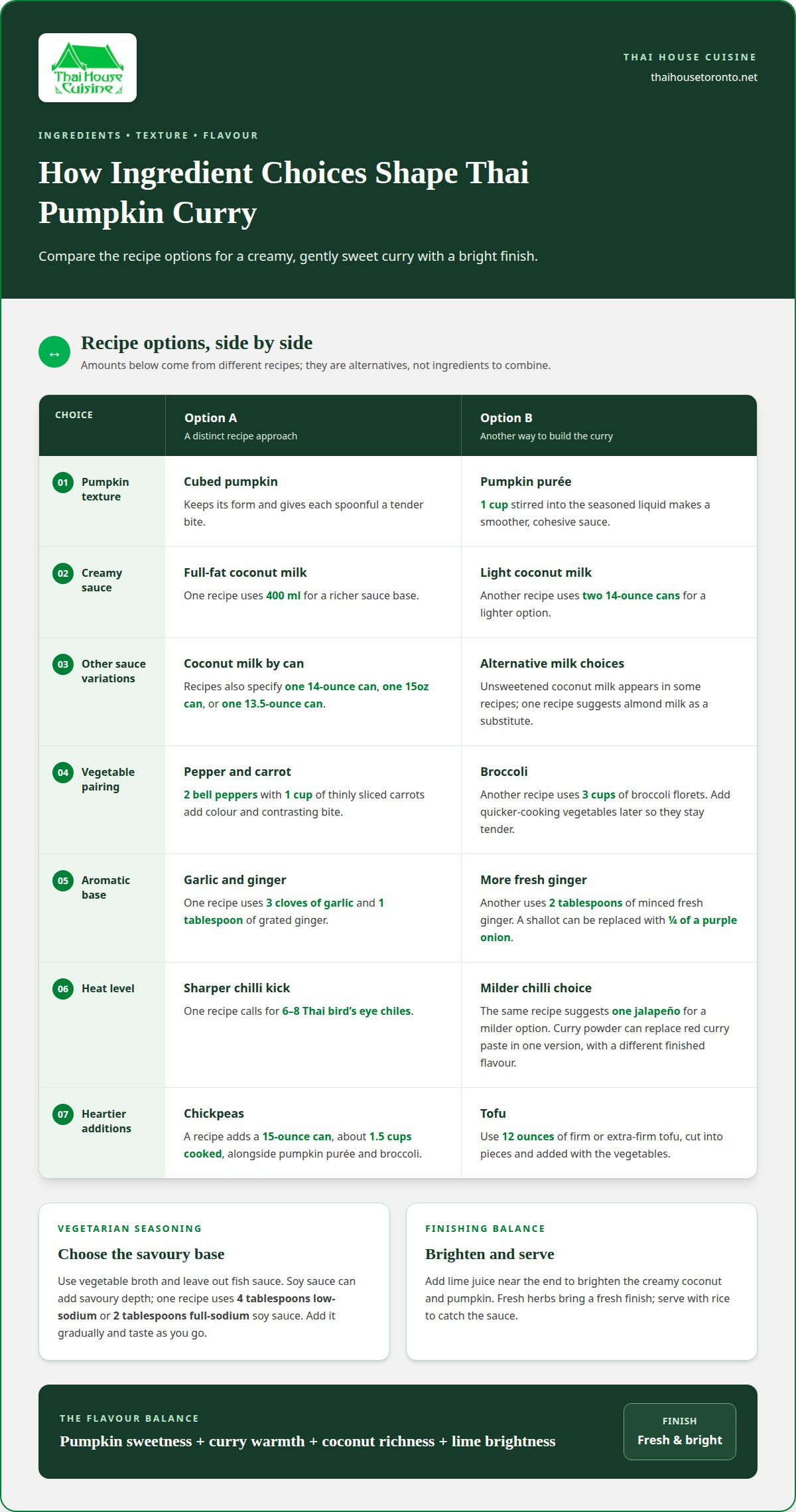
- Choose cubed pumpkin or a purée base to shape the finished texture. Cubes keep their form and offer a tender bite in each spoonful. A smoother version uses 1 cup of pumpkin purée with red curry paste and coconut milk. Stir the purée into the seasoned liquid until smooth, then simmer gently. This creates a cohesive sauce with pumpkin flavour throughout.
- Taste the sauce once the pumpkin softens. Lime juice brightens the mellow sweetness and creamy coconut; add it near the end, then taste before adding more. Serve the curry with rice, which catches the sauce. A Thai pumpkin curry seasonal special brings pumpkin, curry warmth, coconut richness and citrus brightness together in a comforting bowl.
Recipes also differ in coconut milk amount and style. The pumpkin curry sauce includes 400 ml of full-fat coconut milk, a choice that gives the sauce a richer base. Another recipe uses one 14-ounce can of coconut milk, with almond milk suggested as a substitute. These are alternative approaches rather than ingredients to combine; choose the version that suits the desired creaminess.
Other recipes specify their coconut milk in can sizes. One recipe uses 1 15oz can of coconut milk, while the Thai pumpkin curry recipe uses one 13.5-ounce can of coconut milk. These amounts offer distinct ways to make a creamy sauce, alongside the versions measured in millilitres or by weight. Keeping the coconut milk quantity aligned with the recipe helps maintain its intended balance with the pumpkin and curry paste.
A lighter option uses two 14-ounce cans of light coconut milk. Some Thai pumpkin curry recipes use unsweetened coconut milk. Together, these variations show that there is no single coconut milk amount or type across recipes: full-fat, light and unsweetened versions all appear, and almond milk is suggested as a substitute in one recipe. The choice shapes the sauce’s richness while keeping coconut milk central to the curry.
Vegetables, aromatics and seasonings
- Choose vegetables that bring contrasting textures and flavours. Pumpkin supplies a sweet, soft centre, while red bell pepper adds colour and a firmer bite. One recipe pairs pumpkin with 2 bell peppers and 1 cup of thinly sliced carrots. Another uses 3 cups of broccoli florets. Cut vegetables into similar-sized pieces so they cook evenly. Add quicker-cooking vegetables later, keeping them tender rather than letting them lose their shape.
- Build an aromatic base with garlic, ginger and shallot. A recipe uses 3 cloves of garlic and 1 tablespoon of grated ginger; another uses 2 tablespoons of minced fresh ginger. Cook these with the curry paste until fragrant, then add the vegetables. Ginger’s warming, peppery notes complement pumpkin’s sweetness, while garlic brings savoury depth. A shallot adds a gentle onion flavour, but one-quarter of a purple onion can stand in.
- Adjust heat with the paste and chiles, not just extra seasoning. Thai bird’s eye chiles bring a sharper kick, and one recipe calls for 6-8. For a milder option, it suggests one jalapeño instead. Curry powder can replace red curry paste in one version, though the finished flavour will differ. Taste the sauce as it cooks, since paste and chiles contribute different levels of heat and spice.
- Make a vegetarian version by choosing vegetable broth and leaving out fish sauce. Soy sauce can add savoury depth; use a low-sodium option when you want more control over saltiness. Recipe quantities vary: one version uses 4 tablespoons of low-sodium soy sauce, or 2 tablespoons of full-sodium soy sauce. Add it gradually and taste before adding more. This helps keep the seasoning balanced rather than overly salty.
- Add chickpeas or tofu when you want a heartier vegetable curry. One recipe uses a 15-ounce can of chickpeas, about 1.5 cups cooked, alongside pumpkin purée and broccoli. For tofu, use 12 ounces of firm or extra-firm tofu, cut into pieces and added with the vegetables. Thanks to their different textures, chickpeas make the sauce more substantial, while tofu takes on the surrounding seasoning. Choose your favourite, then finish with fresh herbs or lime juice.
Thai pumpkin curry’s flavour profile
- Notice the first impression: aromatic curry paste, followed by pumpkin’s mellow sweetness. Red curry paste brings chilli warmth and fragrant seasoning, while coconut milk rounds its sharper edges. Together, they create a creamy sauce rather than a dry, fiery coating. As pumpkin softens, it absorbs the surrounding flavours, giving each spoonful sweetness and savoury depth. That balance makes a Thai pumpkin curry seasonal special comforting without tasting heavy.
- Build the heat with curry paste before adding extra chiles. Red curry paste gives the sauce its central spice, while Thai bird’s eye chiles bring a sharper burn. Simmer over medium heat so the flavours mingle without scorching the coconut milk. Butternut squash offers similar sweetness, balancing the chilli as it becomes tender. The result is warmth that complements the squash instead of overwhelming it.
- Bring in savoury depth with fish sauce, which gives the curry a salty, rounded quality. One recipe uses 2 tablespoons, though that amount belongs to that version. Stir it through the sauce, then taste a piece of pumpkin with some liquid. This gives a better sense of balance than tasting the sauce alone. Bell pepper contributes fresh, mild sweetness beside the curry’s deeper savoury notes.
- Finish with acidity to lift the rich ingredients. Lime juice cuts through creamy coconut and makes the pumpkin taste brighter, rather than sweeter. Add it near the end, then taste again before adding more. One recipe uses 1 tablespoon of lime juice. Fresh herbs, including Thai basil or cilantro, add a fragrant finish; scatter them in just before serving to preserve their aroma.
- Think of the flavour as a balance, not a single dominant note. Pumpkin brings sweetness, curry paste warmth, coconut milk softness, and fish sauce savoury character. Lime juice and herbs add contrast. This layered profile gives a Thai pumpkin curry seasonal special its appeal, letting each flavour come through. Serve it with rice to catch the creamy sauce and temper each bite.
The pumpkin’s cooking time is part of the flavour balance, not merely a step toward tenderness. Cooking it for 10-15 minutes softens it and lets it infuse with curry flavour, so its mellow sweetness can sit alongside the paste’s aromatic warmth. As it cooks, the aim is a piece that gives way easily while still holding enough shape to be tasted against the creamy sauce. This makes the pumpkin an active part of each bite, rather than a neutral base beneath the seasoning.
Let the curry’s aroma and the pumpkin’s texture guide your final adjustment. Once the pumpkin softens, taste it with the sauce; seasoning that seems assertive on its own may feel more balanced alongside the pumpkin. If the flavour needs a lift, lime and herbs add contrast while keeping the curry rounded and comforting. The softened pumpkin is central to the dish’s interplay of gentle sweetness, fragrant spice and creamy, savoury finish.
What types of pumpkin or squash are used in Thai pumpkin curry?
- Choose pumpkin, acorn squash or butternut squash for a cubed curry. One recipe uses 16 ounces of any of these options, making them practical alternatives within the same dish. Pumpkin gives the curry its familiar seasonal character, while acorn and butternut squash offer their own sweetness. Select a firm piece with flesh that can be cut cleanly. The best choice depends on whether you want a classic pumpkin taste or a different squash note.
- Try kabocha when you want a distinct squash option. One Thai pumpkin curry recipe uses 1 cup of cubed kabocha squash. Cut it into even pieces so they soften at a similar pace in the sauce. Kabocha’s dense flesh gives each bite substance, making it a good fit for a curry where the squash should remain recognizable. Keep the pieces bite-sized, and stir gently as they cook to help them hold their shape.
- Cut larger squash into even cubes before cooking. One recipe uses 1 1/4 lb. of pumpkin in 1-inch (2.5-cm) cubes. Similar-sized pieces cook more evenly, so smaller pieces are less likely to break down before larger ones soften. If using butternut squash, peel it and remove the seeds before cutting. For acorn squash, trim away the rind and seeds, then cut the flesh into pieces close in size.
- Match the cut to the finish you want. Cubes provide tender pieces throughout the curry, while roasted pumpkin can be blended into a smooth sauce. A recipe for Thai red curry pumpkin purée uses one sugar pumpkin weighing about 1 kg. Roast the pumpkin until soft, then scoop out its flesh and blend it with the sauce ingredients. This creates a more uniform texture than adding uncooked cubes.
- Keep the squash choice consistent with your cooking method. For a simmered curry, add evenly cut pumpkin, acorn squash or butternut squash to the sauce and cook until tender. For a purée-style curry, roast a sugar pumpkin first, then blend its flesh. Kabocha works as a cubed option, with 1 cup used in one recipe. These choices change texture and flavour, while each brings a satisfying squash base to the bowl.
What allergens or dietary restrictions should diners check before ordering Thai pumpkin curry?
- Check the curry’s sauce ingredients first. Coconut milk, fish sauce and soy sauce appear in some recipes, and each may matter for an allergy or dietary restriction. Don’t assume a pumpkin curry contains only vegetables. Review the details for the specific dish and note any ingredients you need to avoid. Coconut milk is still coconut, and soy sauce is still soy, even when blended into a creamy sauce.
- Look closely at the curry paste. Thai red curry paste is a central seasoning, but its ingredients vary by recipe or product. Review the listed components for anything relevant to your needs rather than relying on the word “curry.” If you avoid a particular ingredient, check that it isn’t in the paste or sauce. Apply the same care to broth, which may be part of the curry base.
- Distinguish vegetarian from vegan requirements. A vegetable-based curry may still include fish sauce, so “vegetarian” alone doesn’t answer every dietary question. A vegan choice also requires checking for all animal-derived ingredients in the sauce and additions. Even a curry made with pumpkin, coconut milk and vegetables needs a full ingredient review before you can determine whether it suits a specific diet.
- Check for soy and nuts if you avoid them. Some versions use soy sauce, while others include cashews as a garnish or ingredient. Recipes may also add tofu, which is made from soy. Review the curry and its toppings, since the main sauce may not tell the whole story. If you’re considering several versions, assess each one separately.
- Consider sodium needs as well as allergies. Fish sauce and soy sauce both add savoury saltiness, and recipes vary in the amounts or types used. Low-sodium soy sauce still contains soy. If you follow a low-sodium eating plan, review the sauce ingredients and seasoning details instead of judging by the pumpkin or vegetable content alone.
- Before ordering, sort your needs into clear categories: ingredients you must avoid, ingredients you’re limiting, and dietary choices such as vegetarian or vegan. Note fish sauce, soy sauce, cashews, tofu and coconut milk where relevant. This focused list makes it easier to compare the dish’s ingredient details with your requirements and decide whether it suits you.
Thai House Cuisine: Lunch Specials
Thai House Cuisine offers Lunch Specials for a satisfying midday Thai meal. After exploring the ingredients and flavour of pumpkin curry, you can choose a dine-in Thai meal or enjoy takeout and delivery orders when a meal at home suits you better. Thai food catering is another option for sharing Thai dishes at an event. Each option offers a different way to enjoy Thai cuisine, whether you’re taking a lunch break, planning dinner or gathering with others. For details about meal options, contact Thai House Cuisine.
Make room for a seasonal favourite
Food is also a generous way to bring people together. A seasonal dish can spark conversation around the table, invite someone to try an unfamiliar flavour or add warmth to a shared meal. Explore at your own pace, and let each new taste lead to another discovery.
Here’s to finding a new favourite and enjoying every delicious bite.
Frequently Asked Questions
What ingredients are typically used in Thai pumpkin curry?
Thai pumpkin curry commonly combines pumpkin or squash with curry paste and coconut milk. Depending on the recipe, it may also include vegetables such as carrots, broccoli or bell pepper, along with aromatics like garlic and ginger. Some versions add chickpeas or tofu, while herbs and lime can finish the dish. There’s no fixed ingredient list; the combination depends on the recipe.
Is Thai pumpkin curry usually vegan, vegetarian, or gluten-free?
Thai pumpkin curry can be vegetarian or vegan, but the ingredient list matters: some recipes use fish sauce, and tofu or vegetables alone don’t determine whether the sauce is animal-free. Gluten-free status also depends on ingredients such as curry paste, broth and soy sauce. If you avoid a particular ingredient, review the full recipe or dish details, including sauces, garnishes and added protein.
How spicy is Thai pumpkin curry, and can the heat level be customized?
The heat depends on the curry paste and any added chiles, so one version may taste mild while another has a stronger chilli kick. When cooking at home, start with less paste or chile, simmer, then taste before adding more. Coconut milk and pumpkin soften the overall impression of spice but don’t remove the heat. For a prepared dish, use its menu description to guide your choice.


