

The secret to the world's most soul-stirring comfort food isn't found in a standardized corporate manual; it lives in the splattered, hand-written recipe cards passed down through generations. Most of us have experienced the disappointment of a generic takeout order where the curry is cloyingly sweet and the noodles lack any real character. If you've been searching for authentic homemade Thai food Toronto offers, you know that the "imperfect" family recipe always beats commercial efficiency. It's about the heart of the operation and the soul of the work.
We understand that you're looking for more than just a quick bite. You want depth, sincerity, and a meal that feels like a warm hospitality gesture from a dedicated local expert. This guide will help you distinguish generational secrets from generic restaurant fare. We'll explore the regional traditions that define Thailand's diverse culinary landscape and help you identify the signs of genuine home-style cooking. From understanding complex flavour profiles to finding a trusted neighbourhood spot, you're about to rediscover what makes Thai food the ultimate comfort.
Key Takeaways
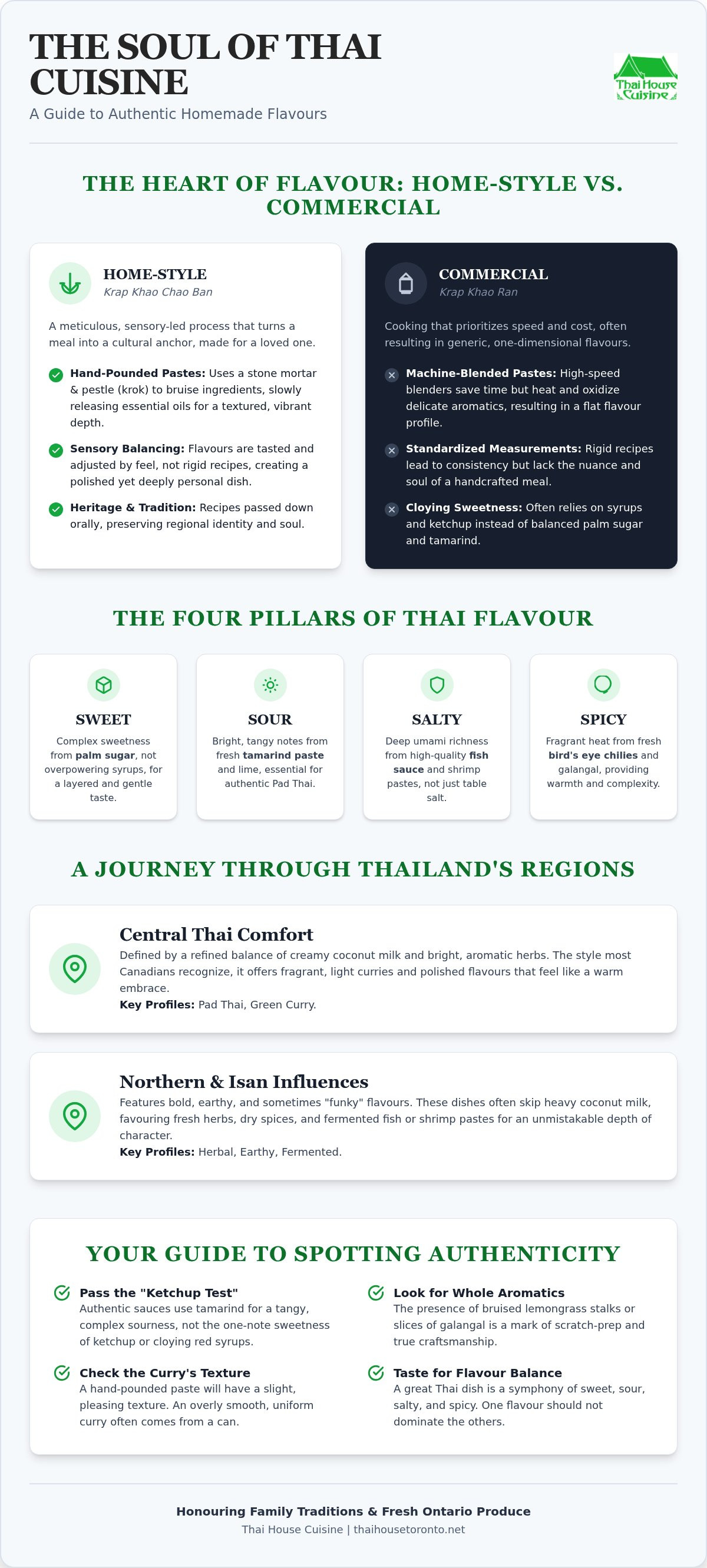
- Learn to distinguish between Krap Khao Chao Ban (home-style) and commercial cooking, where the traditional mortar and pestle creates a depth of flavour that machines simply can't replicate.
- Master the "Ketchup Test" to identify authentic tamarind-based sauces and learn why the presence of whole aromatics like galangal is a mark of true culinary craftsmanship.
- Explore the diverse regional profiles of Thailand, from the refined herbal balance of the Central plains to the bold, earthy traditions of the North.
- Discover the generational secrets and regional soul that define the best homemade Thai food Toronto has to offer, moving far beyond the cloying sweetness of generic chains.
- See how local institutions like Thai House Cuisine have spent over a decade honouring these traditions in the Beaches by pairing family recipes with fresh Ontario produce.
What Defines Family Recipe Thai Food?
To truly understand the magic of a family recipe, you must first recognize the distinction between Krap Khao Ran (food for a shop) and Krap Khao Chao Ban (food for the people of the home). Commercial cooking often prioritizes speed and cost, but home-style cooking is a meticulous, sensory-led process that turns a simple meal into a cultural anchor. For those seeking homemade Thai food Toronto residents can rely on for comfort, the difference is felt in the very first bite. It is the difference between a meal made for a customer and a meal made for a loved one.
At the heart of this practice sits the krok, the traditional stone mortar and pestle. While generic kitchens might use high-speed blenders to save time, a dedicated family chef knows that machines heat and oxidize delicate aromatics. The rhythmic thud of the krok bruises and crushes ingredients, slowly coaxing out the essential oils from fresh galangal, lemongrass, and bird's eye chilies. This manual labour creates a curry paste with a soul, offering a textured, vibrant depth that a commercial paste simply cannot replicate. It's about craftsmanship over convenience.
The 'Secret Sauce' is No Secret: It's Heritage
In a traditional Thai household, recipes aren't found in glossy books or on digital tablets. They are living things, passed down through oral tradition and hours spent standing at a grandmother's side. This heritage is deeply tied to regional identity; a family from the lush central plains will prepare a green curry with a different aromatic profile than a family from the rugged north. Authentic homemade Thai food Toronto lovers seek is defined by this scratch-prep philosophy. Every paste is pounded daily, and every coconut is cracked with a specific purpose in mind, ensuring that the regional soul of the dish remains intact even thousands of kilometres from its origin.
Balancing the Four Pillars of Flavour
Home cooking relies on "sensory balancing" rather than rigid, standardized measurements. A chef doesn't just follow a list; they taste, adjust, and feel the dish as it develops. The intricate history and regional variety found in Thai cuisine ensure that no two family recipes are exactly alike. These adjustments often depend on the season or the specific punch of a batch of chilies. The four pillars of flavour represent the essential harmony of sweet, sour, salty, and spicy that serves as the foundation for any authentic Thai family meal. By balancing these pillars, a family chef creates a dish that feels polished yet deeply personal, providing a sense of home that transcends the boundaries of a simple restaurant transaction.
The Regional Diversity of Thai Soul Food
Thai cuisine is far from a single, uniform style of cooking. It is a vibrant tapestry of regional stories, each with its own distinct personality and pantry. In a city as diverse as ours, finding authentic homemade Thai food Toronto locals truly cherish means looking beyond the generic. It requires an appreciation for how geography shapes the plate. Toronto's multicultural landscape provides a unique stage where these regional traditions can thrive side by side, allowing diners to travel from the lush central plains to the rugged northern mountains in a single sitting.
Central Thai Comfort: The Pad Thai and Green Curry Roots
Central Thai food is often what Canadians first think of when they imagine comfort. This style is defined by a refined balance of creamy coconut milk and bright, aromatic herbs. While many commercial kitchens rely on cloying syrups, a family recipe uses palm sugar and tamarind to create a complex, layered sweetness that never feels heavy. A family-recipe Green Curry stands apart from canned-paste versions because it relies on the samrap tradition of set meals. This deep connection to familial origins is what dictates whether a dish feels like a commodity or a comfort. The result is a curry that is fragrant and light, rather than oily and over-salted. It's a polished presentation of heritage that feels like a warm embrace.
Isan and Northern Influences on the Toronto Palate
In recent years, Toronto foodies have developed a growing appreciation for the bold, earthy, and sometimes "funky" flavours of the North and the Isan region. These dishes often skip the heavy coconut milk in favour of fresh herbs, dry spices, and fermented ingredients. The hallmark of a true Northern family recipe is the use of fermented fish or shrimp pastes, which provide an unmistakable depth and soul. You'll see this in the rise of Som Tum (Papaya Salad) and the essential side of sticky rice in local neighbourhoods. These recipes prioritize intense heat and herbal complexity over sweetness. If you're ready to taste the difference that regional heritage makes, you can explore our dine-in Thai meals right here in the Beaches, where we bring these traditions to life daily.
Southern Thailand introduces yet another layer of diversity. This region is famous for its intense heat and the pungent, medicinal use of fresh turmeric and abundant seafood. While Central dishes might be subtle, Southern soul food is unapologetically sharp and spicy. It's this regional variety that makes Thai food such an enduring source of comfort; there is always a new profile to discover and a different family story to hear. Each region contributes to a collective culinary identity that is as complex as the families who preserve it.
Commercial vs. Homemade: Spotting the Difference
You've likely sat down to a plate of Pad Thai that was suspiciously bright pink or neon red. This is the first red flag of a commercial shortcut known as the "Ketchup Test." Authentic homemade Thai food Toronto enthusiasts know that real Pad Thai should be a deep, earthy amber. This colour comes from slow-simmered tamarind pulp, not food colouring or condiments. When a kitchen prioritizes speed over heritage, the complex tang of tamarind is replaced by cloying sweetness. A family-run kitchen takes the time to prepare the base from scratch, ensuring a depth of flavour that a commercial bottle can't match.
Take a moment to look closely at your curry or soup. Do you see whole rounds of galangal, bruised stalks of lemongrass, or torn kaffir lime leaves? In generic restaurant fare, these aromatics are often absent because the kitchen uses pre-ground, shelf-stable pastes. A chef dedicated to the "home-style" philosophy leaves these ingredients in the bowl. They aren't meant to be eaten, but their presence proves the dish was infused with fresh botanicals. Similarly, look at the broth of your Tom Yum. A clear, shimmering broth indicates hours of simmering bones and aromatics. A cloudy, flat-looking soup often signals the use of instant powders.
The Aromatics: Freshness You Can Smell
The soul of a dish is often carried in its scent. Pre-ground spices lose their aromatic oils within minutes, leaving a dish that tastes "flat." In a kitchen that respects tradition, you'll smell the sharp, peppery punch of Thai Holy Basil (Bai Gaprao) the moment it hits the wok. Many commercial spots swap this for standard sweet basil because it's cheaper and easier to find. However, the two are not interchangeable. Homemade Thai food Toronto diners should expect a fragrance that fills the entire room; it's a sign that the herbs were bruised just seconds before serving to release their full potential.
The Texture of Authenticity
Machine-sliced vegetables offer a uniform, soulless look that defines generic takeout. In contrast, hand-cut vegetables have varied edges that catch the sauce, providing a more interesting "mouthfeel." This attention to detail extends to the noodles. Properly soaked rice noodles in a family-recipe stir-fry maintain a distinct "bite" or elasticity. They shouldn't be mushy or clumped together. True Thai home cooking prioritizes the preservation of ingredient texture over speed. When a menu is smaller and more focused, it's often a sign that the kitchen is dedicated to these time-consuming, manual techniques rather than mass-producing a hundred different dishes.
Bringing the Thai Kitchen Home: Tips for Flavour
Recreating the evocative depth of homemade Thai food Toronto families have cherished for generations requires more than just a list of ingredients. It demands a respect for the process and a commitment to sourcing the right aromatics. If you are wandering through the vibrant stalls of Chinatown or exploring the specialized grocers in Leslieville, look for the essentials that form the heart of the Thai pantry. You will need a high-quality fish sauce for umami, authentic palm sugar for a mellow sweetness, and fresh bird's eye chilies to provide that signature heat. These aren't just condiments; they are the building blocks of a cultural tradition.
One professional secret for maximum flavour extraction is "blooming" your curry paste. Instead of simply stirring paste into a boiling pot of coconut milk, start by heating the thick coconut cream until the oil begins to separate. Fry your paste in this oil until it becomes fragrant and the room fills with its scent. This technique coaxes out the essential oils and soul of the spices. Once your stir-fry is complete, resist the urge to serve it immediately. Allow the dish to rest for thirty seconds off the heat. This brief pause allows the flavours to marry and ensures the sauce coats every ingredient perfectly without overcooking the delicate greens.
The Importance of Fresh Herbs in Canada
In our Toronto climate, keeping delicate Thai herbs vibrant can be a challenge. Store your Thai basil and cilantro roots in a glass of water like a bouquet, covering them loosely with a plastic bag in the fridge. For those in the East End, you can often find fresh galangal at independent Asian grocers near Broadview. While you can sometimes swap standard ginger for galangal in a pinch, you will lose that distinct earthy, pine-like aroma that defines a true family recipe. Never substitute standard sweet basil for Thai Holy Basil if you want that authentic peppery punch. High quality matters. Freshness is priority.
Mastering the 'Taste and Adjust' Method
The final stage of Thai cooking is a sensory dance of balancing the pillars of flavour. Always add your final squeeze of lime juice after you have removed the pan from the heat; boiling lime juice causes it to lose its bright, citrusy soul and turn bitter. Use fish sauce as your primary salt substitute to add a lingering umami depth that table salt simply cannot provide. For beginners, a "Golden Ratio" of equal parts sweet, sour, and salty is a safe starting point, but remember to trust your palate over the measuring spoon. Taste. Adjust. Perfect.
If the meticulous prep of a traditional kitchen feels overwhelming, we are here to bring the experience to you. Order our Thai food catering to enjoy these generational secrets at your next event without lifting a finger.
Thai House Cuisine: Keeping Family Traditions Alive in the Beaches
Since 2012, Thai House Cuisine has stood as a dedicated local expert in the heart of the Beaches. Our journey on Queen Street East began with a simple yet profound mission: to share the authentic regional recipes of our heritage with our Toronto neighbours. We've spent over a decade perfecting the transition from traditional family secrets to a modern city kitchen, ensuring that every plate of homemade Thai food Toronto diners enjoy feels like a genuine homecoming. It's about more than just a commercial transaction; it's about the heart of the operation and a sincere passion for hospitality.
The atmosphere in our dining room is intentionally cozy, designed to mirror the warmth of a traditional Thai household where every guest is treated with professional pride. We realize that the soul of a dish depends on the quality of its components. Our chefs meticulously blend cherished traditions with fresh, local Ontario produce, creating a vibrant fusion that respects its roots while embracing its current home. Whether you're stopping by for our daily lunch specials or ordering a quiet dinner, you'll find a space that prioritizes your comfort and satisfaction.
A Legacy of Flavour Since 2012
Remaining a neighbourhood staple for over ten years requires a relentless focus on consistency and community. We take immense pride in the fact that our regulars have supported us since our doors first opened in 2012. To show our gratitude and reward our patrons, we offer a 10% cash discount on orders over $50. This commitment to value and quality-obsessed service extends across all our offerings. We maintain the same meticulous standards for our dine-in guests as we do for our takeout and delivery orders. Every meal is prepared with the same care, regardless of where you choose to enjoy it.
Experience the Soul of Thailand on Queen Street East
Every signature dish we serve is a polished presentation of craftsmanship and tradition. From the first aromatic scent of fresh herbs to the final lingering spice, we want you to experience the depth and sincerity of real home cooking. This dedication to excellence isn't limited to our restaurant walls. Our professional catering services bring the same level of care to your private events, turning any gathering into a celebration of authentic homemade Thai food Toronto families love. We believe that food should be a bridge between people. Visit us in the Beaches or order your next family meal online today!
Savour the Soul of Thailand in the Beaches
Finding a meal that feels like home requires looking beyond the standardized menus of generic chains. True comfort is found in the rhythmic thud of a mortar and pestle and the vibrant, amber hues of a tamarind-based sauce. By understanding these regional traditions and spotting the marks of craftsmanship, you've taken the first step toward rediscovering the best homemade Thai food Toronto has to offer. It's a journey that prioritizes heart and soul over commercial speed.
At Thai House Cuisine, we've been proud to serve the Beaches community since 2012. We invite you to experience the warmth of our heritage tonight. SAVE 10% on cash orders over $50. Enjoy a COMPLIMENTARY Mango Salad and Coconut Shrimps on orders over $75! We take immense pride in every dish we prepare. Place your order now to taste the difference that over a decade of dedication makes.
Order Authentic Thai Comfort Food for Delivery or Takeout
We look forward to welcoming you into our community and sharing a taste of our home with yours.
Frequently Asked Questions
What makes Thai food 'homemade' compared to regular restaurant food?
True homemade Thai food is defined by the Krap Khao Chao Ban philosophy, where dishes are prepared as they would be for family members. Unlike regular restaurant food that often uses commercial pastes and high-speed blenders, home-style cooking relies on manual techniques like using a stone mortar and pestle to bruise aromatics. This process preserves the essential oils and soul of the ingredients, resulting in a textured, layered flavour that machines simply cannot replicate.
Is authentic Thai food always spicy?
Authentic Thai cooking isn't defined by heat alone but by the delicate balance of the four pillars of flavour. While some regions like the South are famous for intense spice, many traditional dishes from Central Thailand focus on a refined harmony of coconut milk and aromatic herbs. A family recipe is often adjusted to suit the diner's preference, ensuring that the complexity of the herbs shines through without being overwhelmed by chilies.
Where can I find the best family-recipe Thai food in Toronto's East End?
You can find authentic homemade Thai food Toronto locals have loved for over a decade at Thai House Cuisine, located in the heart of the Beaches. Since 2012, we've brought regional family secrets to Queen Street East, blending traditional heritage with fresh local produce. Our kitchen serves as a community staple, offering everything from cozy dine-in meals to professional catering for special events in the neighbourhood.
What are the most important ingredients in a traditional Thai family recipe?
The foundation of a traditional family recipe lies in high-quality aromatics and fermented essentials. Key ingredients include fresh galangal, lemongrass, and kaffir lime leaves, which provide the aromatic soul of the dish. These are balanced with umami-rich fish sauce, mellow palm sugar, and the bright tang of tamarind pulp. These staples ensure that every meal achieves the polished, multifaceted taste profile that defines true Thai craftsmanship and heritage.
How do I know if a Thai restaurant is using authentic recipes?
Look for specific signs like the colour of the Pad Thai and the presence of whole herbs. An authentic kitchen avoids the "Ketchup Test" by using real tamarind pulp, resulting in an amber sauce rather than a neon red one. You should also see whole pieces of lemongrass or galangal in your bowl, proving the dish was infused with fresh botanicals rather than instant powders or pre-ground commercial pastes.
Does Thai House Cuisine offer vegetarian or vegan options based on family recipes?
Yes, we offer a variety of vegetarian and vegan options that stay true to our family-recipe roots. Many traditional Thai dishes are naturally plant-based or can be easily adapted by substituting fish sauce with soy-based alternatives. We take great care to ensure these versions maintain the same depth and sincerity as our original recipes, allowing every guest to enjoy a polished and authentic dining experience regardless of dietary needs.
What is the best Thai dish for someone trying authentic home-style cooking for the first time?
A traditional Green Curry is an excellent starting point for anyone new to homemade Thai food Toronto kitchens offer. Unlike the heavy, oily versions found in many chains, a home-style Green Curry is fragrant and light, showcasing the refined balance of coconut cream and freshly bruised herbs. It provides a perfect introduction to the samrap tradition, where the focus is on a harmonious blend of sweet, salty, and aromatic notes.
How has Thai food in Toronto changed since 2012?
Since 2012, Toronto's Thai culinary scene has shifted from generic, standardized menus toward a deep appreciation for regional diversity. Diners are now more savvy about the differences between Northern, Southern, and Central styles. This evolution has allowed family-run institutions like ours to thrive by focusing on home-style traditions. There is a growing local demand for "funk," spice, and the authentic textures that only scratch-made cooking can provide.


