

What if your favourite Pad Thai is only the opening chapter of a much deeper, more vibrant story? It's common to feel a bit stuck between "Westernized" fusion and the true, complex flavours of Southeast Asia; often, it's hard to know where the local takeout ends and real heritage begins. We understand that searching for authentic regional Thai cuisine Toronto food lovers can truly trust often leads to more questions than answers, especially when you're looking for something specific in the East End.
You deserve a dining experience that feels like a home away from home, rooted in tradition and prepared with heart. This guide will help you discover the distinct traditions of Thailand’s four culinary regions and teach you to identify the essential roles of ingredients like galangal and lemongrass. We'll show you how to move past the familiar and embrace the bold, spicy, and sour notes that define true Thai craftsmanship. By the end, you'll know exactly what to order and where to find a dedicated local expert in The Beaches to satisfy your cravings.
Key Takeaways
- Map out the four distinct culinary regions of Thailand to understand how geography and climate create unique flavour profiles in every dish.
- Learn to spot the difference between genuine heritage cooking and Westernized "fusion" by recognizing authentic menu structures and regional chef expertise.
- Discover where to find authentic regional Thai cuisine Toronto in the heart of The Beaches, featuring recipes passed down through generations.
- Identify the signature ingredients, such as turmeric and fermented fish, that give each province its unmistakable character and soul.
- Move beyond standard takeout staples and gain the confidence to explore bold, rustic dishes like Khao Soi or traditional Isan-style salads.
Beyond Pad Thai: Understanding the Four Culinary Regions of Thailand
Thai food is often misunderstood as a single, uniform flavour profile, but it is actually a complex mosaic shaped by geography and climate. For those seeking regional Thai cuisine Toronto offers, the journey begins by looking past the standard takeout menu. Authenticity in this craft requires a meticulous balance of sour, sweet, salty, and spicy notes. It's a delicate dance where no single element should dominate, reflecting the diverse landscapes from which these recipes were born. Toronto’s diverse food scene has allowed these specific regions to flourish, providing a platform for heritage cooking to take centre stage.
To truly understand the menu, one must explore the four culinary regions of Thailand: the North, Northeast (Isan), Central, and South. Each hub brings a different personality and history to the table. This geographic diversity is why regional Thai cuisine Toronto diners enjoy today is more varied and authentic than ever before. It allows local chefs to share the specific traditions of their home provinces, whether they come from the lush, cool mountains of the North or the sun-drenched Southern coastlines.
Each area brings its own personality, from the rustic simplicity of the rural provinces to the refined elegance of the central plains. We believe that food is a bridge between cultures, and by honouring these regional distinctions, we bring the true heart of Thailand to our community. It’s about more than just a meal; it’s about a dedicated commitment to cultural storytelling through flavour.
Why Geography Dictates the Flavour Palette
The landscape is the ultimate architect of the Thai menu. Northern mountain ranges provide earthy herbs and bitter greens, while the endless Southern coastlines offer an abundance of seafood and intense, tropical heat. Border influences are equally significant, with flavours from Laos, Myanmar, and Malaysia seeping into the border regions to create unique cross-cultural profiles. Regionality is the soul of Thai cooking traditions.
The Role of Fresh Herbs in Authentic Dishes
Authentic flavour is built upon the "holy trinity" of Thai aromatics: lemongrass, galangal, and kaffir lime leaves. These ingredients are the lifeblood of the kitchen, providing a vibrant punch that dried substitutes simply cannot replicate. Regional chefs in Toronto work tirelessly to source these fresh elements, ensuring every paste is pounded with care to maintain traditional standards. These aromatics are the foundation of the dish rather than mere garnishes. The difference between a corporate recipe and a heritage meal is often found in the vibrant, aromatic depth of a fresh-pounded paste.
The North and Northeast: Bold Spices and Rustic Aromas
The North and Northeast of Thailand offer some of the most distinctive profiles in the culinary world. Unlike the central plains, these regions often move away from heavy coconut milk, opting instead for clear, pungent broths and earthy, herbal pastes. This shift creates a rustic experience that highlights the raw quality of the ingredients. For those exploring regional Thai cuisine Toronto, these dishes provide a refreshing departure from the sweet and creamy staples often found on Westernized menus. It's a journey into the rugged landscapes where the food is as honest as the people who cook it.
The culinary identity of these areas is defined by four legendary dishes:
- Khao Soi: A golden, creamy curry noodle soup topped with crispy nests of fried noodles.
- Som Tum: A vibrant green papaya salad that hits every taste bud with sour, salty, and spicy notes.
- Larb: A zesty minced meat salad seasoned with toasted rice powder and fresh mint.
- Gai Yang: Succulent grilled chicken marinated in coriander root and garlic.
Northern Comfort: The Lanna Style
Northern food, or Lanna style, is influenced by the cooler mountain climates and neighbouring Myanmar. It's characterized by a focus on bitterness and complex aromatics rather than pure chili heat. You'll find that sticky rice, or Khao Niew, is the essential companion here; it's used as a tool to scoop up rich dips and herbal stews. While most Northern dishes avoid coconut milk, Khao Soi remains the iconic exception. This dish perfectly balances a rich broth with pickled mustard greens and lime, creating a meal that feels like a warm hug on a cold Toronto evening.
Isan Heat: The Soul of the Northeast
Heading east to the Isan plateau, the flavours become sharper and more intense. This is the land of high heat and fermented depth. Isan cuisine is famous for its "zap" flavour, a word used to describe food that is vibrantly spicy and sour. The expansion of specialized Isan spots in Toronto, including new downtown openings as recently as April 2026, highlights the growing local appetite for these intense flavours. Dishes like Som Tum rely on fermented fish (pla ra) and bird's eye chilies to wake up the palate. It’s a bold, unapologetic style of regional Thai cuisine Toronto residents have come to adore for its raw energy and social, shareable nature.
If you're ready to experience these bold, rustic traditions for yourself, our kitchen is always ready to welcome you for a meal that feels truly authentic and prepared with heart.
While the North relies on herbal complexity and the Northeast on fermented punch, the Central and Southern regions bring their own distinct mastery to the table. In the central plains, you'll find the elegant, balanced flavours often associated with "Royal" Thai cooking. Conversely, the South is a place of unapologetic intensity, where the heat of the sun is matched only by the fire on the plate. For anyone exploring regional Thai cuisine Toronto, understanding these two styles is the key to truly mastering the menu. The contrast between these two areas is striking. Central dishes tend to lean into a delicate sweetness, often using palm sugar to round out the saltiness of fish sauce. Southern dishes, however, favour a sharp, salty profile that cuts through the humidity of the coast. These differences aren't accidental; they reflect centuries of trade, local agriculture, and the diverse cultures that have touched Thailand’s borders.Central Thailand: The Art of Balance
Bangkok serves as the vibrant heart of the country, acting as a culinary melting pot where all four regional styles converge and refine. Central Thai cuisine is celebrated for its sophistication and its pursuit of the perfect equilibrium between sweet, sour, salty, and spicy. This is the birthplace of the silky, coconut milk-based curries that have become staples in the West. Classic dishes like Green Curry (Gaeng Keow Wan) and Panang Curry showcase this region's love for aromatic pastes tempered by the richness of coconut cream. Unlike the sticky rice of the North, fragrant Jasmine rice is the standard accompaniment here, providing a clean canvas for these intricate sauces. It's a style of cooking that feels polished and inviting, designed to please a wide variety of palates without sacrificing depth.Southern Thailand: Where Fire Meets the Sea
If you travel further down the peninsula, the flavours undergo a dramatic transformation. Southern Thai food is famous for being the spiciest in the country. Here, the mild sweetness of the central plains is replaced by a sharp, salty punch and a deep, lingering heat. This intensity comes from a heavy reliance on fresh turmeric and black pepper, which give Southern curries their signature golden hue and medicinal warmth. The geography of the South, nestled between the Andaman Sea and the Gulf of Thailand, ensures that seafood is the undisputed star of the menu. Spicy fish curries and stir-frys are staples of the coastal diet. Yet, amidst this fire, you'll find the "King of Curries": Massaman. This dish reflects the region's historical Persian influences, blending traditional Thai ingredients like lemongrass with "dry" spices like cinnamon, cardamom, and cloves. It's a rich, nutty, and mildly sweet masterpiece that stands out as a unique pillar of regional Thai cuisine Toronto Finding genuine regional Thai cuisine Toronto food lovers can trust requires a bit of culinary detective work. It’s about looking past the bright neon signs and focusing on the sensory details that define a true heritage kitchen. When you walk into a restaurant, your first clue is the aroma. A kitchen that respects tradition will smell of sharp, citrusy lemongrass, pungent galangal, and the deep, earthy funk of fermented shrimp paste. If the air feels sterile or lacks these vibrant scents, the food likely lacks soul as well. The menu structure is another dead giveaway. Authentic regional spots don't just offer a random list of dishes; they categorize their offerings by preparation method, such as curries, stir-frys, and salads. This organization reflects the traditional way of eating in Thailand, where a balanced meal includes a variety of textures and cooking styles. You should also evaluate the heat. Real Thai spice isn't just a "burning" sensation designed to overwhelm the palate. It’s a nuanced layer of flavour that should always be balanced by sour, salty, or sweet notes.The Importance of Traditional Family Recipes
The secret to consistent, soul-warming flavours lies in cherished family recipes. There is a vast difference between a corporate recipe found in a training manual and a chef's personal heritage. You can often realize a dish has been "dumbed down" for the Western palate if it's cloyingly sweet or lacks the vibrant, herbal punch discussed in previous sections. Heritage cooking doesn't take shortcuts; it honours the time-consuming process of pounding pastes by hand and sourcing fresh, local ingredients that mimic the flavours of home.Finding Your Local Thai Centre in The Beaches
One of the greatest advantages of dining in Toronto’s East End is the abundance of cozy, family-run establishments. Unlike high-volume downtown chains, the independent restaurants on Queen Street East are deeply rooted in the community. These spots often stay truer to their regional roots because they aren't trying to cater to every passing trend. When you dine at a local favourite in The Beaches, don't be afraid to engage with the staff. Ask about the regional origin of your meal or which province the chef calls home. Most passionate hosts are eager to share the story behind their food, turning a simple dinner into a personal connection. If you're ready to taste the difference that true heritage makes, book your table in The Beaches today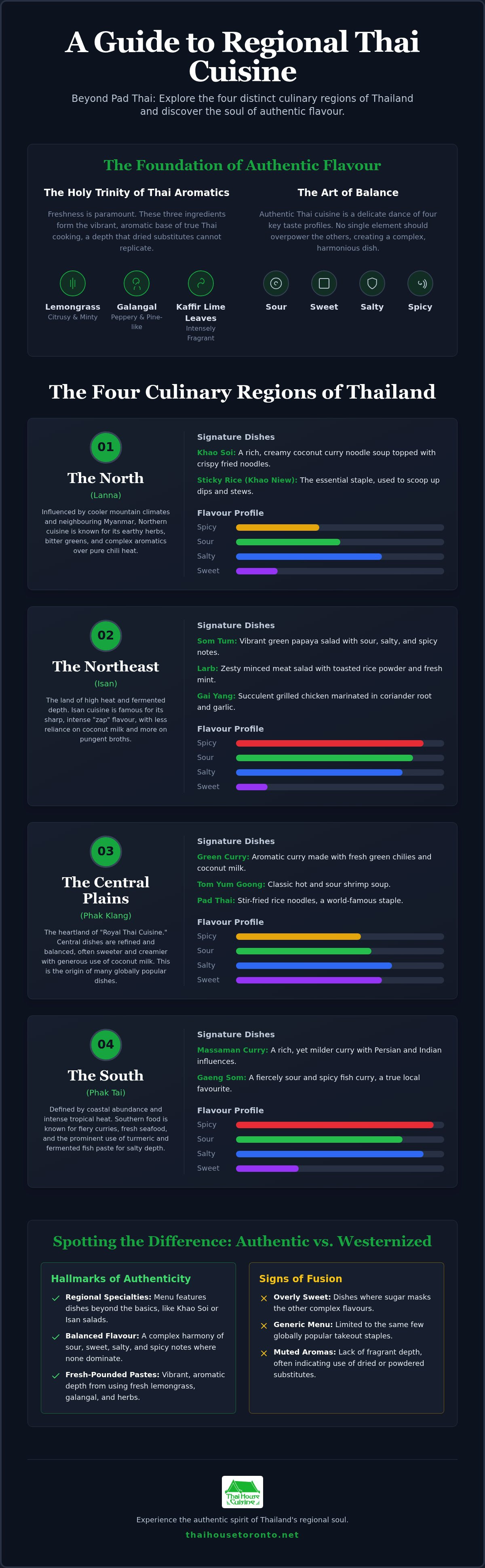
Experiencing Thailand’s Regional Soul at Thai House Cuisine
Since 2012, our mission has been simple: to bring the authentic comfort of a Thai home to the heart of Toronto’s East End. We believe that a meal is more than just food; it is a connection to heritage and a celebration of craftsmanship. By employing regional chefs from various parts of Thailand, we ensure that the nuances of each province are respected and preserved. This dedication to tradition makes us a premier destination for those seeking genuine regional Thai cuisine Toronto residents can enjoy without a plane ticket. Every dish we serve is a tribute to the diverse culinary map we have explored together.
Our kitchen is a place where traditional family recipes meet the vibrant bounty of Ontario. While our menu features a wide array of authentic curries and rustic regional specialties, we also take immense pride in staples that have become local legends. From our signature Pad Thai to our rich, golden Khao Soi, every plate is prepared with the same level of care and professional pride. We treat every guest like a member of our own family, ensuring that your dining experience is as warm as it is flavourful.
A Heritage of Quality Since 2012
Our commitment to the Toronto community is deeply rooted in our history as a staple in The Beaches. We understand that quality begins with the ingredients, which is why we prioritize fresh local produce to complement our imported traditional Thai herbs. This blend of local freshness and imported authenticity creates a polished presentation and a depth of flavour that sets us apart. As a thank you to our loyal neighbours, we offer a 10% cash discount on all orders over $50. It’s our way of showing appreciation for the community that has supported our craft for over a decade.
Join Us for an Authentic Regional Experience
Whether you are visiting from Leslieville, the Danforth, or Scarborough, we are your regional Thai home in the East End. Our dining room on Queen Street East offers a full sensory experience where the aromas of galangal and kaffir lime fill the air. If you prefer a cozy night in, we provide fast delivery and easy takeout options to bring the soul of Thailand directly to your doorstep. We invite you to move beyond the ordinary and discover the meticulous details that define our kitchen. Book your table or order online to taste the regions of Thailand today!
Embrace the Authentic Spirit of Thailand
Exploring the four culinary regions of Thailand transforms a simple dinner into a profound cultural experience. You now have the tools to distinguish between standard fusion and the vibrant, soul-warming flavours of true heritage cooking. Whether you crave the rustic heat of the Northeast or the refined balance of the Central plains, understanding these nuances is the first step toward a deeper appreciation for regional Thai cuisine Toronto food lovers deserve. It's about more than just ingredients; it's about the stories behind the spice.
Since 2012, our family has been proud to serve as a dedicated local expert in the heart of The Beaches. Our regional chefs bring their own histories to every dish, using authentic family recipes that prioritize quality and tradition. We invite you to join us and feel the warmth of our hospitality firsthand. SAVE 10% ON ALL CASH ORDERS OVER $50. QUALITY. HERITAGE. PASSION. We're ready to welcome you home.
Explore our regional menu and order your authentic Thai feast today!
Frequently Asked Questions
What is the difference between Northern and Southern Thai food?
Northern Thai food focuses on earthy, bitter, and herbal notes with a mild spice level; Southern food is famous for its intense heat and turmeric-heavy seafood dishes. While the North uses sticky rice to scoop up thick stews, the South relies on jasmine rice to balance its fiery, salty curries. It’s a contrast between the rustic mountains and the vibrant coast.
Is all authentic Thai food extremely spicy?
Authentic Thai food is not always spicy; it is actually defined by a delicate balance of four key flavour pillars. While some Southern or Isan dishes are famously hot, many Central and Northern recipes focus on sweetness, sourness, or herbal bitterness. A true heritage kitchen ensures that spice never overwhelms the other ingredients. Balance is always the top priority in our kitchen.
Why is sticky rice so popular in Northern Thai cuisine?
Sticky rice, or Khao Niew, is the cultural heart of Northern and Northeastern provinces because it thrives in those specific climates. It serves as both a staple grain and a practical utensil. Diners roll the rice into small balls to dip into sauces and herbal broths, making it essential for the social, shared style of eating found in those specific regions.
What are the most important ingredients in an authentic Thai pantry?
An authentic pantry relies on the "holy trinity" of aromatics: lemongrass, galangal, and kaffir lime leaves. These fresh roots and leaves provide the vibrant base for every paste. Other essentials include high-quality fish sauce for salt, palm sugar for sweetness, and tamarind for a bright, fruity sourness. Without these specific elements, the soul of the dish is lost.
Where can I find the best regional Thai food in Toronto's East End?
You can find the most authentic regional Thai cuisine Toronto offers right in the heart of The Beaches at Thai House Cuisine. Located on Queen Street East, our restaurant has been a dedicated neighbourhood staple since 2012. We focus on bringing the distinct flavours of Thailand’s four regions to the East End community through heritage recipes and meticulous preparation.
How do I know if a Thai restaurant uses traditional family recipes?
You can identify traditional family recipes by the presence of fresh-pounded pastes and a menu that avoids generic fusion shortcuts. Real heritage cooking often features unique regional specialties that aren't found on every standard takeout menu. If the kitchen staff includes chefs who grew up in specific Thai provinces, it's a strong sign the flavours are rooted in genuine tradition.
Does Thai House Cuisine offer vegetarian or vegan regional options?
Yes, we offer a wide variety of vegetarian and vegan regional options that don't sacrifice the depth of traditional flavour. Many of our curries and stir-frys can be prepared with fresh tofu and seasonal vegetables. We take great care to ensure our plant-based guests can still experience the vibrant aromatics and spices that define regional Thai cuisine Toronto food lovers enjoy.
What makes Thai House Cuisine different from other Thai restaurants in The Beaches?
Thai House Cuisine stands out because of our deep community roots and our team of regional chefs who bring their own province’s secrets to our kitchen. Since 2012, we've remained a family-owned business that treats every guest like an old friend. We prioritize fresh local ingredients and offer a 10% cash discount on orders over $50 to reward our loyal local patrons.


