

The best wine for Panang curry may be a little sweet rather than bone-dry. If you’re wondering what wine pairs with Panang curry without making the chilli feel hotter or the coconut sauce seem heavier, start with an off-dry Riesling. Its gentle sweetness can soften the impression of heat, while lively acidity refreshes your palate between creamy, aromatic bites.
Choosing a bottle can still feel tricky. A strong alcohol impression may make chilli feel more pronounced, while a rich, oaky wine can overwhelm the curry’s fragrant spices. The right match depends on the heat, coconut richness and sweetness in the curry, as well as how much spice you enjoy.
This guide offers a reliable first pairing, explains how sweetness, acidity and aroma affect the match, and shows how to adjust your choice for milder or hotter curry. Whether you’re planning a meal at home or enjoying Thai food in Toronto’s Beaches, Danforth, Leslieville, nearby Scarborough or the East End, these tips can help you choose a glass that suits the dish and the occasion.
Key Takeaways
- Understand why Panang curry’s chilli, coconut richness and aromatic seasoning call for a balanced wine match.
- Learn how sweetness, freshness and aroma shape a pairing, and why a touch of sweetness may suit noticeable heat.
- Compare off-dry Riesling, Gewürztraminer, sparkling wine and rosé to find a style that fits your taste.
- Use a simple four-step approach to adjust your wine choice for mild, medium or pronounced curry heat.
- Discover practical ways to enjoy Thai food at home or as part of a meal at Thai House Cuisine, rooted in Toronto’s Beaches since 2012.
What makes Panang curry a distinctive wine-pairing challenge?
Aromatic, fruit-forward wines with some freshness are useful starting points for Panang curry. The dish can combine chilli warmth, a creamy coconut base, savoury seasoning and fragrant ingredients, so the wine needs to complement more than one flavour at a time. The best choice depends on how those elements balance in the curry you’re eating.
A quick visual look at Panang curry can help bring those flavours to mind:
How chilli heat and coconut richness shape the pairing
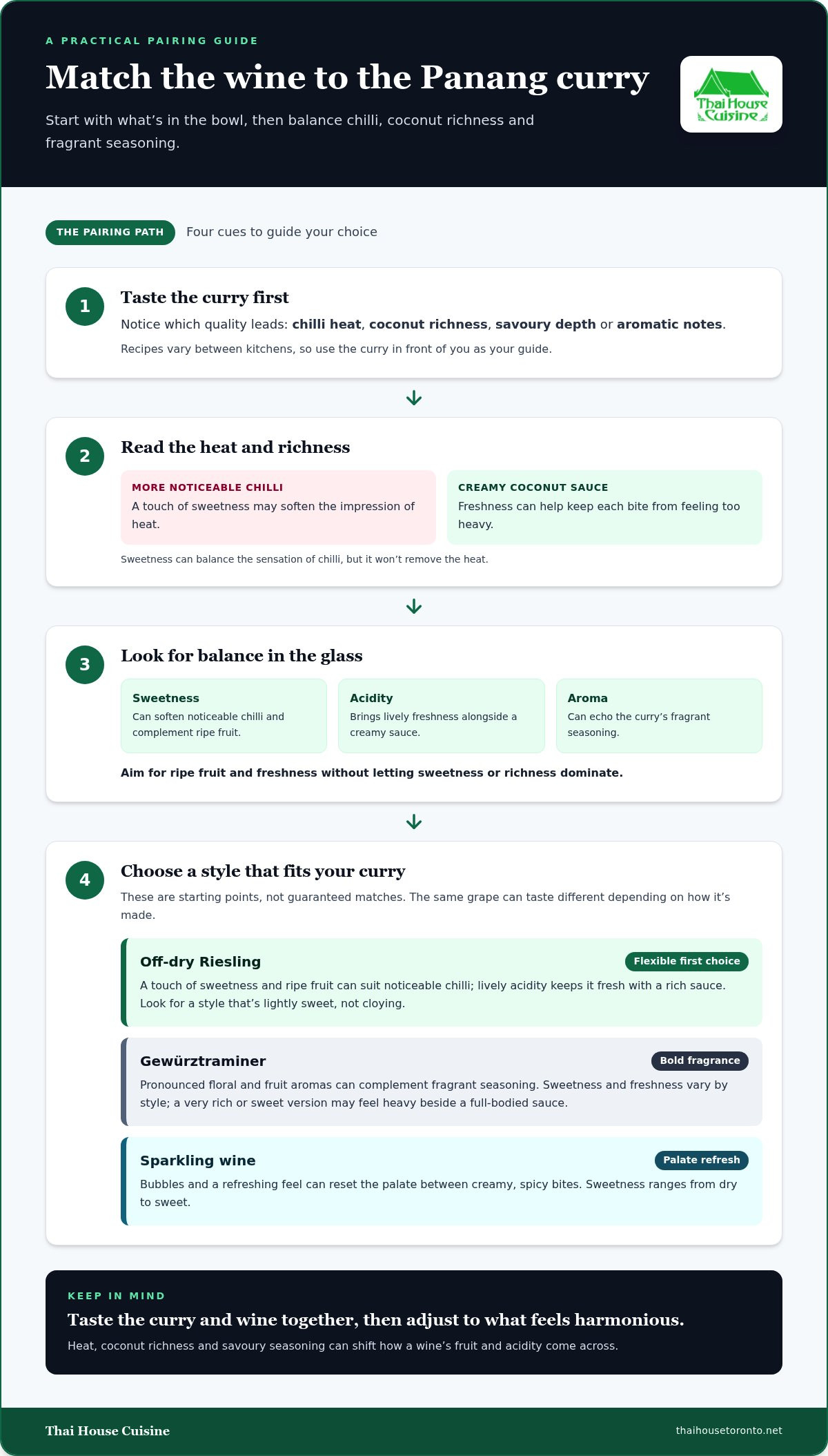
Chilli intensity can vary with the amount of curry paste, the preparation and the cook’s preferred balance. That’s why the same wine may taste different alongside two Panang curries. A touch of sweetness can soften the impression of heat, but it won’t remove the chilli; the dish will still have its own warmth.
Coconut milk gives the sauce a rounded, rich texture. A wine with freshness can help keep each bite from feeling too heavy, while fruit and aroma can sit comfortably beside the curry’s fragrant character. Salt and savoury seasoning matter as well: they can change how the wine’s fruit, acidity and overall balance come across.
Which Panang flavours should you notice first?
Before choosing a bottle, taste the curry and decide which element leads: chilli heat, coconut richness, savoury depth or aromatic notes. You might notice citrus-like fragrance from makrut lime leaves, along with other herbal or spicy notes depending on the recipe. Treat these as clues, not a fixed checklist.
Phanaeng (Panang) curry has a range of ingredients and characteristics, and proportions differ between kitchens. Rather than treating one recipe as the only authentic version, pay attention to the curry in front of you. Start with its actual flavour balance, then look for a wine with enough freshness, fruit and aroma to meet it without taking over.
How do sweetness, acidity and aroma work with Panang curry?
A few simple wine terms can make pairing less of a guess. Acidity is the mouth-watering freshness that makes a wine feel lively. Sweetness is the sugar you can taste, while body describes whether a wine feels light or full in your mouth. Aroma is the scent you notice before and as you sip, from citrus and flowers to ripe fruit and spice.
With Panang curry, these qualities work together. A touch of residual sweetness can soften the sensation of noticeable chilli and complement ripe, fruity flavours. It won’t take the heat away, but it can make each bite feel more balanced. Acidity brings lift alongside a creamy sauce, while aromatic notes can echo the curry’s fragrant seasoning.
A useful pairing balances ripe fruit and freshness with the curry’s heat, rather than letting sweetness or richness dominate.
Why off-dry Riesling is a reliable starting point
Off-dry Riesling is a practical first pour. Its ripe fruit and gentle sweetness can sit comfortably beside chilli, while its acidity keeps the wine lively with a rich sauce. Look for a style that tastes fresh and lightly sweet, not cloying. The fruit should round out the spice while the wine stays crisp enough to invite another sip.
If you’re asking what wine pairs with Panang curry, Riesling is a useful starting point, not a rule for every recipe or palate. A milder curry may need less sweetness, while a hotter one may suit a more noticeable hint of it. Taste the dish and wine together, then adjust to what feels harmonious.
When aromatic whites or sparkling wine may suit
For a more expressive glass, Gewürztraminer brings pronounced floral and fruit aromas that can complement fragrant curry seasonings. Its intensity may appeal if you enjoy a wine that makes its presence known. However, a very rich or sweet style could feel heavy beside an already full-bodied sauce. Let the curry’s heat and your own preference guide the choice.
Sparkling wine offers another option. Its bubbles and refreshing feel can reset the palate between creamy, spicy bites, making it a lively choice for a shared meal. If you’re planning a Thai meal in Toronto, explore Thai House Cuisine’s Thai dining options and choose a wine at home that brings the balance of fruit, freshness and aroma you enjoy.
Which wine styles compare best with Panang curry?
No single bottle suits every Panang curry. Use the styles below as starting points, then adjust for the dish’s heat and richness and for how sweet, fresh or aromatic you like your wine. The same grape can taste quite different depending on how it’s made, so treat these as general guides rather than guaranteed matches.
| Wine style | Sweetness | Freshness | Aromatic character | May suit |
|---|---|---|---|---|
| Off-dry Riesling | A touch of sweetness | Usually lively and crisp | Often fruity, with citrus or stone-fruit notes | Those wanting a flexible first choice, especially with noticeable chilli |
| Gewürztraminer | Ranges from dry to sweet | Varies by style | Expressive, often floral and fruit-forward | People who enjoy bold fragrance alongside aromatic curry |
| Sparkling wine | Ranges from dry to sweet | Bright, with bubbles that refresh the palate | Can be crisp and fruity, depending on the wine | Those looking for a lively contrast to a rich sauce |
| Rosé | Ranges from dry to fruit-forward | Often refreshing when served cool | Red-fruit notes are common, though styles differ | Drinkers who prefer a pink wine or want to avoid sweeter whites |
Off-dry Riesling versus Gewürztraminer
Think of Riesling as the fresher, more adaptable option and Gewürztraminer as the more aromatic one. A lightly sweet Riesling can soften the impression of chilli while keeping a lively feel. Gewürztraminer may appeal if you want the wine’s floral and fruit aromas to stand out beside the curry. Prefer less sweetness? Choose a drier style of either grape. Producer and winemaking choices matter, so the grape name alone can’t promise a specific taste.
Can rosé or sparkling wine work with Panang?
Yes. A dry or fruit-forward rosé can offer refreshing fruit without the sweetness of some aromatic whites. Sparkling wine brings a palate-cleansing lift between bites, particularly with a creamy sauce. Match the wine to the curry’s actual heat and your preference, rather than choosing by colour or category alone. Very tannic or high-alcohol reds may make spicy heat feel more pronounced for some diners, so a softer, lower-tannin red is a gentler alternative if you prefer red wine.
To decide what wine pairs with Panang curry, start with a style that sounds enjoyable, then taste it with a bite of the dish. If the chilli feels sharper, try a wine with a touch more sweetness. If the sauce feels heavy, look for extra freshness.
How should you choose wine for your curry’s heat level?
Use this four-step method to choose a glass that suits the curry in front of you:
- Assess the heat. Notice whether the chilli is gentle, warming or strong enough to dominate each bite.
- Note the sauce richness. A thick, creamy sauce may call for more freshness, while a lighter-feeling curry can work with a rounder wine.
- Choose the wine structure. Consider a touch of sweetness for chilli, freshness for richness and fruit-forward flavours for a balanced match.
- Adjust to taste. Try a small sip with a bite. If the wine seems sharp or the heat feels stronger, switch to a fruitier, fresher or slightly sweeter style.
Rule of thumb: as the curry gets hotter, lean towards fruit-forward freshness and away from firm tannins or a strong alcohol impression.
For mild or medium Panang curry
With mild heat, off-dry Riesling or an aromatic white is a useful place to begin. A moderate hint of sweetness can round out the chilli, while acidity keeps the wine lively. With medium heat, you may prefer a little more fruit or sweetness, depending on your spice tolerance. Consider the sauce, too: if it’s especially rich, prioritize freshness so the pairing doesn’t feel heavy.
For hotter curry or lower spice tolerance
If the curry is pronounced in heat, or you’re sensitive to spice, choose a wine with gentle fruit, freshness and a moderate alcohol impression. Strong tannins can add a drying sensation that may make an already uncomfortable level of heat feel more pronounced. You can change the glass to find a gentler match.
Test before settling in. Take a small sip, then try a bite of curry and notice whether the chilli seems sharper, softer or unchanged. If the heat builds, try a fruitier wine with a touch more sweetness; if the sauce feels weighty, favour freshness. This taste check helps answer what wine pairs with Panang curry for your palate rather than relying on a universal rule.
Explore Thai House Cuisine’s Toronto dining options
Where can Toronto diners enjoy Panang curry with a thoughtfully chosen wine?
A good pairing is about the meal you’re actually having, not a strict rule about which grape belongs with Thai food. At home, choose a wine you enjoy from the styles above, then taste it alongside a bite of curry. If the chilli seems sharper or the sauce feels heavier with the wine, adjust your glass rather than forcing the match. A slightly fruitier, fresher option may feel more balanced.
The same approach works when planning a restaurant meal, takeout or delivery. Consider the curry’s heat and richness, and decide whether you want the wine to refresh your palate or complement the dish’s fragrant flavours. If you’re having wine at home, choose a bottle separately to suit your meal.
Pairing Panang curry at home or dining out
Start with your own preferences. If you usually enjoy crisp whites, look for freshness; if a hint of sweetness suits your palate, try an off-dry style. A small taste of wine with a bite of curry can tell you more than tasting either on its own. The chilli may seem more pronounced, the sauce richer, or the combination pleasantly balanced. Use that first impression to guide the rest of the meal, whether you’re dining in or enjoying takeout or delivery.
Plan a Thai meal in Toronto’s Beaches
For more context on the dish’s character, read the Panang curry guide alongside this pairing advice. Thai House Cuisine has served Toronto’s Beaches neighbourhood since 2012, with authentic Thai comfort food prepared by regional Thai chefs and inspired by cherished family recipes. Enjoy a Thai meal at the restaurant or plan one at home, whether you’re in the Beaches, Danforth, Leslieville, nearby Scarborough or Toronto’s East End.
Browse the Thai House Cuisine menu as you plan. Once you’ve chosen your meal, match a wine to its actual heat and richness, then enjoy the pairing that feels right to you.
Explore the Thai House Cuisine menu
Make your next Panang curry pairing your own
The best answer to what wine pairs with Panang curry depends on the curry’s heat, coconut richness and your own taste. Off-dry Riesling is a flexible place to start, while aromatic whites, sparkling wine and rosé offer different ways to balance fruit, freshness and spice. Taste the wine with a bite of curry, then adjust to what feels right.
For a thoughtfully prepared Thai meal, Thai House Cuisine brings authentic comfort food to Toronto’s Beaches, with regional Thai chefs and cherished family recipes. Serving the neighbourhood since 2012, the restaurant offers dine-in, takeout, delivery and event catering, making it easy to plan a meal for your table or a gathering.
Choose a wine you enjoy, savour the layers of the curry and let the meal unfold at its own pace.
Frequently Asked Questions
What wine pairs best with Panang curry?
An off-dry Riesling is a dependable first wine to try with Panang curry. Its gentle sweetness can balance chilli, while its freshness helps alongside the coconut-rich sauce. It’s a starting point, not a universal match: a milder curry may suit a drier wine, while pronounced heat may call for more fruit and softness. For Toronto diners, the same approach works whether enjoying Thai food in the Beaches, Danforth, Leslieville, nearby Scarborough or the East End.
Is Riesling good with Panang curry?
Yes, Riesling can pair well with Panang curry, especially in an off-dry style. Ripe fruit and a touch of sweetness can soften the impression of chilli, while acidity keeps the wine lively beside a rich sauce. Look for a wine that tastes fresh rather than cloying. If your curry is mild or you prefer dry wines, choose a drier Riesling and see how it tastes with a bite.
Can red wine go with Panang curry?
Red wine can work, but choose a fruit-forward style with low tannins and a moderate alcohol impression. Light-bodied reds such as Pinot Noir or Gamay are possible options, particularly with milder curry. Tannins create a drying sensation, and some diners may find that high tannin or alcohol makes chilli feel more pronounced. Try a small sip alongside a bite before committing to a full glass.
Should wine with Panang curry be sweet or dry?
Neither sweetness nor dryness is essential; choose according to the curry’s heat and your palate. A little residual sweetness can complement noticeable chilli, while a dry wine may suit a mild curry or diners who prefer less sweetness. Freshness matters in either style, as it helps balance the coconut-rich sauce. Taste the wine with the food, since sweetness and spice can feel different together than on their own.
Does alcohol make spicy Panang curry taste hotter?
It can. Alcohol may amplify the burning sensation of chilli, so a wine with a strong alcohol impression can make spicy Panang curry feel hotter for some people. If you’re sensitive to heat, try a fruit-forward wine with moderate alcohol and avoid pairing pronounced spice with a powerful, tannic red. A small taste with a bite of curry helps you judge the effect before choosing a full glass.
What non-alcoholic drink goes with Panang curry?
Water is a simple, refreshing option that won’t compete with Panang curry’s fragrant sauce. If you’d like a drink with more flavour, try unsweetened or lightly sweetened iced tea; its clean finish can complement the meal without adding wine’s alcohol. A lightly sweet drink may soften the impression of chilli, though it won’t remove the heat. Choose what you enjoy and sip between bites.
Does sparkling wine pair with Panang curry?
Yes, sparkling wine can pair nicely with Panang curry. Its refreshing bubbles offer a lively contrast to the creamy sauce and help reset the palate between bites. Choose a style with enough fruit to complement the curry, and consider the heat: a touch of sweetness may suit pronounced chilli, while a drier sparkling wine may work with milder curry. Taste a sip with the dish to see if the balance works for you.


