

A family-friendly curry doesn’t need to lose its Thai character to be gentle enough for children. For a mild Thai curry for kids, reduce jarred green curry paste to 4 tablespoons while keeping a good curry flavour; extra coconut milk can soften red curry’s heat. Choose tofu or prawns to suit your family.
It makes sense to be cautious with curry paste: its heat can quickly take over a meal. The key is to adjust the paste and balance the sauce, rather than give up the fragrant, comforting flavours that make Thai curry special.
This guide explains how to make red or green curry milder, choose between tofu and prawns, and work with store-bought or homemade paste. You’ll also find practical ways to make a family-friendly green curry with vegetables and a creamy coconut sauce. Make small adjustments as you cook, then serve the curry with rice for a relaxed meal everyone can enjoy.
Key Takeaways
- Soften red curry’s heat with coconut milk, adding it gradually to balance the sauce without losing its creamy character.
- Choose extra-firm tofu for a plant-based option or prawns for a seafood version, and add them at the right stage for their texture.
- Adjust store-bought curry paste to suit your family, or make a homemade paste to control its flavour from the start.
- Build a family-friendly green curry with coconut milk and vegetables, then simmer until the vegetables are tender.
- For a naturally milder choice, consider Massaman curry and adapt its vegetables to your family’s preferences.
Reducing red curry's spiciness with coconut milk
Yes. Coconut milk is plant-based, so it can make a curry dairy-free, provided the curry paste and every other ingredient are dairy-free too.
Use coconut milk to soften red curry’s heat and create a smooth, gently sweet sauce. Adjust the flavour with these steps without letting the coconut overwhelm the vegetables or protein.
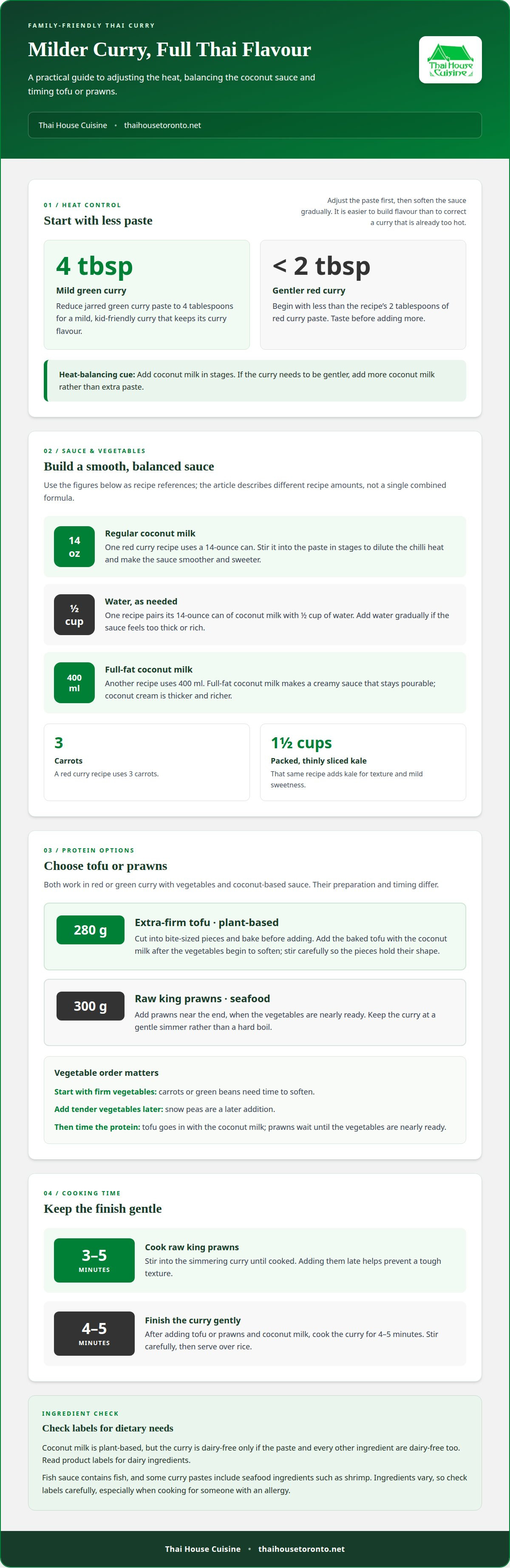
- Start with less red curry paste. For a family-friendly pot, begin with less than the recipe’s 2 tablespoons of Thai red curry paste, then taste the sauce before adding more. The heat comes from the paste, so reducing it at the start gives you more control than trying to correct an already fiery curry.
- Stir in coconut milk gradually. A Thai red curry recipe may use one 14-ounce can of regular coconut milk. Add it to the paste in stages, stirring after each addition. Coconut milk dilutes the chilli heat and makes the sauce sweeter and smoother. If you need a gentler flavour, use more coconut milk rather than adding extra paste.
- Choose milk or cream for the texture you want. Full-fat coconut milk creates a creamy sauce while keeping it pourable; 400 ml is one recipe’s amount. Coconut cream is thicker and richer, so it can make the curry feel heavier. Use coconut milk as a substitute for dairy cream when you want a coconut-flavoured sauce, not a neutral one.
- Balance the sauce with water and vegetables. One red curry recipe pairs its 14-ounce can of coconut milk with ½ cup of water. Add the water gradually if the sauce feels too thick or rich. Carrots and kale bring texture and mild sweetness; that recipe uses 3 carrots and 1 ½ cups of packed, thinly sliced kale.
- Taste before adding protein. Simmer the coconut milk sauce with the vegetables, then taste a small spoonful. If it’s still too hot, stir in more coconut milk. If it’s mild but overly rich, loosen it with water. Add tofu or prawns once the sauce tastes balanced.
For a dairy allergy, coconut milk alone doesn’t make a dish safe: curry paste and other ingredients matter too. Read product labels and avoid ingredients containing dairy.
Tofu or prawn options
Choose the protein before you start cooking. Extra-firm tofu gives curry a tender, satisfying bite, while prawns add delicate seafood flavour. Both work with red or green curry, vegetables and coconut-based sauce. These steps help you time each option so the protein cooks properly and the vegetables retain their texture.
- Choose a protein for the meal. Use 280 g of extra-firm tofu for a plant-based curry, or 300 g of raw king prawns for a seafood version. Tofu absorbs the sauce and makes a delicious option for a meat-free dinner. Prawns bring a lighter texture and pair well with vegetables such as carrots, green beans or snow peas.
- Prepare tofu so it holds its shape. Cut extra-firm tofu into bite-sized pieces and bake it before adding it to the coconut milk. Baking helps the pieces keep their shape in the sauce. Add the tofu after the vegetables begin to soften, so it warms through without rough stirring.
- Add prawns near the end. Stir raw king prawns into the simmering curry for 3 to 5 minutes, until cooked. Adding them late helps prevent a tough texture. Keep the pieces in the sauce as it cooks, and make sure the curry is bubbling gently rather than boiling hard. The short cooking time suits prawns better than an early addition.
- Time the vegetables around your protein. Start with firm vegetables, such as carrots or green beans, to give them time to soften. Add tender choices, including snow peas, later. For tofu, add the baked pieces with the coconut milk. For prawns, wait until the vegetables are nearly ready, then add them for their brief cooking time.
- Finish the curry gently. After adding tofu or prawns and coconut milk, cook the curry for 4-5 minutes. Stir carefully so tofu stays intact and prawns cook evenly. Taste the sauce before serving, then spoon it over rice. For a family dinner, serve extra vegetables alongside the curry so children can choose familiar bites.
If you’d rather have dinner prepared for you, explore Thai takeout and delivery options.
For the tofu version, make baking part of the preparation sequence rather than leaving it until the curry is already underway. The recipe recommends baking tofu before adding it with the coconut milk. Once it is ready, keep the pieces set aside until the sauce and vegetables are at the point where they can be added. This keeps the order of preparation clear and avoids treating tofu as though it needs the same timing as prawns. Add it with care, then let the curry finish cooking gently.
This approach also makes it easier to keep the two protein options distinct while preparing the meal. If you are making tofu curry, focus on getting the tofu baked and ready for its addition with the coconut milk; if you are making the prawn version, follow the later timing for the seafood instead. Choose the option that suits the meal, and keep the rest of the curry preparation consistent. With the tofu prepared in advance, you can bring the ingredients together in sequence and serve the finished curry over rice.
Using store-bought or homemade curry paste
Fish sauce contains fish, and some curry pastes include seafood ingredients such as shrimp. Ingredients vary, so read the labels on packaged paste and fish sauce, especially when cooking for someone with an allergy.
Both jarred and homemade curry paste can bring Thai flavour to a family meal. Jarred paste is convenient, while homemade paste gives you control over the ingredients. Use these steps to manage the heat and build a balanced sauce.
- Read the paste label before measuring. Check the ingredient list for chilli, fish sauce, shrimp or other ingredients your family avoids. Brands and recipes vary, as does the heat of jarred paste. Start with less than the recipe calls for, then adjust after tasting the sauce.
- Use a measured starting amount for green curry. One recipe recommends 4 to 6 tablespoons of Thai green curry paste, or one quantity of homemade paste. For children, reduce jarred paste to 4 tablespoons to keep decent curry flavour with less heat. Stir it through the vegetables before adding coconut milk.
- Season red curry in stages. A red curry recipe uses 2 tablespoons of Thai red curry paste. Start with less if you want a gentler result, then taste once the sauce is creamy. Add more in small amounts only if the curry needs extra depth. Garlic and ginger can add aromatic flavour without relying on more paste.
- Build homemade paste around chosen ingredients. A homemade paste can include fresh coriander, lemongrass, lime juice and ground cumin. One version uses 25 g of fresh coriander and 1 tablespoon of vegetable oil. Blend the ingredients into a paste, then add it gradually so you can control the curry’s heat.
- Balance the seasoning thoughtfully. A homemade curry-paste recipe specifies 3 teaspoons each of fish sauce and sugar. Fish sauce adds savoury depth, while sugar balances the flavour. If fish is an allergy concern, don’t use fish sauce; select a suitable substitute and check its label before adding it.
- Cook the paste before loosening the sauce. Add the measured paste to the pan and cook it with the vegetables for 2 minutes, stirring so it coats them evenly. Then add coconut milk and continue with the recipe. This step gives the garlic, ginger and other aromatics time to mingle before the sauce becomes creamy.
Family-friendly Thai green curry
Thai yellow curry’s heat depends on its paste and preparation, so its colour doesn’t guarantee a mild result. Green curry is described as spicy, while Massaman is described as the mildest Thai curry. Adjust the paste to control the heat rather than relying on the curry’s name.
For an easy mild curry at home, use less green curry paste with coconut milk, vegetables and tofu. Simmer until the vegetables soften, then serve with rice. Use a recipe as a guide, but taste the sauce as you cook.
There isn’t one serving size that suits every child or age. Offer a portion that matches the child’s appetite and eating skills, with soft vegetables and manageable pieces of tofu or other protein.
- Measure the green curry ingredients. For a family-style pot, gather 4 tablespoons of jarred green curry paste, 400 grams of coconut milk and ½ cup of water. Include vegetables such as 100 grams each of baby corn and green beans. These amounts give you a practical starting point for a creamy sauce with vegetables throughout.
- Prepare vegetables according to their cooking time. Slice carrots and green beans so they soften evenly, and add tender vegetables later. Start with the firmer pieces. This helps avoid crunchy carrots beside overcooked greens and gives children a range of familiar textures in each bowl.
- Cook the paste with the vegetables. Stir the curry paste through the vegetables for 2 minutes. This spreads its flavour across the ingredients before the liquid goes in. If children are sensitive to heat, use less paste than the measured amount, then taste the sauce later before deciding whether it needs more.
- Add coconut milk and simmer. Pour in 400 grams of coconut milk and ½ cup of water, then simmer the curry until the vegetables soften, about 5 to 10 minutes. Stir occasionally to keep the sauce even. Add baked tofu with the coconut milk if you want a plant-based protein.
- Serve with a familiar side. Brown rice pairs well with curry and adds a hearty base to the meal. One red curry recipe uses 1 ¼ cups of brown jasmine or long-grain brown rice. Cook rice separately, then offer curry and rice side by side so children can choose how much sauce to spoon over.
- Adjust each bowl thoughtfully. Let the curry cool to a comfortable temperature before serving. Start with a smaller helping of softened vegetables and bite-sized tofu, then offer more according to appetite. Keep extra curry paste out of children’s portions so adults can add heat to their own bowls.
Thai yellow curry’s heat varies with its paste and preparation, so it isn’t necessarily mild. Green curry is described as spicy. Red curry’s heat can’t be compared based on the available information.
What mild Thai curry dishes are best for kids?
Start with Massaman for a naturally gentler curry: it’s described as the mildest Thai curry. Red, green and yellow curries can also suit children when you adjust the paste and choose familiar vegetables. Use these steps to match the dish to your family’s tastes and needs.
- Choose Massaman as a mild starting point. Potatoes, onions, peanuts and coconut milk give this curry a mix of carbohydrates, protein, vitamins, minerals and fats. Add tofu for plant-based protein, or choose another protein that suits the meal. Its mellow profile makes Massaman a useful first curry to try with children.
- Use sweet vegetables in Massaman. Add sweet potato or pumpkin instead of potatoes, or combine them with potatoes. Their soft texture and gentle sweetness can balance the savoury sauce. Cut vegetables into similar-sized pieces so they cook evenly and are easy to serve with rice.
- Keep peanuts separate if needed. Peanuts are common in Massaman, but pumpkin or sunflower seeds can replace them. Serve seeds separately rather than mixing them into the pot, so everyone can choose a topping. This also makes the curry’s flavour and texture easier to adjust at the table.
- Try yellow curry with vegetables. Thai yellow, or Karee, curry traditionally includes cherry tomatoes, which add a refreshing taste. Add them near the end of cooking to help them hold their shape. One recipe description notes wheat gluten in its yellow curry spice mix, so choose a suitable alternative for a child avoiding gluten.
- Adjust red or green curry to suit the child. These curries can have more noticeable heat, so use less paste and let coconut milk form the sauce. Add familiar vegetables such as carrots, then serve with rice. Keep the sauce and rice separate if a child prefers to control each bite.
- Let children personalize their portions. Serve curry with rice and familiar sides, keeping toppings such as seeds in separate dishes. A child can start with a little sauce or choose vegetables first. This makes Massaman, Karee or a milder red curry easier to adapt at dinner.
Explore Thai curry options for dinner
When planning a Massaman meal, treat the potato choice as flexible. Use sweet potatoes or pumpkin instead of potatoes, or add them alongside potatoes to suit your family’s preferences. If children have different likes, offer a choice of vegetables and let each child decide what to include in their serving. This keeps the curry mild while making it easy to vary the vegetables in the pot.
Thai House Cuisine
When you’d like to enjoy Thai flavours without making curry at home, Thai House Cuisine offers dine-in meals, takeout and delivery in Toronto’s Beaches neighbourhood and nearby East End communities, including Danforth, Leslieville and Scarborough. For a gathering, Thai food catering brings Thai dishes to the table. Lunch specials are another way to enjoy Thai food during the day.
For a family meal, consider whether you’d prefer dining in, eating at home or serving a group. The cooking tips above can help you adjust curry at home; a restaurant meal is another way to enjoy Thai cuisine together.
Contact Thai House Cuisine to plan your next meal.
Make curry part of a family meal
A new dish can become a familiar favourite through shared meals and small, enjoyable choices. Invite children to help set the table or choose a side, then talk together about the flavours they notice. These simple rituals make trying Thai food part of a relaxed family routine, not a test they need to pass.
Use what you’ve learned to decide whether cooking suits tonight’s plans. If you’d rather spend less time preparing dinner, Thai House Cuisine can bring Thai food to your table. For a family exploring a mild Thai curry for kids, choose the setting that makes sharing the meal feel easy and enjoyable.
Bring curiosity to the table, follow your family’s tastes and enjoy discovering new favourites together.
Frequently Asked Questions
What ingredients make Thai curry mild and kid-friendly?
Coconut milk, a modest amount of curry paste and familiar ingredients can make a gentler curry. Choose a fragrant paste with garlic and ginger, then let coconut milk bring richness to the sauce. Use vegetables and protein your child already enjoys, and keep extra chilli out of the shared pot. This lets the Thai flavours come through without making heat the main feature.
How can you reduce the heat in Thai curry without losing flavour?
Use less curry paste and build flavour with ingredients such as garlic, ginger, lime juice or fresh coriander. Add the paste gradually, tasting the sauce between additions. If it becomes too hot, stir in coconut milk to soften the flavour. Keep chilli or extra paste separate at the table so adults can add more without changing the children’s servings.
What vegetables and proteins work well in mild Thai curry for children?
Choose vegetables with flavours and textures your child recognizes, such as bell peppers, spinach or sweet potato. Cut them into manageable pieces and cook until tender enough to eat comfortably. Tofu and prawns both work in coconut-based curry, and chicken is another option. Serving familiar rice alongside the curry gives children an easy way to balance each spoonful.
What are safe serving sizes of Thai curry for children by age?
There isn’t one serving size that suits every child or age. Offer a portion that matches the child’s appetite and eating skills, with soft vegetables and manageable pieces of tofu or other protein.


