

What if lunch became part of the conversation, not a distraction from it? To impress clients with catered lunch, choose a menu that feels welcoming, suits the group and fits smoothly around the meeting. A polished setup matters, but so do practical details: whether guests can serve themselves easily, understand what's on the menu and find dishes that suit their preferences.
A thoughtful Thai lunch can bring warmth and memorable flavour to a professional gathering. Thai House Cuisine serves authentic Thai comfort food in Toronto's Beaches neighbourhood and caters corporate offices and gatherings across Toronto and the GTA. Thai chefs prepare dishes using family recipes and fresh local ingredients, and customizable catering includes vegetarian and dietary options. Use this guide to plan the menu, account for guest needs and coordinate the meal so conversation stays at the centre, whether your gathering is in the Beaches, Danforth, Leslieville, nearby Scarborough or another East End area.
Key Takeaways
- Start with the meeting’s purpose and setting, then choose a lunch format that supports the conversation.
- To impress clients with catered lunch, balance distinctive Thai flavours with menu variety and choices suited to guests’ preferences.
- Compare options by how easily guests can serve and enjoy them during the meeting, not by novelty alone.
- Use a simple planning sequence: confirm the meeting details, estimate attendance, gather preferences, select dishes and coordinate delivery.
- Thai House offers customizable catering for Toronto and GTA offices and client gatherings, with vegetarian and dietary options.
Why a Catered Lunch Can Strengthen a Client Meeting
A client host’s first goal is to help guests feel welcome, valued and comfortable. A well-planned lunch supports that goal without turning hospitality into a performance. Shared food can also create natural pauses for conversation before the agenda begins or between discussion points.
A client lunch works best when hospitality supports the purpose of the meeting. Choose a format that makes serving straightforward and fits the pace of the conversation. To impress clients with catered lunch, give practical details as much attention as the menu: consider where food will go, how guests will serve themselves and whether the meal suits the schedule.
Match the lunch format to the client occasion
A focused working lunch calls for a different setup from a relaxed relationship-building meeting. If you’ll be reviewing documents or following a full agenda, easy-to-serve dishes can limit interruptions. For a more informal conversation, a shared spread can give guests the freedom to choose and talk at their own pace.
Think about how people will eat in the space. Will everyone have a seat at a table, or will guests need to serve themselves between agenda items? Leave room for plates, serving dishes and meeting materials. Keep utensils and food within easy reach, and avoid a layout that forces guests to cross the room or interrupt a discussion to get lunch. These details help the meal feel considerate while keeping attention on the meeting.
Make the meal feel thoughtful, not generic
Menu care shows guests that you’ve considered who will be at the table. A distinctive dish can make lunch memorable, while a considered range of choices helps guests find something they’ll enjoy. Thai flavours bring aromatic, savoury character to the occasion. At Thai House, chefs prepare authentic comfort food using family recipes and fresh local ingredients. The aim isn’t to surprise guests for its own sake, but to serve food that feels inviting and suits the gathering.
Thoughtfulness also shows in how you host. Share a brief overview of the dishes, make serving choices clear and give guests space to decide what they’d like. Dining customs vary, so a little awareness can help keep the atmosphere comfortable. The Importance of Table Manners in Business Settings offers a general overview of etiquette across dining situations. Follow your guests’ cues rather than assuming everyone has the same habits.
Good hospitality can set a warm tone, but it can’t guarantee a particular business result. Its value is in making the setting welcoming and giving conversation room to develop naturally. Keep the meal in a supporting role, and let the meeting’s purpose lead.
How Thai Flavours Make a Client Lunch Memorable
An impressive menu brings together flavour, variety and a clear fit for the occasion. Give guests something distinctive to enjoy while keeping the choices welcoming and easy to understand. Thai cuisine offers a natural balance: familiar formats such as noodles and fried rice alongside aromatic herbs, tangy notes and rich coconut flavours.
Thai House’s Thai chefs prepare authentic comfort food using family recipes and fresh local ingredients. The menu draws on Thai cooking traditions while offering familiar dishes guests can recognize. That combination gives a client lunch character without making it feel formal or unfamiliar. If you want to impress clients with catered lunch, build the menu around a few complementary dishes rather than novelty alone.
Choose dishes that balance familiar and distinctive flavours
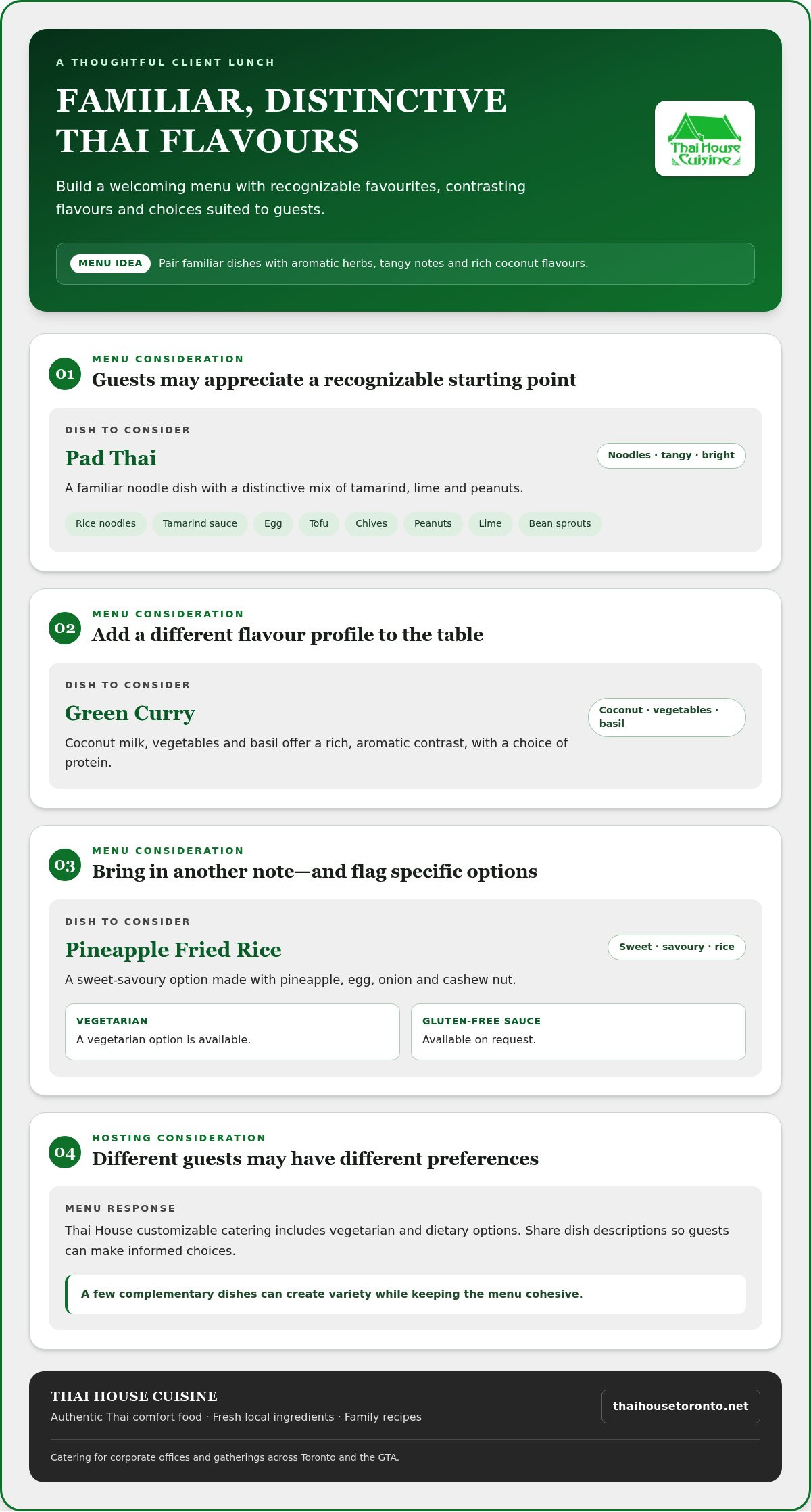
Use recognizable dishes as a welcoming starting point. Pad Thai, for example, is made with rice noodles, tamarind sauce, egg, tofu, chives, peanuts, lime and bean sprouts. Green Curry offers a different profile, with coconut milk, vegetables and basil, plus a choice of protein. The contrast can make a menu feel varied without asking guests to choose between entirely unfamiliar options.
Pineapple Fried Rice brings a sweet-savoury note, with pineapple, egg, onion and cashew nut. A vegetarian option is available, and gluten-free sauce is available on request. Consider how these dishes might complement one another and the occasion. A focused meeting may call for a straightforward combination, while a longer gathering may benefit from more variety.
Use variety to shape a welcoming meal
A well-composed shared menu offers contrast: noodles alongside vegetables, savoury flavours balanced with bright herbs or citrus, and different textures across the dishes. Variety makes the meal engaging and gives guests room to choose what appeals to them. Thai House’s customizable catering includes vegetarian and dietary options, helping hosts plan for varied preferences.
For menu inspiration, browse the Thai House catering menu and think about how the dishes might work together. Consider the overall mix, not just individual favourites. A range of flavours and textures can make the table feel abundant while keeping the meal cohesive. Share dish descriptions with guests so they can make informed choices.
Distinctive food can give a business lunch a stronger sense of place and care, especially when each choice feels purposeful. Thai House brings authentic Thai cooking to corporate offices and gatherings across Toronto and the GTA. Explore Thai House in Toronto as you shape a menu that feels welcoming and memorable.
How to Compare Catered Lunch Options for Client Hosting
A menu can sound appealing and still be awkward for a meeting. Compare each option by how well it suits the guests, agenda and space, rather than choosing based on novelty alone. Compare a catered lunch by guest fit, meeting format, menu variety and serving ease. The right selection makes it straightforward for guests to enjoy their meal without pulling attention away from the conversation.
| Meeting format | Menu variety | Dietary fit | Serving practicality |
|---|---|---|---|
| Focused working lunch with a set agenda | A cohesive selection that’s easy to understand and enjoy | Include choices that account for known preferences | Choose food guests can serve or eat with minimal interruption |
| Relaxed relationship-building conversation | A broader mix of flavours and textures can invite guests to choose | Plan for vegetarian and other dietary preferences | Allow comfortable access to food while keeping the conversation flowing |
Compare menu variety and dietary flexibility
Variety doesn’t mean ordering as many dishes as possible. Look for a balanced selection with different flavours and textures, then consider which guests each choice may suit. Pad Thai and Green Curry are examples of distinct Thai dishes, but their ingredients don’t automatically make them suitable for every dietary need. A dish’s name alone isn’t enough to establish that it meets a specific restriction.
Customizable catering helps hosts plan for vegetarian and other dietary preferences. Gather attendees’ needs in clear, considerate language, then use that information to shape the menu. Share dish descriptions with guests in advance where practical, so they can make informed choices. Don’t describe a dish as suitable for an allergy or restriction unless you have accurate information about its ingredients. Dietary options are helpful, but they aren’t a blanket allergen guarantee. Similarly, for organizations hosting corporate gatherings or events internationally, dedicated venues such as Regale Singapore demonstrate the value of selecting certified culinary establishments that reliably accommodate specific cultural and dietary standards.
Compare presentation and practical serving needs
For a formal, tightly scheduled discussion, a composed meal can suit the tone, while a shared meal may feel more relaxed for relationship-building. Think through the room: where will food sit, how will guests reach it, and can they serve themselves without interrupting a presentation or blocking conversation? Match the serving plan to the space and agenda.
Before deciding, picture the lunch from a guest’s point of view. Will they know what’s being served? Can they reach the food comfortably? Does the setup leave room for meeting materials and conversation? This kind of comparison can help you impress clients with catered lunch by making the experience considered and easy to navigate. Thai House’s customizable catering gives Toronto hosts a way to plan around varied preferences while bringing authentic Thai flavours to the table.
Plan a Smooth Catered Client Lunch in Toronto
A clear plan keeps lunch logistics from competing with the meeting. Start with the purpose and schedule, then work through attendance, guest needs, menu choices and delivery. This sequence helps you impress clients with catered lunch while keeping arrangements manageable for your Toronto office.
- Define the meeting. Decide whether lunch falls during a working session, a break or a relaxed client conversation. Note the timing and how much attention guests can give to serving and eating.
- Estimate attendance. Use the latest expected headcount to guide planning, and account for likely changes. Confirming who’s coming gives you a more useful basis for choosing the menu.
- Gather preferences. Invite attendees to share relevant dietary preferences or restrictions in advance. Keep the request simple and provide a clear way to respond.
- Choose the dishes. Use the meeting format and guest information to shape a menu that’s easy to enjoy. Thai House offers customizable catering with vegetarian and dietary options.
- Coordinate delivery. Include the delivery destination and intended arrival timing in your order plan. Account for the minimum order and delivery conditions as you arrange the meal.
Prepare the office and guest information
Consider meal timing, meeting format and available serving space together. A boardroom table may need to accommodate both lunch and meeting materials, while another office space might offer more room for food. Send attendees menu descriptions when dietary choices matter, and give them time to share preferences. Don’t assume a dish meets a specific restriction based on its name or description alone.
Coordinate ordering and delivery details
Make the destination specific, especially in a Toronto office where the entrance, reception desk and meeting room may be in different places. Plan delivery around the meeting schedule so receiving the order doesn’t interrupt an important discussion. Thai House has a minimum delivery order of $35 before tax. Free in-house delivery applies only to orders of $35 or more; a $7 delivery charge may apply outside the free-delivery area.
Before lunch day, review the expected attendance, menu choices, delivery destination and meeting timing in one place. This final check can prevent avoidable confusion and leave you free to welcome your guests. For a wider view of planning a Toronto event around Thai food, use the Thai catering planning guide as a helpful reference.
Bring a Thoughtful Thai Catered Lunch to Your Toronto Clients
A successful client lunch comes together through a few considered choices: match the menu to the meeting, account for guests’ preferences and coordinate delivery around the schedule. These details help lunch feel welcoming without taking attention away from the conversation. If you want to impress clients with catered lunch, thoughtful planning matters as much as distinctive food.
Why local experience matters for Toronto office lunches
Thai House has been serving Toronto since 2012, with roots in the Beaches neighbourhood. Its catering serves corporate offices and gatherings across Toronto and the GTA, bringing authentic Thai comfort food to local client meetings. That neighbourhood connection is part of the restaurant’s story, and its catering helps hosts give a meeting a sense of place.
Thai chefs prepare dishes using family recipes and fresh local ingredients, and customizable catering includes vegetarian and dietary options. For a host, that’s a practical starting point: choose food with character, then shape the menu around the occasion and the people attending. Keep the meeting’s pace and the needs guests have shared in mind as you make your selections.
Choose the next step that fits your meeting
Start with the gathering itself. A short working lunch may call for a focused menu that’s easy to serve, while a relaxed client meeting may leave room for a broader selection. Consider expected attendance, available serving space and any preferences guests have shared. Then review menu choices with the meeting in mind, rather than selecting dishes simply because they sound unusual.
Explore the Thai House catering menu for inspiration as you consider what may suit your group. Thai House catering includes a free bonus catering card valued up to $100 and a free bonus tray of food. The card value is capped at $100.
Bring the details together before the meeting: a menu that fits the occasion, choices informed by guest preferences and delivery coordinated with your office plans. With warm hospitality and authentic Thai flavours, lunch can feel like a considered part of welcoming your clients. Explore the menu and plan a catered gathering for your Toronto office.
Make Your Next Client Lunch Feel Considered
Turn your meeting plans into a guest experience that feels natural from arrival to the last conversation. Think about what you want clients to take away from the time together, then let lunch reinforce that welcome without competing with the discussion. A menu chosen with care shows attention to the people at the table, while an organized setup helps everyone settle in.
The meal doesn’t need to be elaborate to be meaningful. Keep the occasion, guest preferences and practical details in view, and choose food that gives the gathering a warm character. That’s a thoughtful way to impress clients with catered lunch and make room for genuine connection.
Start planning around your next meeting. A welcoming lunch can set a gracious tone and help make your time together memorable.
Frequently Asked Questions
Can Thai food work for a client lunch if guests have different preferences?
Yes. Thai food can suit a mixed group when the menu offers a choice of flavours and dishes. A host might pair a noodle dish with a curry and a vegetarian selection, then share ingredient details so guests can decide what works for them. Ask attendees about preferences ahead of time, and don’t assume a dish meets a specific dietary restriction without accurate information about its ingredients.
Is Thai catering suitable for a formal business meeting?
Yes. Thai catering can suit a formal meeting when the menu and serving approach match its tone. To impress clients with catered lunch, keep the selection composed and straightforward to enjoy, while leaving the agenda and conversation in focus. Clear dish descriptions and an organized lunch space can help guests feel at ease while the meeting remains professional.
How much food should I order for a catered client lunch?
Base your order on expected attendance and whether lunch is meant to be a full meal or a lighter part of the meeting. Consider the meeting time and whether guests will have time to sit and eat, then account for confirmed dietary preferences when planning the menu. A current headcount gives you a more useful starting point than relying on a standard quantity.
Can a Thai House catering menu include vegetarian options?
Yes. Thai House offers customizable catering with vegetarian options. Pineapple Fried Rice is one menu example, with a vegetarian option available. Review the menu details and consider how each selection fits the group. If guests have specific dietary restrictions, share those clearly as you plan rather than assuming a vegetarian dish addresses every need.
What should I tell clients before serving Thai food at a meeting?
Give guests a clear menu overview before lunch, including dish names and ingredient details. This lets them make informed choices and mention relevant dietary needs in advance. For example, Pad Thai includes rice noodles, tamarind sauce, egg, tofu, chives, peanuts, lime and bean sprouts. Don’t guess at ingredients or describe a dish as safe for an allergy unless you have accurate information.
Does Thai House offer free delivery for catered lunch orders?
Free in-house delivery applies to orders of $35 or more, and the minimum delivery order is $35 before tax. A $7 delivery charge may apply outside the free-delivery area. Include your office destination in the delivery arrangements and account for these terms as you plan the order.


