

The best Tom Kha isn’t defined by richness alone. Finding where to get the best Tom Kha soup means looking for a bowl where tender chicken, creamy coconut milk and fragrant galangal, lemongrass and lime leaves come together in a balanced broth. Tom Kha Gai is a name often used for a chicken soup featuring galangal.
You may already know the pleasure of coconut-milk soup that feels comforting without losing its bright, aromatic character. That balance makes Tom Kha Gai distinctive: creamy and savoury, with lively notes from herbs and lime, and gentle warmth that complements rather than overwhelms the other flavours.
Learn how chicken, coconut milk and aromatic herbs shape the soup, what its name tells you about the bowl, and what to look for when choosing Tom Kha Gai in Canada. Use these details to recognize the style you’re craving, whether you’re planning a relaxed dine-in meal or choosing Thai food to enjoy at home in Toronto’s Beaches, Danforth, Leslieville, nearby Scarborough or the East End.
Key Takeaways
- Learn how chicken, coconut milk and aromatic herbs work together to give Tom Kha Gai its character.
- Know what to look for when choosing a Canadian restaurant for takeout or delivery.
- Use the soup’s balance of creamy, bright and savoury flavours to assess its quality.
- Choose dine-in, takeout or delivery based on how you want to enjoy a Thai meal.
Chicken, coconut milk and aromatic herbs
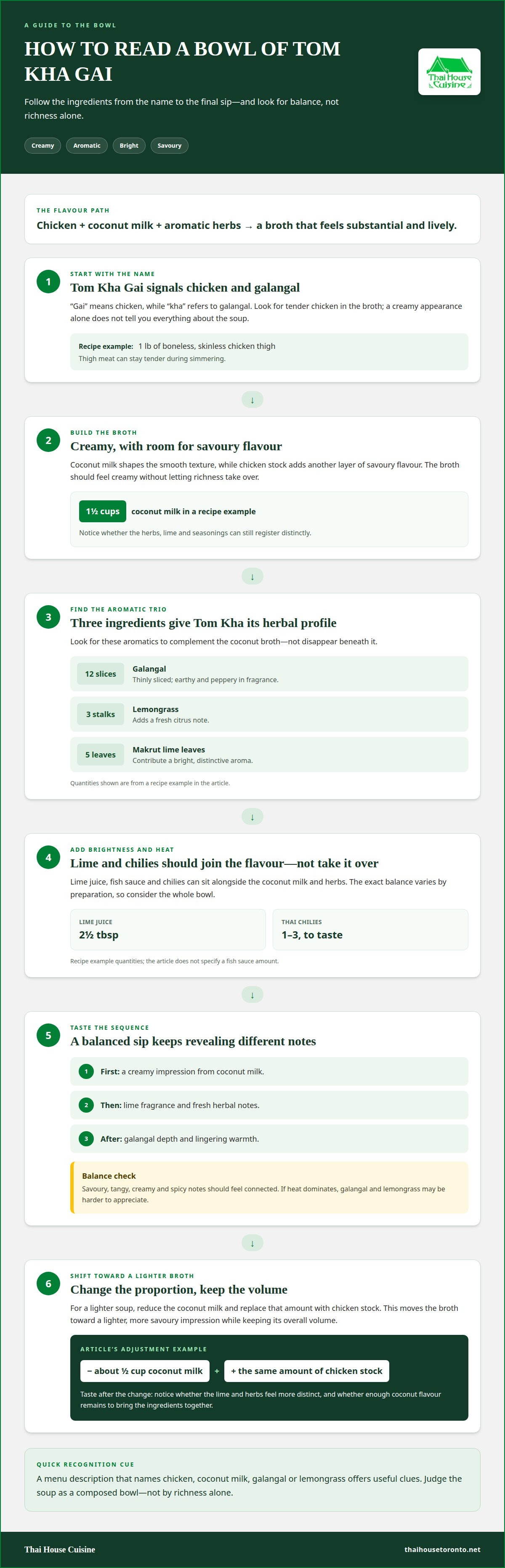
- Start by identifying the chicken in Tom Kha Gai, the familiar chicken version of Tom Kha soup. “Gai” means chicken, while “kha” refers to galangal, the root that gives the soup its distinctive aromatic character. Look for tender chicken pieces in the broth, rather than assuming the soup’s creamy appearance tells you everything. A recipe example uses 1 lb of boneless, skinless chicken thigh. The cut matters because thigh meat can stay tender during simmering.
- Notice how coconut milk shapes the broth without needing to dominate it. A recipe example uses 1 ½ cups of coconut milk, while chicken stock provides another layer of savoury flavour. The result should feel creamy, with room for the herbs, lime and seasonings to register distinctly. A soup that tastes only rich may feel one-dimensional; aromatic notes help keep each spoonful balanced. Coconut milk is central to the texture, but it works alongside the other ingredients.
- Look for galangal, lemongrass and makrut lime leaves as a trio of aromatics. One recipe example calls for 12 thin slices of galangal, 3 stalks of lemongrass and 5 makrut lime leaves. Galangal brings an earthy, peppery fragrance; lemongrass adds a fresh citrus note; and lime leaves contribute a bright, distinctive aroma. Together, these ingredients give Tom Kha its recognizable herbal profile. They should complement the coconut broth, not disappear beneath it.
- Use the first aroma and sip to assess how the ingredients come together. Lemongrass and makrut lime leaves should offer a fresh lift, while galangal gives the broth its characteristic depth. Coconut milk softens the overall impression, and chicken adds a savoury, substantial element. A well-balanced bowl lets you notice these qualities in sequence rather than tasting one strong note throughout. A creamy first impression, for example, can give way to lime fragrance and lingering warmth.
- Consider how lime, fish sauce and chilies fit into the overall flavour. A recipe example includes 2 ½ tablespoons of lime juice and 1-3 Thai chilies, to taste. These details illustrate how brightness and heat can sit alongside coconut milk, rather than replacing the herbal character. The exact balance varies by preparation, so judge the whole bowl: savoury, tangy, creamy and spicy notes should feel connected. If heat dominates, the galangal and lemongrass may be harder to appreciate.
- Assess the ingredients as a composed soup, not a checklist. The name Tom Kha Gai points to the defining combination of soup, galangal and chicken, while coconut milk and aromatics complete its familiar character. A menu description naming chicken, coconut milk, galangal or lemongrass gives you useful clues about the style. When ordering from Thai House Cuisine, focus on how those elements are presented together. That gives you a clearer basis for choosing Tom Kha than judging richness alone.
Chicken, coconut milk and aromatic herbs combine harmoniously, with each part contributing to a broth that feels both substantial and lively. The recipe uses one 13 oz. can of coconut milk, a useful point of reference when considering how prominent the creamy texture should be. Rather than judging richness alone, notice whether the broth still allows the chicken and aromatic ingredients to come through. A balanced soup can feel smooth without becoming heavy, and its fragrant notes should remain clear from the first sip to the last.
If you prefer a lighter soup, you can adjust a recipe by reducing coconut milk by about ½ cup and increasing chicken stock by the same amount. This keeps the broth’s overall volume while shifting its character away from richness and toward a lighter, more savoury impression. Taste the soup after the change and consider whether the lime and herbs feel more distinct, or whether enough coconut flavour remains to bring the ingredients together. The goal isn’t to remove creaminess altogether, but to find a proportion that suits the broth and lets its aromatic qualities remain noticeable.
Which Canadian restaurants offer Tom Kha soup for delivery or takeout?
- For a local meal, start with Thai restaurants in Toronto’s Beaches, Danforth, Leslieville, nearby Scarborough and the East End. Look for a current menu that names Tom Kha, Tom Kha Gai or chicken coconut soup. Tom Kha Gai identifies the chicken version. A restaurant’s ordering page can show whether takeout or delivery is offered. To narrow down where to get the best Tom Kha soup near home, look for a clear dish name and description rather than assuming every Thai restaurant serves it.
- Read the menu entry to see whether it matches the soup you want. “Tom Kha” may describe the soup generally, while “Tom Kha Gai” specifies chicken. Look for details such as coconut milk, galangal or lemongrass. These terms help distinguish the dish from Tom Yum, a different Thai soup. Even a short description can identify Tom Kha, but ingredient details give you more context before you order.
- Confirm that the restaurant offers an order method that suits your plans. A menu page may show takeout, delivery or both, sometimes through separate ordering options. Pickup details may appear in one ordering flow, for example, while delivery appears in another. Use the restaurant’s current menu or ordering page to follow the appropriate path. This helps you avoid relying on an old menu or confusing details from another location.
- Compare dish details that help you choose, not just the soup’s name. Check whether the description identifies chicken and coconut milk, and look for any stated spice guidance or serving details. If you’re ordering several dishes, consider how the soup fits into the meal. These details make it easier to compare Canadian restaurant menus. They can also help you decide where to get the best Tom Kha soup for your preferences, whether you want a starter or a more substantial choice.
- Choose takeout if you plan to collect your meal, or delivery if you want it brought to your address. The restaurant’s ordering page should guide you through the available option. For a group meal, review the menu as a whole so Tom Kha Gai fits alongside the other dishes. A clear listing, a matching soup name and a straightforward order path are practical criteria for finding Tom Kha in Canada.
How can I tell whether a restaurant serves authentic, high-quality Tom Kha soup?
- Read the menu description for the dish’s defining ingredients, not just “Thai coconut soup.” Tom Kha Gai identifies the chicken version, while “kha” refers to galangal. A description that names galangal, lemongrass or makrut lime leaves gives you a clearer picture of its aromatic profile. A short listing isn’t proof of poor quality, but specific ingredient names make it easier to distinguish Tom Kha from other soups. Tom Yum is a different Thai soup, for example, so don’t treat the names as interchangeable.
- Look for balance in the way the menu describes the broth. Coconut milk contributes creaminess, while lime and aromatic herbs bring brightness. Chicken and savoury seasoning round out the bowl. A description that emphasizes only richness or heat tells you less about how the other flavours fit together. A mention of coconut milk alongside galangal or lime, for instance, suggests a more complete flavour picture. There’s no single required taste, but creamy, tangy and savoury notes should all have room to register.
- Use the ingredient list to check whether the soup sounds like Tom Kha Gai rather than a loosely named coconut soup. Chicken should be clear in the description if you want the gai version. Galangal is a useful clue because ginger and galangal aren’t identical ingredients, even though both are roots. Lemongrass and makrut lime leaves also point to the soup’s aromatic character. If a menu lists only chicken and coconut milk, you’ll have fewer details to judge its style. Treat menu wording as a guide, not a guarantee of taste.
- Consider how spice is presented. Thai chilies can add warmth, but heat shouldn’t erase every other flavour in the bowl. A menu that gives a spice cue helps you decide whether the soup suits your preference. A gentle coconut broth with a clear lime aroma may suit someone seeking a less fiery option, while a stronger chili presence can appeal to diners who enjoy heat. Don’t confuse spiciness with authenticity or quality. The more useful question is whether the seasoning works with the soup’s other elements.
- Assess the restaurant’s menu as a whole and choose a dish description that is specific and coherent. A clearly named Tom Kha Gai, with chicken and recognizable aromatics, is easier to evaluate than a vague “Thai soup” listing. Compare the wording with the qualities you want: creamy broth, herbal fragrance, savoury chicken and balanced brightness. No single ingredient or phrase settles the question by itself. Taken together, the dish name, description and flavour cues offer a practical way to choose where to order Tom Kha soup in Canada.
This soup
- Decide whether Tom Kha Gai will be a starter or the centre of your meal. One recipe example serves 6 people as an appetizer or 2-4 people as an entree. That difference changes how you might pair the soup with other dishes. As a starter, it can introduce a meal with a warm, aromatic broth. As an entree, consider whether you want a more substantial serving. A restaurant’s menu description can help you understand how it presents the soup and what role it may play at your table.
- Choose the version that suits your appetite and flavour preferences. Tom Kha Gai identifies chicken soup, while a restaurant may describe other versions differently. Read the full dish name and description rather than relying on a photo or shortened label. A menu entry that names chicken, for example, gives you a more useful starting point than one that simply says “coconut soup.” If you’re ordering with someone else, compare the description with the flavours you both enjoy before settling on a shared meal.
- Use preparation time as context, not as a measure of restaurant quality. One Tom Kha Gai recipe example takes 30 minutes to prepare and cook. That figure describes the recipe, not the time a restaurant needs to prepare or deliver an order. A restaurant meal involves its own service process, so recipe timing can’t predict when an order will arrive. Instead, use the menu to choose the soup and order method that suit your plans. This keeps recipe information in perspective.
- Read nutrition figures as recipe-specific examples rather than universal values. One recipe example lists 332 calories and 25 g of protein per serving. Those numbers belong to that particular preparation, not every restaurant’s bowl. Ingredients, serving size and preparation can change the nutrition profile. If you’re comparing menu options for dietary reasons, rely on information provided for the specific dish you’re considering. A recipe’s nutrition panel can offer context, but it can’t describe a restaurant serving unless it applies to that preparation.
- Think about the eating experience you want before choosing how to enjoy the soup. A dine-in meal lets Tom Kha Gai be part of a longer restaurant visit; takeout or delivery can suit a meal at home. For a shared meal, decide whether the soup is the opening course or a main choice, then select other dishes accordingly. If you’re ready to enjoy a Thai meal in Toronto, explore Thai dining options.
Thai House Cuisine
Thai House Cuisine offers a welcoming next step for readers exploring Thai comfort food and deciding how they’d like to enjoy it. Choose a dine-in meal for a relaxed restaurant experience, or takeout and delivery for a meal at home. Thai food catering can suit a shared gathering, while lunch specials offer another way to enjoy Thai cuisine during the day. The best fit depends on your plans and the kind of meal you want, whether you’re dining solo or gathering with others. For details about enjoying a meal, contact Thai House Cuisine.
Make your next bowl part of a good meal
Finding where to get the best Tom Kha soup starts with what you want from the meal, not a universal score. Think about whether you’re choosing a comforting solo lunch, a relaxed dinner or food to share. That decision can guide where and how you enjoy your next bowl. Let your preference for a fragrant, creamy soup lead you toward a meal that feels right for the occasion.
Keep exploring Thai cuisine with an open appetite. A familiar soup can be a starting point for discovering other dishes and flavour combinations, whether you’re dining in or planning food at home. Choose the setting that suits your day, then make room to enjoy the meal at your own pace.
May your next meal bring comforting flavours, a little discovery and something worth sharing.
Frequently Asked Questions
Where can I find the best Tom Kha soup near me in Canada?
If you’re in Toronto’s Beaches, Danforth, Leslieville, nearby Scarborough or the East End, Thai House Cuisine serves authentic Thai meals prepared by Thai chefs. Choose dine-in, takeout or delivery for a meal at home. For a useful comparison, look for a menu description that identifies the soup as Tom Kha Gai and explains its main ingredients. The best choice is the one that fits your location and preferred way to enjoy the meal.


