

What if a balanced Thai meal didn’t mean giving up the bright, satisfying flavours you love? Finding healthy Thai food options Leslieville diners can feel good about starts with more than a dish’s name. Ingredients, preparation, portions and your own needs all shape how a meal fits into your day.
It’s understandable to scan a menu and wonder whether a curry, stir-fry or salad will leave you feeling balanced. There isn’t one universally “healthy” choice, and flavour doesn’t have to take a back seat. A few practical cues can help you compare descriptions and build a meal that works for you, without labelling foods as good or bad.
This guide offers a simple way to think about vegetables, protein, grains and cooking methods, with Canada’s Food Guide as a useful visual reference. You’ll also find ideas for weighing portions and personal preferences. For a local East End meal, Thai House Cuisine has served Toronto’s Beaches neighbourhood since 2012, with family recipes prepared by chefs from different regions of Thailand using fresh local ingredients. Enjoy Thai meals dine-in, takeout or delivery.
Key Takeaways
- Use menu descriptions to spot ingredients and preparation details, rather than judging a dish by its name alone.
- Compare healthy Thai food options Leslieville menus by looking at ingredient variety, cooking method and portion preferences, not by ranking dishes as universally better.
- Set your priorities before ordering, then consider how each part of the meal fits together.
- Choose dine-in, takeout or delivery in the way that best suits your plans and preferences.
- Discover Thai House Cuisine in the Beaches neighbourhood, where chefs from different regions of Thailand prepare family recipes.
Healthy Thai Food Options in Leslieville: What Makes a Meal Balanced?
Searching for healthy Thai food options Leslieville diners can enjoy? Start by setting aside the idea that one dish is automatically the “healthy” choice. What feels balanced depends on your appetite, preferences and personal dietary needs, as well as the ingredients and preparation that make up the whole meal.
A balanced Thai meal is a satisfying mix of ingredients and portions that suits you, while leaving room to enjoy the flavours and variety. This is a practical way to think about what you order, not medical advice or a promise about what a particular dish will do for your health.
One ingredient can’t tell the whole story. Vegetables add variety, while a protein source and rice or noodles can make a meal more substantial. Sauces and cooking methods shape a dish’s character, but a menu description rarely gives exact quantities or full nutrition information. Consider how the components come together rather than treating one ingredient as a verdict.
How to think about balance without labelling foods
Look at the meal as a whole instead of sorting individual foods into “good” and “bad” categories. A rich sauce, crisp texture or generous helping of rice doesn’t define the entire meal on its own. Your appetite and preferences matter: you might want a lighter-feeling combination at one meal and something more filling at another. Personal dietary needs can also affect what works for you.
Thai food is known for its interplay of flavours and ingredients. The Thai cuisine overview offers broader context on its traditions and cooking styles. Keep that variety in mind when reading a menu. Balance doesn’t require stripping away the qualities that make a meal appealing; it means noticing how its elements come together.
A simple framework for comparing Thai meals
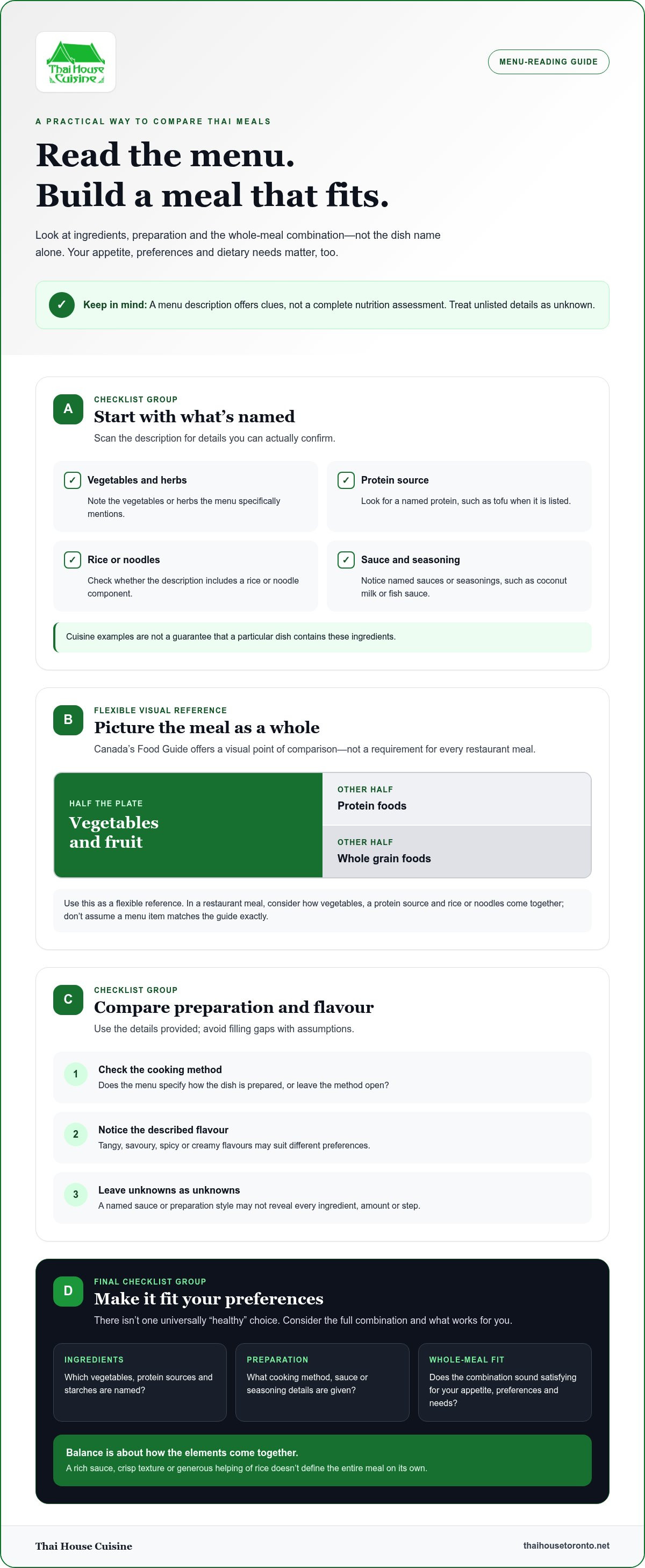
Start with what the menu actually says. Look for named ingredients and preparation details, and don’t assume a dish contains something the description leaves out. Then consider how vegetables, a protein source and rice or noodles fit together. Canada’s Food Guide offers a visual reference: half a plate of vegetables and fruit, with the other half divided between protein foods and whole grain foods. Use it as a flexible point of comparison, not a requirement for every restaurant meal.
- Ingredients: Which vegetables, protein sources and starches does the description name?
- Preparation: Does the menu specify a cooking method, or leave it open?
- Whole-meal fit: Does the combination sound satisfying for your appetite and preferences?
This quick scan helps you compare options without trying to calculate nutrition from a dish name. It’s a guide, not a prescription. Next, read the descriptions more closely and note which ingredients and preparation details are clear.
Thai Ingredients and Cooking Methods: What to Look for on a Menu
A menu description can offer useful clues about a Thai dish, but it only tells part of the story. Scan for named ingredients and preparation details, then use them to picture the meal rather than to guess at nutrition information the menu doesn’t provide. This makes it easier to compare healthy Thai food options Leslieville menus describe without treating a short dish name as a complete assessment.
An ingredient description tells you what a dish may contain; it isn’t a complete nutrition assessment. Ingredient amounts, the full sauce recipe and serving size can all affect how a meal suits your preferences, and those details may not appear in a menu listing.
Reading ingredient descriptions with care
Start with the main ingredients the description actually names. A Thai dish might feature herbs such as lemongrass, vegetables, a protein such as tofu, a sauce made with coconut milk or fish sauce as a seasoning. These are general cuisine examples, not a guarantee that any particular dish contains them. Check whether the listing identifies a protein, mentions vegetables or describes a rice or noodle component.
Then consider what the description leaves open. “Vegetable” doesn’t identify which vegetables or how much is served, and a named protein doesn’t tell you its portion. Don’t fill in those gaps with assumptions. If the menu gives only a dish name, use it as a starting point, not proof of specific ingredients or dietary suitability.
Why preparation and sauces matter
Cooking method and sauce shape a dish’s texture, flavour and overall character. One description might specify a cooking method, name a sauce or highlight fresh herbs; another may offer little detail. Compare what’s written, not what you imagine. Even when a menu names a preparation style, it may not disclose every step or the quantities used.
Seasoning matters to personal preference, too. A tangy, savoury, spicy or creamy flavour profile may appeal differently depending on what you enjoy. A sauce’s name alone can’t tell you its complete ingredients or how strongly it’s used. Likewise, preparation terms aren’t a guarantee that one meal is better for everyone.
- Look for named components: Note any vegetables, herbs, protein, sauce, rice or noodles the description specifically mentions.
- Separate facts from guesses: Treat unlisted ingredients and quantities as unknown.
- Read for your preferences: Consider the described flavour and preparation alongside what you enjoy and need from a meal.
These menu-reading habits can help you make a more informed choice while leaving room for the depth and character of Thai cooking. For a local next step, browse Thai House Cuisine’s menu and use its descriptions to guide your selection.
How to Compare Thai Food Options Near Leslieville
Once you’ve started reading menu descriptions, compare options against the things that matter to you. For anyone looking up healthy Thai food options Leslieville restaurants serve, a side-by-side check can bring clarity without turning the menu into a ranking. A category such as noodles or curry tells you what kind of dish it is; it doesn’t prove that it’s a better or worse choice for a particular diner.
Use this table as a browsing prompt. Record what the menu actually says, then separate those details from your preferences and any unanswered questions.
| What to compare | Menu prompt | What it helps you consider |
|---|---|---|
| Menu detail | Does the description name key ingredients or preparation? | How much you can learn from the listing, and what remains unspecified. |
| Ingredients | Which vegetables, protein sources, sauces or starches are named? | Whether the described combination matches your priorities. |
| Preparation | Does the menu describe how the dish is prepared? | Whether that style sounds appealing to you. |
| Portion preferences | Does the menu give serving details, or leave them open? | How the meal might fit your appetite and plans. |
Compare meals by your own priorities
Before choosing, decide what matters most today: ingredient variety, a particular ingredient, a flavour profile or a portion that feels right for your appetite. Then compare two options on those terms. One description may give more ingredient detail, while another may sound more appealing to you. Those are useful distinctions, not proof that one meal is universally superior.
Use menu details rather than assumptions
A dish name can be memorable without explaining its full ingredients, preparation or serving size. Separate menu facts from general cuisine examples and your own expectations. The Thai House Cuisine menu descriptions give you a place to review the details provided for its offerings. Don’t assume a substitution, allergen control or nutrition breakdown unless the menu explicitly says so.
Keep the comparison personal and practical. If a detail matters to your choice but isn’t clear in the description, treat it as unknown rather than filling in the blanks. The most suitable option is the one that aligns with your preferences and needs, not a dish that wins a universal “best” label. This approach makes browsing easier while leaving room to enjoy the distinctive flavours and variety of Thai meals.
Practical Ways to Make a Thai Meal Fit Your Preferences
A little planning can make ordering simpler without taking the pleasure out of choosing. Start with what you feel like eating, use menu details to compare possibilities, then think about how the full meal fits your appetite and schedule. For people exploring healthy Thai food options Leslieville diners can enjoy, the aim is a choice that suits them, not a strict set of rules.
Build a meal around what matters to you
Before browsing, decide what you’re looking for. You might want a particular ingredient, a balance of different components or a flavour that sounds satisfying. Check the menu descriptions against those priorities, and keep personal dietary requirements in view. If a key detail is unclear, don’t assume; use the information provided to guide your choice.
Consider the meal as a whole before adding extra items. An additional dish or side may suit sharing or a bigger appetite, but it doesn’t need to be an automatic part of every order. Think about what you’re already choosing, whether it sounds satisfying and what suits the occasion. Your appetite, routine and preferences can change from one meal to the next.
Choose a convenient way to enjoy your meal
Dine-in, takeout and delivery are different ways to enjoy a meal, not nutrition categories. Dining in may suit an unhurried meal out; takeout can work when you’re bringing dinner home; delivery may fit a day when staying in is more convenient. The format doesn’t determine whether a meal is balanced. Your menu choice and personal priorities still matter.
For takeout, review the menu before ordering and consider how the meal will fit your plans at home. A practical Toronto Thai takeout guide offers more ideas for enjoying Thai food at home. Keep your expectations grounded in the details available; don’t assume a particular portion, ingredient change or dietary accommodation unless it’s clearly stated.
Use menu descriptions alongside your own needs; neither one tells the whole story alone.
Try this four-step approach the next time you order:
- Set priorities: Decide which flavours, ingredients or other preferences matter most for this meal.
- Read descriptions: Note the details the menu provides, and leave unmentioned ingredients or preparation unknown.
- Consider the whole meal: Reflect on what you’re ordering together and whether it fits your appetite and plans.
- Choose a format: Pick dine-in, takeout or delivery based on what works for your routine.
Thai House Cuisine serves dine-in, takeout and delivery meals for Toronto’s East End diners, so you can choose a format that fits your plans.
Enjoying Thai House Cuisine Near Leslieville
For diners around Leslieville and Toronto’s East End, Thai House Cuisine brings Thai comfort food to the Beaches neighbourhood. The restaurant has served the Beaches since 2012, with chefs from different regions of Thailand preparing family recipes using fresh local ingredients. The combination of regional cooking backgrounds and treasured recipes connects the menu to Thai food traditions.
A neighbourhood restaurant rooted in Thai cooking
Thai cuisine reflects a range of regional traditions, and the chefs’ varied backgrounds inform the food they prepare at Thai House Cuisine. Family recipes carry familiar flavours into meals shared in the neighbourhood. Fresh local ingredients are part of the restaurant’s approach to Thai comfort food. These details describe how the restaurant prepares its food, not the nutrition profile of any particular dish.
If you’re looking into healthy Thai food options Leslieville, use menu descriptions and the priorities discussed in this guide to make a choice that fits your preferences. Thai House Cuisine’s roots and cooking traditions add context to the meal, while your needs and appetite remain personal. No single dish needs to stand in for the whole cuisine.
Choose dine-in, takeout, or delivery
The right format depends on your plans. Dine in when you’d like to enjoy a meal at the restaurant, choose takeout when you want to bring Thai comfort food home, or opt for delivery when having a meal brought to you better suits the occasion. These are convenient ways to enjoy the restaurant’s food, rather than indicators of whether a meal is balanced. Your ingredient choices and the menu details remain useful guides.
As you decide, keep the approach simple: consider what you’re in the mood for, read the available descriptions and choose a format that works for your day. A meal can honour the flavour and character of Thai cooking while reflecting your own preferences. There’s no universal “best” order. The best fit is one you can choose with confidence and enjoy, whether you’re in the Beaches, Leslieville, Danforth or elsewhere in Toronto’s East End.
Explore Thai House Cuisine and find a convenient way to enjoy its Thai comfort food.
Make Your Next Thai Meal Your Own
Your next meal is a chance to enjoy the flavours you love while choosing with your own priorities in mind. Rather than searching for a universally perfect order, approach healthy Thai food options Leslieville with curiosity: let your appetite, preferences and the menu guide you.
A small shift in how you choose can make ordering feel more confident. Decide what would make the meal satisfying for you today, then enjoy discovering something that fits. Balance isn’t about taking the character out of Thai food. It’s about making room for both personal choice and vibrant flavour.
For a local meal, Thai House Cuisine brings Thai comfort food to the Beaches and nearby East End communities, including Leslieville and Danforth. Choose dine-in, takeout or delivery to suit your plans, and enjoy food made with family recipes and fresh local ingredients.
Browse the Thai House Cuisine menu and choose your next meal for dine-in, takeout or delivery.
Frequently Asked Questions
Is Thai food healthy?
Thai food can fit into a balanced way of eating, but no cuisine or dish is automatically healthy for everyone. Ingredients, preparation, serving size and your own needs all matter. A meal with vegetables, a protein source and rice may suit one person, while another may need to consider a specific dietary restriction. Focus on the details of the particular meal rather than judging Thai food as a whole.
Can Thai food be a balanced takeout meal?
Yes, takeout can be a balanced meal when its components suit your appetite and preferences. Check the description for what’s included, then consider how the main, starch and any sides fit together. You may find the meal already feels complete without adding extras. If you’re ordering for a group, choosing a few different items to share can offer variety while letting each person serve themselves according to their appetite.
Is coconut milk always unhealthy?
No, coconut milk isn’t automatically unhealthy. It’s one ingredient, and its role in a dish depends on the recipe and serving size. Coconut milk can make a sauce creamy and rich, but its presence alone doesn’t tell you the nutritional makeup of the full meal. If you’re considering it for a personal health or dietary reason, rely on information that applies to your needs rather than assuming every coconut-milk dish is the same.
Are rice noodles healthier than jasmine rice?
Neither is universally healthier; rice noodles and jasmine rice are both rice-based starches, and the rest of the meal matters too. Think about how the noodle or rice portion fits alongside the dish’s other ingredients and what you find satisfying. If you’re managing a health condition or following specific dietary guidance, your needs may call for a more tailored comparison. A dish’s name alone won’t provide enough information to make that assessment.
Does choosing spicy Thai food make a meal healthier?
No, spice level on its own doesn’t determine whether a meal is healthier. Chilli can contribute heat and flavour, but it doesn’t tell you about the dish’s other ingredients, preparation or serving size. Choose a spice level you’ll enjoy, especially if you’re sharing a meal with people who prefer different levels of heat. If you’re sensitive to spicy foods, a milder option may simply make the meal more comfortable for you.
How can I handle food allergies when ordering Thai food?
Clearly communicate the specific allergy when ordering, and ask about ingredients and the possibility of cross-contact during preparation. Don’t rely on a dish name or a general dietary label to establish that a meal is safe. If you have a severe allergy, explain its seriousness and proceed only if you receive clear information you can rely on. If safety remains uncertain, choosing another meal is the more cautious option.


