

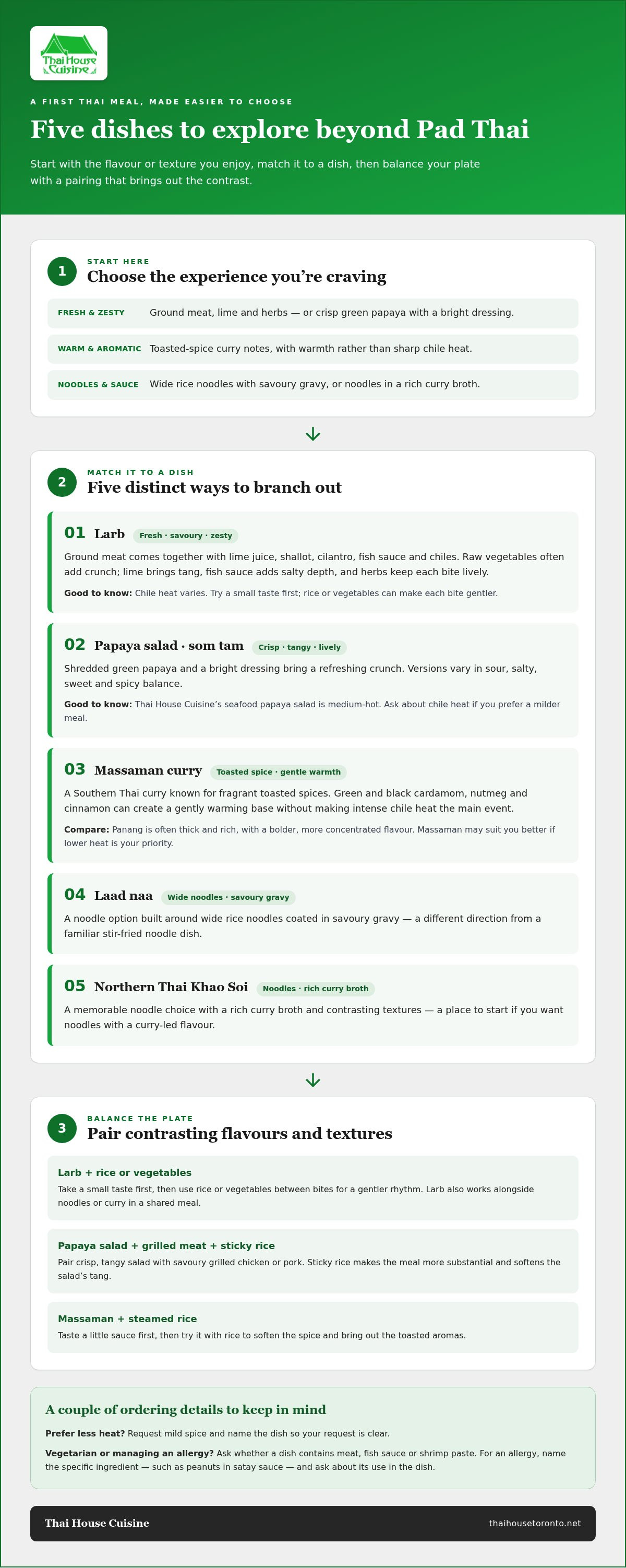
Pad Thai is only the beginning: for a first Thai meal, try larb, papaya salad with grilled meat, massaman curry, laad naa or Northern Thai Khao Soi. If you’re deciding what to order from a Thai restaurant for the first time, Khao Soi is a memorable place to start, with noodles in a rich curry broth.
It’s easy to choose a familiar noodle dish, but Thai cooking offers a vivid range of fresh herbs, tangy lime, savoury sauces, warming spices and satisfying textures. Larb brings ground meat, lime and herbs together; papaya salad adds a bright, crunchy contrast to grilled meats; and massaman offers deep, toasted-spice notes.
This guide helps you choose beyond Pad Thai, whether you’re drawn to noodles, curry or a lively mix of sweet, sour, salty and spicy flavours. We’ll explore five dishes, including Khao Soi, so you can find a first order that feels inviting and discover what you might want to try next.
Key Takeaways
- Look beyond familiar noodles: larb brings ground meat, lime and herbs together for a fresh, savoury choice.
- Pair papaya salad with grilled meats and sticky rice for a lively mix of crisp, tangy and smoky flavours.
- Choose massaman curry for warming toasted spices, or laad naa for wide rice noodles coated in savoury gravy.
- Make Northern Thai Khao Soi your pick if you want a noodle dish with a rich curry broth and contrasting textures.
- Use the flavours and textures you enjoy most to guide your first order, then explore another dish next time.
1. Larb’s ground meat, lime and herbs
Larb brings ground meat, lime juice, shallot, cilantro, fish sauce and chiles into one bright, savoury dish. Raw vegetables often come alongside, adding crunch and a fresh contrast to the seasoned meat. Lime gives the mixture its tang, while fish sauce contributes salty depth and herbs keep each bite lively. If you enjoy flavour that’s fresh, savoury and zesty, larb is a distinctive first order.
Look for larb on menus under its Thai name, or ask whether it comes with raw vegetables. Recipes vary: lime makes the dish tart, herbs add freshness, and chiles bring heat. Take a small taste first, then have rice or vegetables between bites if you want a gentler rhythm. Larb also works well as part of a shared meal alongside noodles or curry.
Thai meat skewers offer a different way to begin. Grilled pieces are easy to share, and their smoky, savoury character contrasts with the lime and herbs in larb. Satay is a familiar example, often paired with peanut sauce. That sauce adds a creamy, nutty note, so consider how it will balance the other dishes on your table. Pair skewers with larb for two distinct textures and flavour profiles.
Common Thai restaurant choices in Canada include Pad Thai, curries, fried rice and noodle dishes, alongside options such as larb and grilled skewers. Menus vary, so choose by flavour and format rather than assuming every restaurant serves the same dishes.
Chiles can make larb and other Thai dishes noticeably spicy, while a curry’s heat depends on its recipe. When ordering, request mild spice if you prefer less heat, and name the dish so your request is clear.
Vegetarians should ask whether larb contains meat or fish sauce, and whether a meat-free dish uses fish sauce or shrimp paste. For a food allergy, state the specific ingredient, such as peanuts in satay sauce, and ask about its use in the dish.
Thai iced tea pairs naturally with spicy larb or grilled meat, while jasmine tea offers a gentler accompaniment. Lime soda can also suit the bright citrus in larb. For a shared meal, choose a drink that complements rather than competes with the food.
2. Papaya salad paired with grilled meats
Papaya salad brings crisp, shredded green papaya and a lively dressing to the table. Its sharp, refreshing character makes a natural partner for grilled meat. A traditional combination brings papaya salad, roast chicken and grilled pork together, often with sticky rice. Each part contributes something different: the salad is crisp and tangy, grilled meat adds savoury depth, and sticky rice makes the meal more substantial.
Order the dishes together if you want to experience their contrast in one meal. Take a bite of papaya salad between pieces of grilled meat, then add sticky rice to soften the salad’s tang. The combination works well for sharing because diners can adjust each mouthful. Try a little of each first, then decide whether you want more salad, rice or meat on your plate.
Green papaya salad is often called som tam on Thai menus. The name is a useful cue, but versions differ in their balance of sour, salty, sweet and spicy flavours. Lime gives the dressing a bright edge, while other seasonings deepen its savoury taste. If you prefer a milder meal, ask about the chile heat before ordering, then pair the salad with a grilled dish. Thai House Cuisine’s seafood papaya salad is medium-hot.
Kai yang, or Thai grilled chicken, is a satisfying match for papaya salad. Its grilled, savoury flavour complements the salad’s fresh crunch, while sticky rice brings the two together. Choose kai yang when you want a familiar main dish with a distinctive salad alongside it. Grilled pork offers another option if you’d like to compare two meats with the same bright salad.
For a first taste, order papaya salad with one grilled meat and sticky rice. Start with a small bite of salad, then try it alongside the chicken or pork. This lets you notice how the dressing changes the flavour of each pairing. If the table enjoys variety, add another grilled meat and share everything rather than treating each dish as a separate course.
That pairing is a strong choice if you want fresh crunch alongside smoky, savoury grilled flavours. To explore Thai dining options in Toronto, browse Thai restaurant details and consider which combination suits your first meal.
3. Southern-style massaman curry
Massaman is often a gentle starting point for diners who prefer less chile heat. This Southern Thai curry is known for toasted spices, which bring warmth and fragrance rather than a sharp, fiery taste. It suits a first curry order if you want deep flavour without making intense heat the main event. Panang curry is another rich option, but its flavour can feel more concentrated.
Massaman’s toasted spices can include green and black cardamom, nutmeg and cinnamon. Together, they create a fragrant, gently warming base that tastes different from a bright, chile-forward curry. Cardamom is aromatic, nutmeg adds warmth, and cinnamon brings familiar sweetness. These layers make massaman satisfying to savour slowly, especially with rice to carry the sauce.
Panang offers a useful comparison. Its curry sauce is often thick and rich, with a bolder, more concentrated flavour than massaman. If you’re choosing between the two, consider whether you want toasted-spice warmth or a fuller, more intense curry taste. Both can make appealing first orders, but massaman may suit you better if lower heat is your priority.
For a balanced meal, pair massaman with steamed rice and taste a little of the sauce first. Then try it with a spoonful of rice, which softens the spice and lets the toasted aromas come through. If you’re sharing, add a fresh or savoury dish to contrast with the curry’s rich texture. That gives everyone another flavour to alternate between bites.
Massaman is also a good choice for exploring how Thai curry can be aromatic without relying on strong chile heat. Compare its cardamom, nutmeg and cinnamon notes with Panang’s denser, more assertive character. If heat matters to your order, request a mild version and describe your preference clearly. The curry’s ingredients, sauce and rice all shape the overall experience, so taste them together before deciding which style suits you best.
4. Wide rice noodles and gravy in laad naa
Laad naa pairs wide rice noodles with savoury gravy, often with Chinese broccoli. The soft noodles hold the sauce, while the greens bring a fresh, slightly bitter contrast. Choose it if you want a comforting noodle dish that differs from stir-fried noodles. Taste the gravy with noodles and greens together to experience the contrast in one bite.
Pad Thai, pad see ew and drunken noodles each offer a different noodle experience. Pad Thai is a familiar stir-fried noodle choice; pad see ew uses rice noodles, egg, Chinese broccoli and protein, with sweet soy sauce balancing savoury notes. Drunken noodles, or pad kee mao, use wide rice noodles and commonly include Chinese broccoli, egg, onion, meat, chiles, garlic, soy sauce, fish sauce and oyster sauce.
For a rice-based side or main, try kai jeow, a Thai omelet seasoned with fish sauce, sugar and soy sauce. It’s cooked until golden-brown and eaten with rice, a protein and sriracha. Khao pad kapi offers another distinctive fried-rice combination, typically served with sweet pork, shrimp, egg, green mango, shallot and long beans. Thai House’s pineapple fried rice is another option, with pineapple, egg, onion and cashew nut.
Crab fried rice is a practical choice for takeout because it travels well and can be reheated in a microwave. It can remain enjoyable when reheated three days later. For the best experience, keep the rice covered during transport, then reheat it until warm throughout. If ordering several dishes, crab fried rice can provide a familiar base alongside a more adventurous curry or salad.
For dessert, mango sticky rice brings sweet mango and sticky rice together, offering a mellow finish after savoury noodles or fried rice. Thai appetizers and desserts can round out a first meal; kai jeow is a shareable savoury option, while mango sticky rice makes a fruit-led dessert.
For family-style ordering, choose a mix of dishes with different textures, such as laad naa, crab fried rice and a vegetable-forward side. Share them around the table, and let diners serve smaller portions of each before choosing favourites. For a takeout meal, browse Thai takeout options and balance saucy noodles with rice.
Laad naa can also be seasoned with chiles soaked in vinegar. To compare the seasoning, try a bite with the chiles and another without, keeping the wide noodles and gravy together in each taste. Pad kra pow is served over jasmine rice and, in Jet Tila’s recommendation, topped with a hard-fried runny egg. It offers another rice-based option alongside noodles and gravy, with the egg included as part of the dish. These choices let you compare a sauced noodle dish with a rice dish and explore different seasonings.
Nam tok is often garnished with khao khua, toasted rice powder that adds crunch. It may be made with pork or beef and gets its juices from lime juice, fish sauce and meat cooking liquid, with chiles and fresh herbs such as mint. Those details make it an option to consider alongside laad naa: one centres on wide noodles and gravy, while the other brings together meat, its juices, chiles, herbs and toasted rice powder.
5. Northern Thai Khao Soi
Khao Soi brings Northern Thai cooking into a bowl of noodles and curry broth. Its defining contrast is tender noodles beneath a crisp noodle topping. The broth is rich and aromatic, often combining coconut milk with curry spices. Thai House serves Khao Soi with creamy Northern Thai coconut curry, striploin steak and crispy noodles. Start with a spoonful of broth, then taste the noodles and toppings together.
Egg noodles give Khao Soi a supple, satisfying base. Some noodles sit in the broth, while crisp fried noodles crown the bowl. The soft and crunchy textures make each mouthful feel different. Chicken is a common protein, though versions may use beef or other choices. The best first bite combines broth, noodles and a little topping, rather than tasting each part alone.
Condiments let you shape the bowl as you eat. Lime adds a sharp, citrusy edge; pickled mustard greens bring tang and crunch. Shallots contribute a pungent bite, while chile oil can deepen the heat. Try each addition in a small amount first. You’ll notice how lime brightens coconut broth and how chile oil changes its warmth.
Khao Soi stands apart from Pad Thai because it arrives in curry broth, not as a dry stir-fry. It also differs from laad naa, where wide rice noodles sit in gravy. The crisp topping is another signature clue. If you want variety from a first dish, Khao Soi offers noodles, soup and toppings in one meal.
For your first bowl, taste the broth before adding lime or chile oil. Then mix in a little pickled mustard green and try another spoonful. Finish by combining a few crisp noodles with the softer noodles below. This lets you discover the bowl’s balance before adjusting it to your taste.
Khao Soi can be rich, so a fresh-tasting side makes a useful contrast. A crisp salad or vegetables can lighten the meal, while jasmine rice is unnecessary when noodles already form the base. If you’re sharing dishes, order Khao Soi as the main bowl and choose sides with different textures. Keep the condiments nearby so everyone can personalize their portion.
Heat varies with the curry broth and added chile oil. If you prefer a gentler bowl, request mild spice when ordering, then add chile oil gradually. Coconut milk softens the spices but doesn’t remove all chile heat. Lime can brighten the flavour, while pickled greens offer tang without the same kind of heat.
Choose Northern Thai Khao Soi when you want a layered noodle meal with creamy broth and crisp toppings. Its combination of textures makes it a memorable alternative to familiar Thai noodle dishes. Taste first, adjust with condiments, and enjoy the bowl one contrasting bite at a time.
Thai House Cuisine: Dine-in Thai Meals
Thai House Cuisine is a welcoming next step when you’re ready to explore Thai dishes over a relaxed meal. Choose dine-in Thai meals to enjoy a meal at the restaurant, or takeout and delivery orders when you’d rather eat at home. Lunch specials suit a midday meal, while Thai food catering can bring Thai dishes to an event.
Use the dishes in this guide to narrow your choice: try Thai House’s Khao Soi for curry broth and contrasting noodle textures, or pair papaya salad with grilled meat for a fresh, savoury combination. If you’re still deciding, begin with the flavour and texture that appeal most, then explore another dish on a future visit.
Visit Thai House Cuisine’s website to plan your visit.
Make Your First Order the Start of Something New
Your first Thai meal doesn’t need to settle every preference at once. Treat it as a chance to discover which flavours you’d like to explore next, whether that means seeking out more herb-forward dishes, trying another curry or sharing a new noodle dish with friends. If you’re deciding what to order from a Thai restaurant for the first time, choose what sounds inviting and let curiosity guide your next visit.
Thai House Cuisine offers dine-in Thai meals for enjoying food together, takeout and delivery orders for meals at home, and Thai food catering for gatherings. Choose the setting that suits the occasion, then make room for a new favourite.
There’s always another Thai dish to discover. Enjoy your first taste, and let it lead to the next.
Frequently Asked Questions
What are the must-try Thai dishes beyond Pad Thai?
Try Khao Soi, larb, som tam, massaman curry or laad naa for a first taste beyond Pad Thai. For a shared meal in Toronto’s Beaches neighbourhood, choose dishes with contrasting formats: a noodle bowl, a curry with rice, and a fresh salad or grilled meat. That gives everyone different flavours to sample without ordering several similar noodle plates.
What makes Khao Soi and Panang Curry unique?
Khao Soi is a Northern Thai noodle dish served in curry broth, while Panang is a rich curry commonly enjoyed with rice. Choose Khao Soi for a complete bowl with noodles and toppings; pick Panang if you’d rather spoon curry over rice. The difference is as much about how you want to eat as flavour: one is a noodle-centred soup, the other a curry-and-rice meal.
What Thai dishes are best for first-time diners?
For what to order from a Thai restaurant for the first time, match the dish to flavours you already enjoy. Choose massaman if you like aromatic, gently warming curry, or grilled chicken with rice for a straightforward savoury meal. Then add one unfamiliar dish, such as larb or Khao Soi, to explore something new. In Toronto, sharing dishes makes it easy to taste different styles together.


