

The cheaper party menu can end up costing more than expected. Cooking at home may look less expensive beside a catering quote, but the catering vs cooking for a party cost comparison changes when you count the hours spent shopping, prepping, cooking and cleaning, along with serving supplies and food that goes to waste.
It’s easy to compare a grocery receipt with a catering total and miss what each option includes. In Ontario, basic groceries are generally zero-rated for HST, while prepared meals are subject to 13% HST, so tax is another part of the picture. Your time and effort matter, too, especially when you’re hosting a larger gathering in Toronto.
This guide shows you how to compare both options using the same guest count and menu expectations. You’ll learn what to include in a home-cooking budget, how to review a catering quote and when a hybrid approach might make sense. For hosts in the Beaches and Toronto’s East End, customizable Thai catering can bring a generous, flavourful meal to the table while leaving you more time with your guests.
Key Takeaways
- For a fair catering vs cooking for a party cost comparison, count more than food. Include supplies, transport, preparation, serving, cleanup and leftovers.
- Build a home-cooking estimate from your guest count, planned portions and current local grocery prices, then add any extra equipment or serving items.
- Compare drop-off catering separately from staffed or on-site service. Not every catering order includes staff.
- Choose your food plan around your available time, kitchen capacity, menu needs and how much you want to focus on hosting.
- For a shared party meal in Toronto’s East End, Thai House Cuisine offers customizable catering featuring regional Thai specialties and family recipes.
Catering vs. cooking for a party: what belongs in a fair cost comparison?
Cooking at home can mean spending less on food, but that saving may come with more planning, hands-on work and cleanup. To understand the catering vs cooking for a party cost, compare the full job of feeding your guests, not just a grocery receipt against a catering quote.
Start with the same guest count, meal type, portion sizes, dietary needs and service expectations. Catering can mean different ways of preparing and providing food, as outlined in this overview of catering services. For a useful comparison, distinguish food drop-off from arrangements that include service at the event.
For a quick look at the central choice, this video discusses cooking versus catering:
What does “cost” mean when you feed a party?
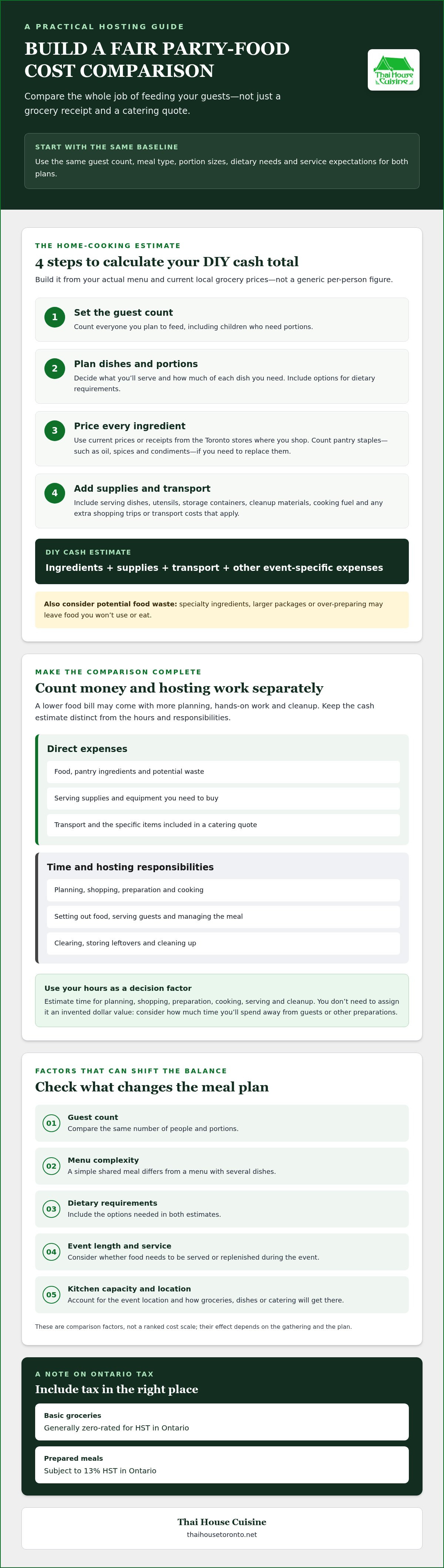
Separate money you’ll spend from the hours and responsibilities you’ll take on. Home cooking involves more than ingredients. Include pantry staples such as oil and spices, serving dishes or disposable supplies, grocery transport, preparation, serving and cleanup. Allow for leftovers or food waste, too. If you need equipment specifically for the gathering, include that expense.
A catering quote may cover different things depending on the arrangement. Review its details rather than assuming it includes staff, serving supplies, transport or cleanup. Keep every listed component separate so you can compare like with like.
Direct expenses
- Food, pantry ingredients and potential waste
- Serving supplies and any equipment you need to buy
- Transport, plus the items actually included in a catering quote
Time and hosting responsibilities
- Planning, shopping, preparation and cooking
- Setting out food, serving guests and managing the meal
- Clearing, storing leftovers and cleaning up
Which party details change the comparison most?
Guest count, menu complexity, dietary requirements and event length can all shift the balance. A simple shared meal is different from a menu with several dishes, varied portions and special dietary needs. Compare equivalent dishes and quantities in both plans, then consider whether you’ll need to serve or replenish food during the event.
The same approach works for gatherings in the Beaches, along the Danforth and across Toronto’s East End, including Leslieville and nearby Scarborough. Account for the event location and how food will get there, whether you’re transporting groceries and dishes or arranging catering. Once you’ve set a fair baseline, ask two practical questions: what will you spend, and how much of the gathering will you spend working?
How to calculate the cost of cooking for a party at home
A useful home-cooking estimate starts with your menu and local prices, not a generic per-person figure. Use the same guest count and meal expectations you’ll use to assess a catering quote. The goal is to calculate the cash total and get an honest picture of the work involved.
- 1. Set the guest count. Use the number of people you’re planning to feed, including children if they’ll need portions.
- 2. Plan portions and dishes. Decide what you’ll serve and how much of each dish you need. Include options for guests with dietary requirements so the comparison reflects the meal you actually plan to host.
- 3. Price the ingredients. Check current grocery receipts or prices at the stores where you shop in Toronto. Include every ingredient, including pantry staples such as oil, spices and condiments if you’ll need to replace what you use.
- 4. Add supplies and transport. Count serving dishes, utensils, storage containers and cleanup materials if you need to buy them. Include cooking fuel and any extra shopping trips or transport costs that apply.
DIY total = ingredients + supplies + transport + any other event-specific expenses. This is your cash estimate. Track potential food waste as well. A specialty ingredient or a larger package may leave you with food you won’t use again, while over-preparing can mean leftovers that may not be eaten.
Which expenses do home cooks commonly overlook?
Small purchases add up. Check whether you have enough serving spoons, platters and containers to carry, serve and store the meal. Include disposable serviceware or reusable items you’ll need to purchase, along with cleaning supplies used for the event. Factor in the work of handling and serving food, too. Michigan State University Extension offers practical food safety considerations for party planning.
How much is the host’s time worth in the comparison?
Estimate your hours for menu planning, shopping, preparation, cooking, serving and cleanup. You don’t need to assign an invented dollar value to that time. Instead, use the estimate to decide whether the DIY total is worth the hours you’ll spend away from guests or other preparations. That time trade-off is a key part of the catering vs cooking for a party cost decision.
For another perspective on planning a shared meal, explore Thai catering for Toronto gatherings. A customizable catered menu can take food preparation off the host’s to-do list while keeping the meal central to the occasion.
Catering vs. cooking: compare the full party experience side by side
A catering quote and a home-cooking estimate only tell part of the story. Compare the same menu, portions and guest needs, then weigh the work each option leaves with the host. Quotes vary with the selected menu and event requirements, so review the specific items and services described rather than assuming every order includes staff. For context, how caterers calculate costs can help explain why food costs are only one part of a professional operation.
The lower food bill isn’t automatically the lower-effort or best-fit option. Use this side-by-side view to compare the overall experience:
| Factor | Cooking at home | Catering |
|---|---|---|
| Direct spending | Ingredients, pantry items, supplies, transport and event-specific purchases. | The items and services included in the quote. Drop-off food and staffed or on-site service are different arrangements. |
| Preparation time | The host plans, shops, prepares and cooks. | The caterer handles food preparation. The host still plans the event and coordinates the meal. |
| Cleanup | The host handles cookware, serving items and food storage. | Responsibilities depend on the arrangement. Don’t assume a quote includes cleanup. |
| Menu flexibility | The host chooses the dishes and adapts recipes to guest needs. | Menu options depend on the catering arrangement. Customizable menus can help match the gathering and guest preferences. |
| Hosting attention | Time in the kitchen can take attention away from guests. | Drop-off can reduce cooking work, while staffed service may shift more event tasks, depending on what’s included. |
When can cooking at home make sense?
Cooking may suit you if you enjoy preparing food, have enough time and want hands-on control of the menu. A familiar meal with a few straightforward dishes is often simpler to organize than several complex recipes. Before deciding, consider whether your kitchen, cookware and serving space can manage the portions, and whether you can meet guests’ dietary needs without overloading your schedule.
When can catering be the more practical choice?
Catering can make sense when preparing the meal would compete with work, event setup or time with guests. A shared menu of customizable Thai dishes can offer variety while easing the host’s cooking workload. Thai House Cuisine serves regional specialties prepared with family recipes and fresh local ingredients. Explore the Thai food menu for ideas as you consider the catering vs cooking for a party cost and the experience you want to create.
How Toronto hosts can choose the right party-food option
The right choice depends on more than the grocery total or catering quote. Think about how many people you’re feeding, what they’ll enjoy, what your kitchen can handle and how you want to spend the event. Cooking can suit a host who likes being hands-on and has time to prepare. Catering can leave more attention for guests.
Use this checklist to narrow down the plan:
- Guest count: How many portions do you need, and can your kitchen prepare them without crowding your usual cooking space?
- Available time: How many hours can you devote to planning, shopping, cooking and cleanup?
- Menu needs: What dietary requirements, range of dishes and serving style should the meal accommodate?
- Hosting priorities: Do you want to cook as part of the occasion, or spend more time welcoming people and enjoying the gathering?
- Event location: How will groceries, prepared food and serving items get to the venue, and where will food be set out?
That last point matters across Toronto and the East End, whether you’re hosting at home or at another venue. Include transport and the event location in either plan. A DIY menu still needs groceries and supplies brought to the kitchen. Catered food also needs to reach the gathering and be ready to serve in the space available.
What should you compare before choosing?
Write down the guest count, dietary needs, serving time and range of dishes you want. Then list the DIY tasks and estimate the hours for each. Compare your grocery list with a catering quote for the same guest count and menu scope, including portions and any services stated in the quote. This gives you a clearer view of both spending and the responsibilities you’ll take on.
How can you reduce stress without losing a personal touch?
A hybrid plan can split the work: order the main meal and make a simple dessert, drinks or another extra yourself. Choose dishes that suit sharing and the mood of the occasion, then add personal touches to make the table feel like yours. For a flavourful shared meal, Thai House Cuisine’s customizable event catering features regional Thai specialties prepared with family recipes and fresh local ingredients.
Once you’ve weighed guest needs, time and transport, the catering vs cooking for a party cost becomes easier to judge in context. Choose the plan that fits your budget and leaves you able to host the way you want.
Make hosting easier with Thai catering from Thai House Cuisine
A memorable party meal brings people together around generous flavours and good conversation. For Toronto hosts weighing the catering vs cooking for a party cost, catering can offer more than food. It can also mean less time spent planning, shopping and cooking, and more time to welcome guests.
Thai House Cuisine has served Toronto’s Beaches neighbourhood since 2012. Its event catering features customizable menus with regional Thai specialties, prepared by chefs from different parts of Thailand using family recipes and fresh local ingredients. The blend of tradition and thoughtful menu planning can make a shared meal distinctive while suiting the style of your gathering.
What makes Thai catering a thoughtful party option?
A menu with a variety of Thai dishes can give guests different flavours and ways to share the meal. Customization helps shape the selection around the occasion and guest preferences, whether you’re planning an informal get-together or a considered celebration. As you compare options, think about the dishes your guests will enjoy, any dietary needs you’re planning for and how the meal will fit the rhythm of the event.
Professional catering shifts meal preparation away from the host. Instead of coordinating several recipes in your own kitchen, you can focus on the setting, the people and the details that make guests feel welcome. The right choice still depends on your gathering, but a shared menu can make food a warm centrepiece.
What is the next step for planning your event meal?
Start with your guest count, preferred serving time and the kinds of dishes you’d like to share. Explore the menu to identify options for the occasion, then consider how the selection can be tailored to your guests. Visit Thai House Cuisine’s website to explore its catering information.
Bring the flavours of Thailand to your Toronto gathering with a menu shaped around your event and guests. Explore Thai catering from Thai House Cuisine.
Choose the party-food plan that lets you enjoy the gathering
A fair catering vs cooking for a party cost comparison includes more than groceries or a quote. Count supplies, transport, food waste and the hours you’ll spend planning, preparing, serving and cleaning up. Compare the same guest count, menu and guest needs, then choose the option that fits your budget, kitchen and hosting priorities.
Cooking can be rewarding if you have the time and enjoy being hands-on. Catering can ease the workload and leave you more present with your guests. For a shared meal with distinctive regional Thai flavours, Thai House Cuisine has served Toronto’s Beaches neighbourhood since 2012. Its customizable catering menus feature regional specialties prepared with family recipes and fresh local ingredients.
Every gathering has its own character. Choose a plan that helps you welcome guests warmly and enjoy the occasion, too.
Frequently Asked Questions
Is catering more expensive than cooking for a party?
Not always. The answer depends on the menu, guest count and what you include in the comparison. Cooking at home may mean lower direct food spending, but supplies, transport, food waste and preparation time add to the total effort. Catering costs vary by menu and event requirements. Compare the same portions and guest needs, then weigh the money spent against the time and hosting responsibilities each option involves.
How do I compare catering with cooking at home for the same party?
Start with one guest count, meal style, portion plan and set of dietary needs. Price the full grocery list using current prices at your usual stores, then add pantry items, supplies, transport and event-specific purchases. Compare that estimate with a catering quote for the same meal scope, noting which services the quote includes. This like-for-like approach makes the catering vs cooking for a party cost easier to assess.
What costs should I include when cooking for a party?
Include all ingredients, including oil, spices and pantry items you’ll need to replace. Add any new serving dishes, utensils, storage containers, disposable serviceware or cleanup materials, as well as cooking fuel and extra shopping trips where applicable. Consider ingredients left unused and food that may go to waste. Track your planning, shopping, preparation, cooking, serving and cleanup hours separately so you can see the workload without assigning it an invented dollar value.
Can catering save money compared with cooking for a large group?
It can be a practical choice for a large gathering, but it isn’t automatically less expensive in direct dollars. Cooking more portions can mean more ingredients, supplies, kitchen work and coordination, while a catering quote reflects its stated menu and arrangements. Compare equivalent dishes and portions, then consider the time and potential leftovers involved in each plan. Catering may be worthwhile if reduced preparation work and more time with guests matter to you.
What is usually included in a party catering quote?
There isn’t one standard set of inclusions for every party catering quote. A quote should identify the selected food and the arrangements it covers. Details may distinguish food drop-off from staffing or on-site service. Don’t assume serving supplies, transport, staff or cleanup are included unless the quote says so. Compare the stated components with your home-cooking estimate, and keep any separately listed charges visible.
Is Thai catering a good choice for a Toronto party?
Thai catering can be a flavourful option for a shared Toronto gathering, especially if you want a menu with regional specialties and variety. Thai House Cuisine has served the Beaches neighbourhood since 2012, with customizable catering menus featuring family recipes and fresh local ingredients. Hosts in the Beaches, Danforth, Leslieville, nearby Scarborough and Toronto’s East End can consider the event style, guest preferences and meal needs when planning.
How can I keep party catering within my budget?
Set your food budget and guest count first, then choose a manageable range of dishes and portions for the gathering. Compare catering options against the same menu scope rather than adding items that aren’t part of your home-cooking plan. Review the quote details and account for any listed charges. A hybrid approach can also help: order the main meal and prepare a simple extra yourself, if that fits your time and plans.


