

Thai food isn’t synonymous with chilli heat. The best Thai dish for someone who doesn’t like spicy food could be Massaman curry, pad Thai, pad see ew, pineapple fried rice or pad Woon Sen, each offering flavour through toasted spices, sweet-and-tangy sauce or savoury noodles rather than intense heat.
If you prefer milder meals, it makes sense to be cautious: some familiar Thai dishes bring a sharper chilli kick. This guide explains what gives these five options their character and highlights spicy choices to avoid, including som tam, tom yum goong and Thai red curry.
Explore the flavours at your own pace, from Massaman’s warm, toasted notes to pad Thai’s bright lime finish. You’ll get a clear starting point for choosing a Thai meal in Toronto that suits your taste, without assuming every dish on the menu is hot.
Key Takeaways
- Look to Massaman curry for toasted spice flavours, and compare it with noodle dishes for a sweeter or tangier profile.
- Pad Thai balances sweet, salty and tangy notes, while pineapple fried rice brings gentle warmth from curry powder.
- Kai jeow, a Thai egg omelet, offers another simple option when you want to avoid chilli-forward flavours.
- Be cautious with som tam, tom yum goong and Thai red curry, which are known for their chilli heat.
- Choose a dish by its flavour profile, not just its name, since Thai food ranges from mild and fragrant to spicy.
1. Massaman curry's toasted spices and roasted flavour
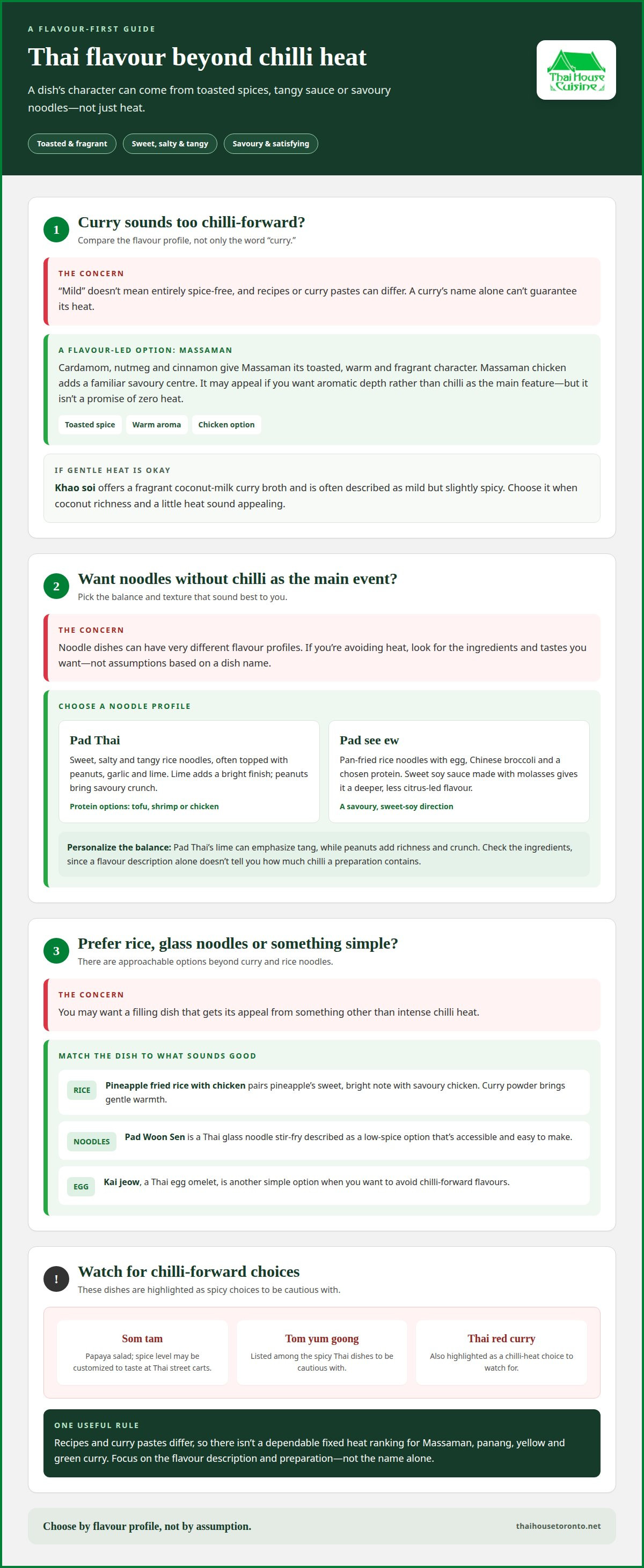
Massaman curry is a Southern-style Thai curry known for toasted spices, including cardamom, nutmeg and cinnamon. Their warm, fragrant character gives the dish a rounded flavour that doesn’t rely only on chilli heat. For someone cautious about spice, that distinction matters: aroma and depth can make a curry satisfying without making heat its main feature.
Which Thai curries are mildest: Massaman, panang, yellow, or green? Massaman is a sensible starting point when you want toasted, aromatic flavours rather than a chilli-forward impression. There isn’t a dependable fixed heat ranking for all four, because recipes and curry pastes differ. The particular preparation matters more than the name alone.
Massaman chicken curry brings tender chicken into that spice-led profile. The meat gives each spoonful a savoury centre, while the toasted notes remain noticeable in the sauce. If you usually choose chicken over a strongly flavoured protein, this version offers a familiar route into Thai curry without making the meal taste plain.
To judge whether Massaman suits your palate, focus on the flavour description as well as the word “curry.” Cardamom, nutmeg, and cinnamon point to fragrant warmth, not necessarily intense heat. A curry can still contain chilli, so “mild” doesn’t mean entirely spice-free. Consider how much chilli you enjoy and whether you prefer sweetness, savouriness, or toasted flavours.
Khao soi offers a useful comparison. This Northern Thai dish, especially associated with Chiang Mai, has a fragrant coconut-milk curry broth. It’s often described as mild but slightly spicy, so it may suit diners who can manage gentle chilli heat. Choose Massaman for toasted spice; consider khao soi when fragrant broth appeals and a little heat is acceptable.
For the clearest decision, match the dish to your tolerance. If even mild chilli is uncomfortable, Massaman’s toasted-spice profile may appeal, but it isn’t a guarantee of zero heat. If gentle warmth works for you, khao soi brings coconut richness and a Northern Thai character. The spice blend, not just the curry name, shapes the experience.
If you would rather move away from curry, garlic pepper chicken is a Thai dish with a strong garlic flavour and can be served with jasmine rice, pasta, noodles, salads, or in an omelette. Pad Thai is a stir-fried rice noodle dish with a choice of protein, including tofu, shrimp, or chicken. These dishes offer other ways to choose a meal when toasted curry spices are not what you want.
For a low-spice noodle option, Pad Woon Sen is a Thai glass noodle stir-fry described as accessible and easy to make. At Thai street carts, papaya salad's spice level is often customized to taste. Som tam is commonly served with grilled chicken or sticky rice. Together, these choices offer alternatives to curry, with options to consider based on noodle preference, serving style, or how much spice you want.
2. Pad Thai’s sweet, salty, and tangy flavours
Pad Thai is a stir-fried rice noodle dish with a balanced sweet, salty and tangy flavour. Its familiar mix makes it a strong choice for diners who want complexity without making chilli the main attraction. The noodles carry the sauce, while toppings such as peanuts, garlic and lime add contrasting texture and brightness. Lime brings a sharp, fresh note; peanuts add a savoury crunch.
Protein options can shape the overall experience without changing the dish’s central flavour profile. Pad Thai may be made with tofu, shrimp or chicken, so diners can choose a familiar ingredient. Toppings also let each person adjust the final taste. A squeeze of lime emphasizes tang, while peanuts contribute richness and crunch. These additions create flavour contrast rather than requiring extra heat.
For someone who doesn’t like spicy food, pad Thai may be the best Thai dish to start with. Its sweet, salty, and tangy notes are easier to identify than chilli heat, and lime offers a bright finish. Still, a flavour description alone doesn’t tell you how much chilli a preparation contains. Check the listed ingredients and choose according to your preference for tangy or savoury tastes.
Pad see ew offers a different noodle experience. It uses pan-fried rice noodles with egg, Chinese broccoli and a chosen protein. Its sweet-salty balance comes from sweet soy sauce made with molasses, giving the noodles a deeper, less citrus-led flavour than pad Thai. The Chinese broccoli contributes a green, savoury contrast, while the egg and protein make each bite more substantial.
Sweet-and-sour shrimp is another option for diners drawn to contrast. The name signals a meeting of tart and sweet flavours, with shrimp bringing a savoury seafood taste. Compared with pad Thai, it may appeal if you want a more direct sweet-and-tangy profile. Sweet-and-sour describes the flavour balance, however, not the amount of chilli, so consider how the dish is prepared.
Use the flavour you want as your guide. Pick pad Thai for a layered sauce with lime, peanuts and a choice of protein. Choose pad see ew for pan-fried noodles and a sweet-soy depth. Sweet-and-sour shrimp suits a sharper contrast. Each gives you a distinct route through Thai flavours, so you can focus on what sounds appealing rather than assuming every Thai dish is spicy.
Pad Thai is typically topped with peanuts, garlic, and lime, allowing diners to adjust its flavour to their liking. The toppings need not be treated as a fixed combination: diners can choose how to use them to guide the final balance toward the taste they prefer. This makes the dish’s flavour more personal, while keeping its familiar combination of noodles and toppings at the centre of the meal.
3. Pineapple fried rice with chicken
Thai pineapple fried rice with chicken brings fruit and savoury flavour together in a filling rice dish. Pineapple contributes a sweet, bright note, while chicken offers a familiar savoury counterpart. For diners who avoid chilli-forward meals, that contrast can make the dish appealing without relying on intense heat. Its flavour has more to offer than simple sweetness.
Curry powder is part of Thai pineapple fried rice, but its role is gentle warmth rather than intense spicy heat. That distinction matters if you’re deciding whether the dish suits your tolerance. Warmth from seasoning can add depth without the sharp, burning sensation associated with a strong chilli presence. The spice blend shapes the aroma as well as the flavour.
Chicken makes the pineapple’s sweetness feel more balanced. A piece of chicken alongside a bite of rice and fruit combines savoury and sweet in one mouthful. That balance is useful if you enjoy fruit in savoury food but don’t want a dish to taste like dessert. The result is a rounded profile, with the curry powder lending a warm savoury note.
The combination also gives this dish a distinct place among milder Thai choices. Massaman centres toasted spices, while pad Thai is known for sweet, salty and tangy flavours. Pineapple fried rice takes another route: fruit brings a sweet-tart accent, chicken adds savouriness, and curry powder contributes gentle warmth. Those differences help you choose by flavour, not simply by whether a dish sounds spicy.
Think about which element you want to lead. If you enjoy fruit with savoury ingredients, pineapple fried rice with chicken puts that pairing at the heart of the meal. If you prefer a noodle dish with a tangier finish, pad Thai offers a different profile. If warm seasoning appeals but sharp chilli heat doesn’t, the curry powder’s gentle character makes pineapple fried rice worth considering.
The dish is also described as quick and easy to make, but its appeal for diners comes from the flavour combination. Pineapple, chicken and curry powder each play a clear part. The fruit adds brightness, the chicken gives the rice a savoury anchor, and the seasoning brings warmth without intense heat. Together, they make a satisfying alternative to a chilli-led curry.
Choose this option for sweet fruit, savoury chicken and aromatic seasoning in one dish. It’s a practical starting point if you’re exploring Thai food and want more than plain rice, but prefer gentle warmth to a strong chilli kick. The best Thai dish for someone who doesn’t like spicy food depends on the flavours they enjoy, and this combination suits diners drawn to a sweet-and-savoury balance.
4. Kai jeow egg omelette
Kai jeow is a Thai-style egg omelette, offering a savoury option without making curry or noodles the focus. Beaten eggs cook into a tender centre with browned, crisp edges, giving the dish contrast in every bite. Its simple base can appeal when you want a mild main dish and familiar flavours.
Eggs bring the main flavour, while fish sauce commonly seasons the mixture with a salty, savoury note. That seasoning makes kai jeow more than a plain omelette, but chilli isn’t its defining feature. The result is a direct, comforting taste, especially for diners who prefer a short ingredient list over a complex curry sauce.
Rice makes kai jeow a more complete meal. Served over jasmine rice, the soft grains balance the omelette’s savoury seasoning and soak up its juices. This pairing also offers a clear alternative to rice noodles, such as pad Thai or pad see ew. Choose kai jeow when eggs and rice sound more appealing than stir-fried noodles.
Texture is part of the appeal. A hot pan gives the outside a golden finish while the inside stays soft, so each forkful combines crispness and tenderness. That contrast keeps a straightforward egg dish satisfying without relying on strong spice. The egg-and-rice combination also lets the omelette’s flavour remain at the centre of the plate.
Keep sauces in mind when avoiding heat. Kai jeow itself is an egg dish, but a chilli sauce served alongside it changes the overall experience. Enjoying the omelette without a spicy condiment lets its savoury egg flavour and fish-sauce seasoning come through clearly. This distinction is useful if you want a mild base but can tolerate heat separately.
Compared with pineapple fried rice, kai jeow offers less sweetness and more emphasis on egg and savoury seasoning. Compared with Massaman curry, it has no toasted-spice profile to explore. Those differences help narrow the choice: pick kai jeow for a simple, savoury meal; choose another dish when you want fruit, aromatic spices, or a more layered sauce.
Kai jeow can suit a shared table because its familiar ingredients provide a gentle contrast to bolder dishes. Pairing the omelette with rice gives the meal a filling centre, while a separate spicy dish can bring heat for diners who enjoy it. Keep the omelette itself as the mild, savoury choice.
For a first taste of Thai food without a chilli-led flavour, kai jeow offers a clear starting point: egg, savoury seasoning, and rice. It’s a practical choice when you want a warm, straightforward dish rather than a sauce-heavy meal. Let the omelette’s golden edges and soft centre do the work.
5. Spicy Thai dishes to avoid
Pad Thai, Massaman curry and satay aren’t automatically fiery dishes, but their heat depends on preparation. Pad Thai is known for sweet, salty and tangy flavours, while Massaman centres on toasted spices. Satay’s name alone doesn’t tell you its heat level. If chilli is a concern, focus on ingredients and preparation rather than assuming every familiar Thai dish tastes the same.
Watch for dishes where chilli is central. Som tam is a green papaya salad made with shredded papaya, tomatoes, carrots, peanuts, string beans, lime, fish sauce, garlic and Thai chillies. Tom yum goong combines shrimp with lemongrass, kaffir lime leaves, galangal and chillies for a spicy, sour soup. Thai red curry uses a paste containing crushed red chillies, simmered with coconut milk.
Chilli peppers and chilli-based curry pastes can bring heat to Thai food. Roasted chilli flakes are another clear sign: they can be added to make featured dishes spicy. Garlic, lime and galangal contribute strong flavours, but they aren’t the same as chilli heat. Recognizing these ingredients helps distinguish a fragrant, tangy or savoury dish from one that may taste hot.
To order with no chilli or low spice, say plainly, “Please make this with no added chilli” or “Please make this mild.” Name the dish, such as pad Thai or green curry, and specify your preference. If you’re sensitive to heat, avoid chilli condiments too. “Less spicy” may leave some heat; “no added chilli” communicates a clearer request.
Curries and noodle dishes can have different levels of heat because recipes use different ingredients and preparations. A curry made with a chilli-containing paste may still have heat even if extra chilli is left out. For noodles, ask for no added chilli and specify any spicy sauce or condiment you want omitted. The dish’s existing seasoning still shapes its flavour.
Mild choices found on Thai restaurant menus in Canada include Massaman curry, pad Thai, pad see ew, pineapple fried rice with chicken and kai jeow. Their flavour profiles differ: toasted spices, sweet-tangy sauce, sweet soy, fruit and savoury egg each offer an alternative to chilli-led heat. A dish can still contain some warmth, so describe your preference clearly when ordering.
For takeout or delivery, include your spice preference with the dish name in the order notes. That keeps the request clear for dishes such as pad Thai, Massaman curry or kai jeow. If you want a definite no-chilli meal, avoid som tam, tom yum goong and Thai red curry, and state your preference directly rather than relying on a dish name alone.
Thai House Cuisine
Thai House Cuisine is a natural next step when you’re ready to turn these flavour notes into a meal. Use the differences between toasted spices, sweet-tangy noodles, fruit-forward rice and savoury egg to guide what appeals to you, then enjoy Thai food through dine-in meals or takeout and delivery. Lunch specials offer another mealtime option. These choices make it easy to consider how and when you’d like to enjoy Thai food, whether you’re ordering for yourself or sharing a meal with others. The dishes in this guide offer distinct flavour profiles, so you can choose based on what sounds good and your comfort with chilli heat. For a welcoming meal, contact Thai House Cuisine.
Make your next Thai meal your own
Let your comfort with heat guide your choice, then explore the flavours you’re curious about at your own pace. The best Thai dish for someone who doesn’t like spicy food is one that matches what you enjoy, whether that means a savoury meal or a brighter, tangier taste. Thai House Cuisine serves Toronto’s Beaches neighbourhood and offers dine-in, takeout, delivery, and Thai food catering for gatherings right here in our local community.
A clear preference for no chilli or low spice can help shape your order. Choose a flavour profile that sounds inviting, and make your next Thai meal a chance to discover something new.
Enjoy the flavour, find your own favourite, and let each meal lead to another discovery.
Frequently Asked Questions
What Thai dishes are traditionally mild and not spicy?
Kai jeow, pineapple fried rice and pad see ew are useful mild-leaning choices. They centre on eggs, rice or noodles rather than chilli-forward curry paste. Spice levels can vary by preparation, so if you avoid chilli entirely, state that clearly when ordering. You can also keep chilli flakes and spicy sauces separate, letting everyone at the table season their food to their own preference.
Is pad see ew a good Thai dish for someone who dislikes spicy food?
Yes. Pad see ew is a sensible choice because its defining flavours come from pan-fried noodles, egg, Chinese broccoli and sweet soy sauce, not a chilli-led sauce. For a simple order, choose your preferred protein and ask for no chilli or spicy condiments. This gives you a savoury noodle dish while keeping added heat out of your meal.
What Thai dishes are mild but still flavourful?
Try dishes where herbs, seasoning or texture create interest without relying on chilli. Kai jeow brings a savoury egg flavour, while pineapple fried rice pairs sweet fruit with chicken and warm seasoning. Pad see ew offers a deeper, soy-based taste. These options suit different appetites, from a straightforward egg-and-rice meal to a more varied mix of sweet and savoury notes.


